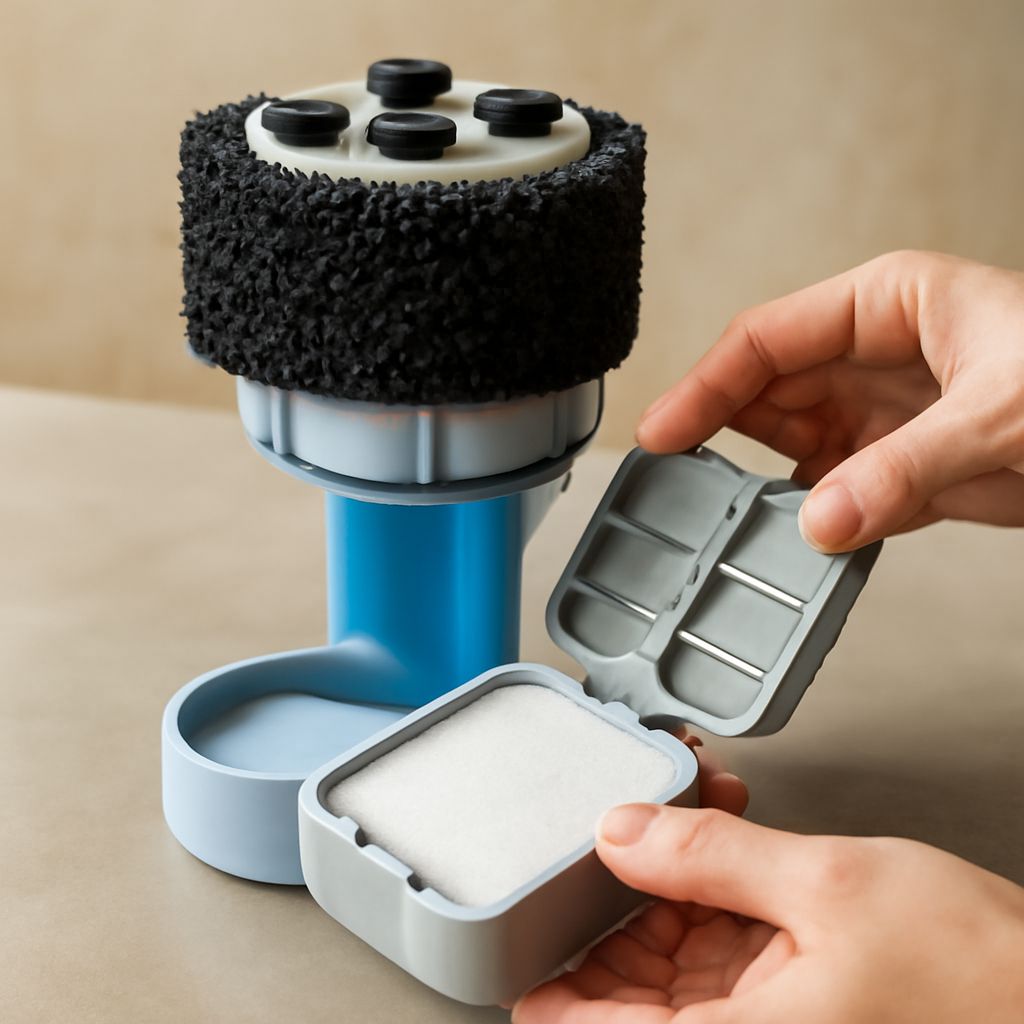
You notice your cat sniffing at her water fountain and walking away unimpressed, or you’ve seen the water looking slightly murky even though the fountain has been running. The cat filter inside the unit is doing its job, but filters don’t last forever and an overdue replacement changes the whole picture. Understanding how fountain filtration works keeps your cat’s water clean and appealing.
A cat water fountain filter removes debris, hair, and dissolved minerals from circulating water, making a real difference in water quality and taste. Some owners also search for a cat fuel filter reference as a joke term, but in practical terms it’s the activated carbon in a cat fountain filter that does the heavy lifting. Each cat fountain filter style works slightly differently depending on the unit design. If you have a fountain question about replacement timing or cleaning, this guide answers the most common ones.
How Cat Fountain Filters Work
Activated Carbon Layer
Most cat water fountain filters contain a layer of activated carbon, also called activated charcoal. This material has an enormous surface area at the microscopic level and binds dissolved chlorine, certain minerals, and organic compounds that affect taste and odor. The carbon is what makes filtered water taste fresher to your cat compared to standing tap water.
Mechanical Filtration Foam
Alongside the carbon layer, most filters include a foam or sponge component that physically traps larger particles: fur, food debris, and sediment. This foam layer catches what the carbon can’t. Both components work together, and when either degrades, overall filtration quality drops. Many fountain owners replace the whole filter unit monthly rather than trying to clean and reuse components.
Ion Exchange Resin
Some higher-end fountain filters add ion exchange resin, which softens water by removing calcium and magnesium ions. Hard water creates visible mineral deposits inside the fountain bowl and on the pump. If you have hard tap water and see white buildup around your fountain, a filter with resin will help slow the accumulation.
How Often to Replace Your Cat Fountain Filter
Most manufacturers recommend replacing the filter every two to four weeks. The actual interval depends on your water source, how many cats use the fountain, and how much hair and debris end up in the water. If you have a single cat and relatively soft, clean tap water, a four-week cycle is usually fine. Multiple cats or harder water means the filter saturates faster and monthly replacement at minimum makes sense.
You can usually tell a filter needs changing before the replacement window hits. If the water has a noticeable taste or odor, if the flow rate drops, or if you see visible debris in the bowl despite regular cleaning, the filter is overloaded. Don’t rely solely on the calendar; check the filter condition periodically.
Cleaning the Fountain Alongside Filter Replacement
Replacing the filter without cleaning the fountain itself leaves biofilm, mineral deposits, and bacteria in the system. Take the whole unit apart during each filter change, wash all components with mild dish soap, rinse thoroughly, and scrub any mineral buildup with a dilute white vinegar solution before rinsing again. Reassemble with the new filter and fresh water. This monthly deep clean extends the life of the pump and keeps the water genuinely clean rather than just filtered.
Pump Maintenance
The pump is the heart of the fountain and also the component most affected by scale buildup. Soaking the pump head in white vinegar for 30 minutes during each deep clean dissolves mineral deposits and keeps the motor running quietly. A failing pump circulates water poorly, which allows bacteria to grow even with a fresh filter in place.
Choosing the Right Replacement Filter
Use filters designed for your specific fountain model. Generic or off-brand filters that don’t fit properly allow water to bypass the filtration media entirely, rendering the filter useless. Check the model number on your fountain and buy the corresponding filter. Buying a three- or six-month supply at once is usually more cost-effective than individual purchases and ensures you always have a replacement on hand.