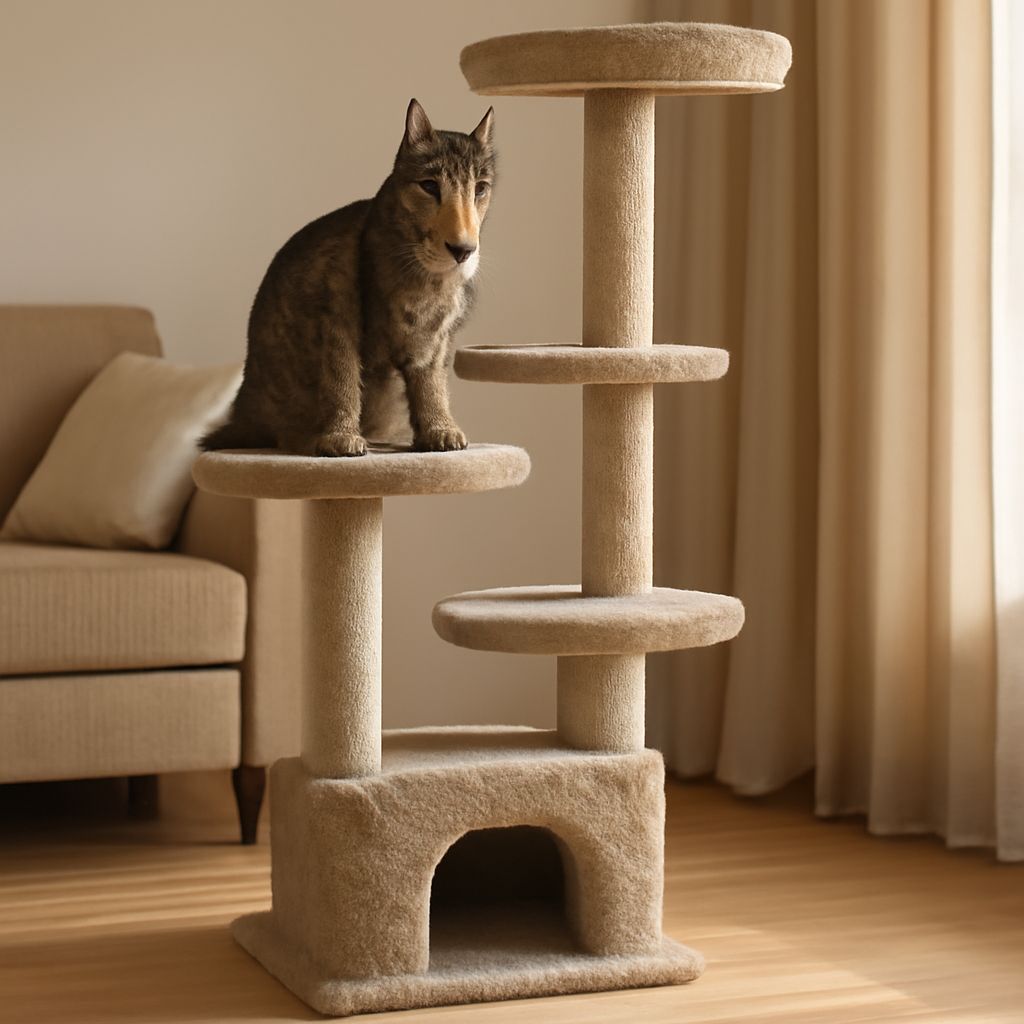
Your living room furniture is starting to show the damage, and your cat has claimed the back of the couch as their personal mountain peak. You know it’s time to invest in a dedicated structure, but standing in the pet store aisle or scrolling through endless product listings leaves you overwhelmed. Choosing a cat tower that actually gets used takes more thought than grabbing the tallest one in stock. The best cat towers match your cat’s size, personality, and your available floor space all at once.
Whether you have one territorial senior or a whole crew of climbers, the right cat platform gives your cats vertical territory of their own. If you’re shopping for multiple animals, the best cat trees for multiple cats have specific features that single-cat towers often skip. This guide walks through everything worth knowing before you buy.
What Makes a Good Cat Tower
A quality feline climbing structure does several things simultaneously: it satisfies the instinct to climb and perch up high, provides scratching surfaces to maintain claw health, and gives cats private spots to rest away from household activity. Towers that skip any of these elements tend to get ignored after the first week.
Height and Stability
Taller towers give cats better vantage points, which most cats strongly prefer. But height only matters if the base is stable. A wobbly tower is a safety risk, especially for larger cats or households with multiple animals launching themselves onto it from across the room. Look for a wide, heavy base and posts that don’t flex under pressure. For large breeds like Maine Coons or Ragdolls, specifically check weight ratings before purchasing.
Scratching Surfaces
Sisal rope and sisal fabric both work well as scratching materials. Carpet-covered posts are acceptable but collect fur quickly and wear unevenly. The best cat tower designs wrap posts floor-to-ceiling in sisal and include at least one flat scratching pad at the base for cats who prefer horizontal scratching.
Perch Size and Configuration
Perches should be large enough for the cat to stretch out fully, not just sit hunched. Many budget towers have undersized platforms that cats will use briefly then abandon for the couch. Cat platform designs that include enclosed cubbies and open perches at different heights give each cat in the household a preferred spot without forced sharing.
Best Cat Towers for Multiple Cats
Multi-cat households need towers designed for simultaneous use. Single-entry cubbies create bottlenecks and territorial disputes. The best cat trees for multiple cats offer multiple separate perches at varying heights, so the dominant cat can claim the top while other cats occupy lower levels without conflict.
Features to Prioritize for Multi-Cat Homes
- Multiple access routes to upper perches (cats avoid traps with only one exit)
- Wide, reinforced base rated for combined cat weight
- Separate resting spots so cats aren’t forced onto shared surfaces
- Replaceable sisal posts (heavy use wears them out faster in multi-cat homes)
Space Planning
A tower for several cats takes up meaningful floor space. Corner-mounted designs and wall-mounted cat shelf systems can supplement or replace freestanding towers in smaller apartments. Measure your space before ordering, and account for the cat’s jump radius around the tower.
Placement and Setup Tips
Location matters more than most owners realize. Cats use elevated perches primarily to observe their territory, so placing a cat tower near a window dramatically increases how often it gets used. A tower stuck in a corner of a back bedroom away from household activity often sits untouched.
During the first few days, sprinkle dried catnip on the perches or rub them with a toy your cat already likes. This helps cats connect the new climbing tower with positive associations. Most cats discover and claim their preferred spots within a week of introduction.
Assembly and Safety Checks
Tighten all bolts before your cat uses the tower, and recheck them monthly. Bolts loosen through regular use, and a shifting tower can startle or injure a cat mid-climb. If a post becomes badly frayed and the sisal starts unwinding, replace it before the exposed staples or wood underneath become a claw hazard.
Bottom line: The best cat tower for your home is one that fits your cats’ sizes, matches your available space, and gets placed somewhere they actually want to be. Spend a little more on stability and perch size, and you’ll have a structure your cats use for years instead of weeks.