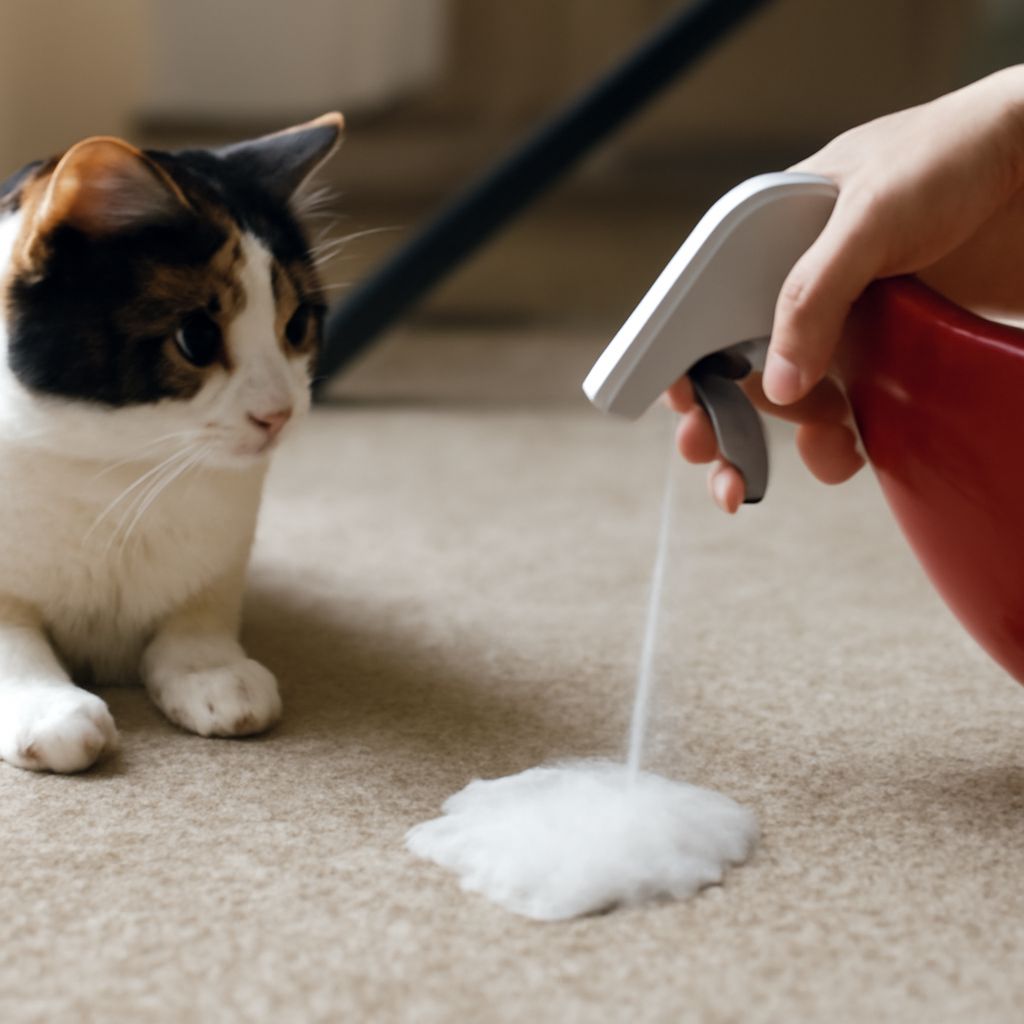
You watch your cat heave a couple of times and produce a small pile of white, frothy liquid, then walk away like nothing happened. When a cat throws up white foam, it’s natural to wonder whether this is a one-time blip or a pattern worth tracking. The foam itself is a mix of saliva, gastric mucus, and air, and it usually means the stomach is expelling something without much food content involved.
If you’re asking why is my cat throwing up foam, the reasons range from completely benign to something that needs a vet’s attention. A cat that keeps throwing up foam on a regular basis, or one that is throwing up saliva foam alongside other symptoms, needs closer evaluation. When you see your cat throwing up white foam and lethargic together, that combination is the clearest reason to call your vet rather than wait.
Common Reasons Cats Vomit White Foam
Bilious Vomiting Syndrome
When a cat’s stomach sits empty for many hours, gastric acid and bile accumulate. The stomach lining gets irritated and the cat vomits to relieve the discomfort. The result is typically white or yellow frothy material. This is most common in cats that go overnight without food. Splitting meals into smaller, more frequent portions or offering a small snack before bed usually solves bilious vomiting on its own.
Hairballs in Progress
White foam sometimes precedes a hairball coming up. The retching and foaming can happen several times before the hair mass actually passes. Long-haired breeds and heavy groomers deal with this more than short-haired cats. Regular brushing and hairball-control food or treats can reduce frequency considerably.
Eating Too Fast
Cats that eat meals very quickly swallow air along with food. The stomach rejects this combination promptly. The result is vomiting shortly after eating, sometimes white foam mixed with partially digested food. Slow-feeder bowls or spreading food across a flat surface slows most fast eaters down effectively.
Dietary Sensitivity or Food Change
Switching food brands or types too abruptly upsets many cats’ digestive systems. Foam vomiting following a new food introduction usually resolves within a few days once the cat adjusts, or after reverting to the previous food and transitioning more gradually over one to two weeks.
When to Be Concerned
Occasional white foam vomiting, once or twice a month without other symptoms, is within the normal range for many cats. The situation changes when the frequency climbs or additional symptoms appear.
Seek veterinary care if your cat is vomiting foam more than twice a week, is losing weight, has become less active or more withdrawn, is drinking more or less water than usual, has changes in litter box habits, or shows any sign of abdominal pain. These patterns suggest conditions beyond a simple upset stomach.
What the Vet Will Check
Your vet will likely ask about the frequency, timing relative to meals, and any other changes you’ve noticed. A physical exam checks for abdominal tenderness, weight loss, and signs of dehydration. Bloodwork assesses kidney and liver function, thyroid levels, and blood sugar. X-rays or ultrasound may follow if obstruction or organ changes are suspected.
Bottom Line
A cat that occasionally throws up white foam without other symptoms is probably dealing with something minor like an empty stomach or an incoming hairball. When the vomiting becomes a regular occurrence or pairs with lethargy, weight loss, or other changes, that warrants a vet exam to find the underlying cause and address it properly. Tracking episodes in a simple log, including time of day and relation to meals, gives your vet the clearest picture.