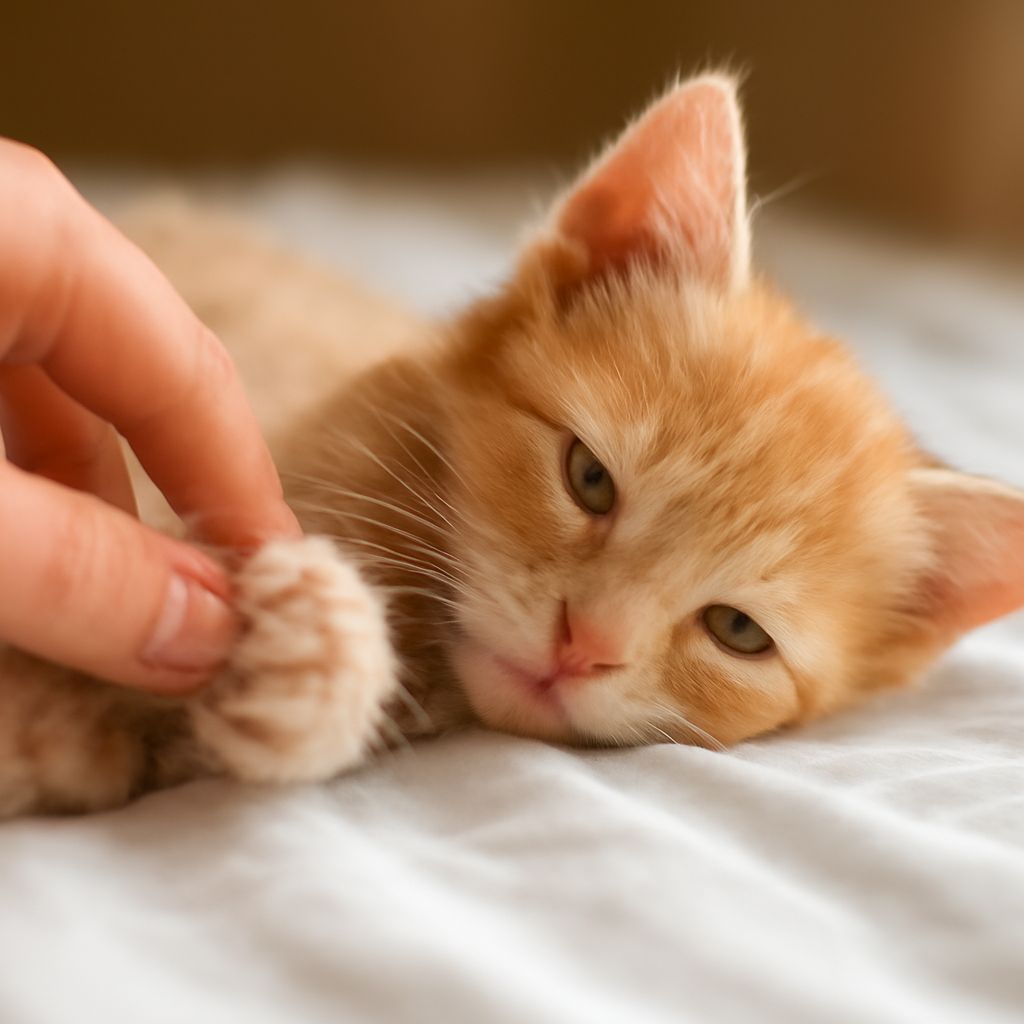
You’ve been sneezing and sniffling all week, and now you’re watching your cat sneeze from across the room and wondering: can my cat catch my cold from me? It’s a reasonable concern if you’ve been in close contact all week, letting her sleep on your pillow and curl up on your chest. The relationship between human colds and feline respiratory illness is less straightforward than it might seem.
Can you catch a cold from a cat is actually a separate question from whether your cat can catch yours. Can a cat get a cold? Yes, absolutely. Can a cat catch a cold from a human? The evidence suggests this is very unlikely due to species-specific viral biology. Knowing what to do when your cat has a cold is far more immediately useful than worrying about cross-species transmission in most household situations.
Can Cats and Humans Share Cold Viruses
Human Cold Viruses and Cats
The viruses most commonly responsible for human colds, rhinoviruses and some coronaviruses, are species-specific. They evolved to infect human cells and don’t replicate effectively in feline tissue. Transmitting your rhinovirus cold to your cat is not something you need to worry about in typical circumstances.
Can You Catch a Cold from a Cat
The reverse is also largely not a concern. Feline respiratory viruses, including feline herpesvirus and feline calicivirus, don’t infect humans. These viruses are highly contagious between cats but not between cats and people. If your cat has a respiratory infection, you won’t catch it, though your other cats certainly might.
What About Other Zoonotic Illnesses
While cold viruses don’t cross species easily, some other illnesses can pass between cats and people. Ringworm, certain parasites, and a few bacterial infections are legitimate zoonotic concerns. The basic precaution of washing hands after handling a sick cat covers most of these risks adequately.
Feline Upper Respiratory Infections
What Causes a Cat Cold
What looks like a cold in a cat is usually feline upper respiratory infection, driven primarily by feline herpesvirus (FHV-1) or feline calicivirus (FCV). Both spread through direct contact with infected cats or shared surfaces. Shelter environments are breeding grounds for URI spread, which is why newly adopted cats often develop respiratory symptoms within days of coming home.
Signs Your Cat Has a Cold
Sneezing, runny nose, eye discharge, mild fever, and reduced appetite are the most common signs. A cat with URI might breathe with her mouth open if nasal congestion is severe. Most healthy adult cats recover without complications, though kittens and immunocompromised cats can develop more serious illness.
When Symptoms Become Serious
A cat that stops eating entirely, shows labored breathing, has discharge that turns yellow or green, or seems notably lethargic needs veterinary attention. Secondary bacterial infections are common and often require antibiotics. Keep a sick cat warm, offer wet food for easier eating and additional moisture, and make sure she stays hydrated.
What to Do When Your Cat Has a Cold
Supportive care at home helps most cats through a mild upper respiratory infection. Use a soft cloth to gently wipe discharge from around the nose and eyes several times a day. Steam from a shower can help loosen nasal congestion, so spending ten minutes in a steamy bathroom with your cat can provide relief. Encourage eating by warming wet food slightly, since a congested cat loses some of her sense of smell and may lose interest in cold food.
Keep the sick cat separated from other cats in the household to reduce spread. Wash your hands after each handling session. Most cats bounce back within one to two weeks. If your cat isn’t improving after a week or gets noticeably worse, call your vet.
Next Steps
Keep your cat’s vaccinations current, as the core feline vaccine includes protection against both herpesvirus and calicivirus, the two most common causes of feline respiratory illness. If you have a multi-cat household and one cat gets sick, isolate the ill cat promptly to prevent spread. Monitor for secondary symptoms and don’t hesitate to call your vet if you’re unsure whether the illness is progressing normally or requires treatment.