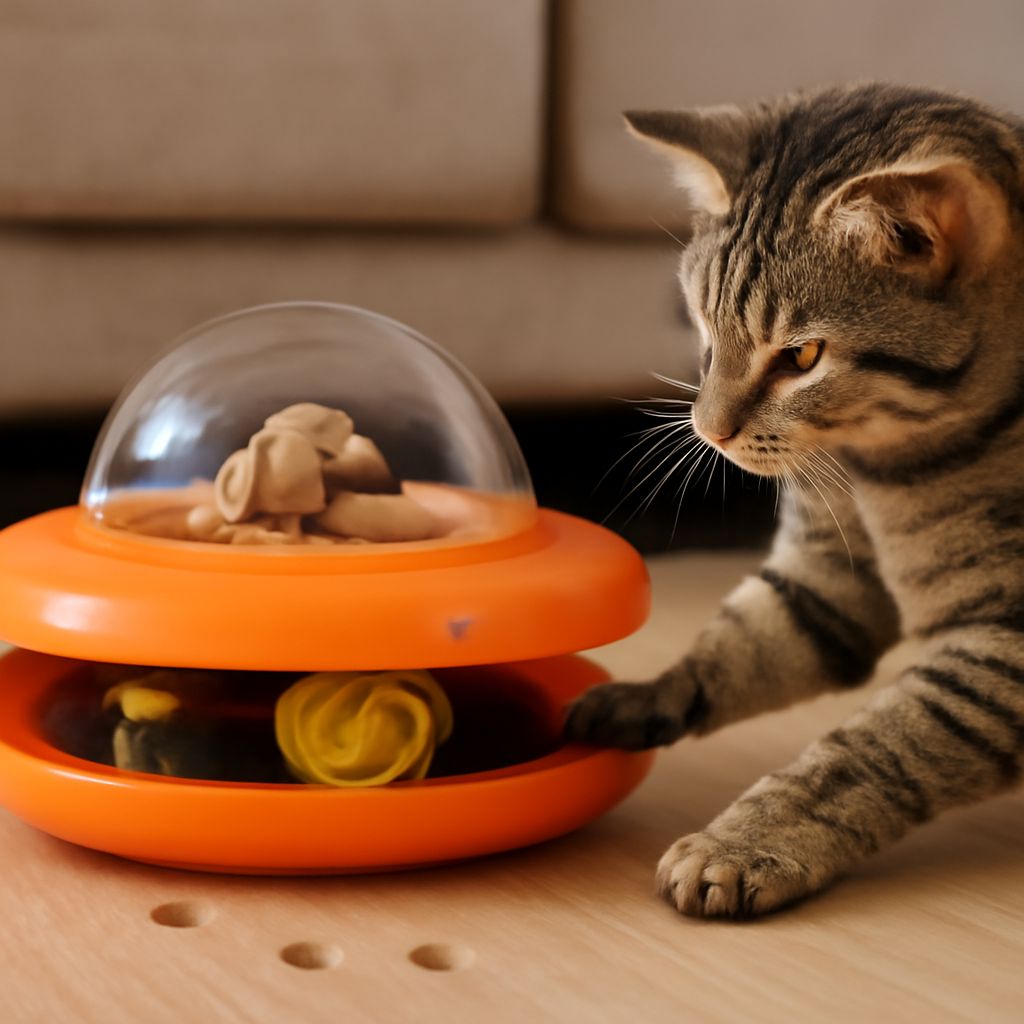
Your cat has batted the same toy mouse under the couch three times today, and now she’s sitting by the window looking vaguely unsatisfied. Cat enrichment toys exist precisely for moments like this — to give indoor cats meaningful mental and physical stimulation that domestic life doesn’t automatically provide. Boredom in cats is a real welfare issue, not just an aesthetic one.
The best cat toys for bored cats do more than roll around on the floor; they engage hunting instincts, problem-solving skills, and sensory attention. Cute cat toys catch your eye at the store, and funny cat toys make great videos, but smart cat toys are the ones that genuinely hold your cat’s attention past the first five minutes. This guide covers what to look for and how to build a rotation that keeps things interesting.
What Makes a Toy Actually Enriching
Mimicking Prey Behavior
Cats are hardwired to respond to prey-like movement: erratic, unpredictable, and small. A toy that moves like a fleeing insect or darting rodent activates hunting behavior far more effectively than one that just sits there. Feather wands, crinkle balls, and electronic toys with randomized movement patterns all hit this mark well. The key is unpredictability, since cats quickly lose interest in anything they can fully predict.
Puzzle Feeders and Food-Based Stimulation
Enrichment doesn’t have to mean toys in the traditional sense. Puzzle feeders that require your cat to work for her food provide serious mental engagement. Cats that eat from puzzle feeders eat more slowly, stay engaged longer, and often show lower signs of stress compared to cats eating from regular bowls. Start with easy puzzles and increase difficulty as your cat figures them out.
Texture and Sensory Variety
Different textures keep things interesting. Crinkly materials, soft plush, rough fabric, and rubber surfaces all offer different tactile experiences. Catnip and silvervine are effective additions for cats that respond to them, adding an olfactory dimension to play. Not every cat responds to catnip, since sensitivity is genetic, but silvervine attracts a higher percentage of cats and is worth trying if catnip leaves your cat unimpressed.
Building a Toy Rotation
Cats get bored with the same toys left out continuously. A rotation strategy, keeping a few toys available and swapping others in and out every few days, keeps novelty high without constant purchases. Store unused toys in a sealed bag or container to preserve scent. When you reintroduce them after a week, many cats treat them as essentially new.
Interactive play, meaning you actively move a wand or laser, is qualitatively different from solo play with a toy on the floor. Aim for two short interactive sessions daily, five to fifteen minutes each. This isn’t just about exercise; it’s about providing the social and mental engagement cats need that solo toys can’t fully replace.
Next Steps
Assess your current toy setup by watching how your cat engages with what she has. If she ignores most toys within seconds, try introducing a puzzle feeder this week and an unpredictable electronic toy next week. Start daily interactive wand play if you aren’t doing it already, even five minutes makes a measurable difference in a bored cat’s mood and behavior. Rotate toys every few days and note which categories she returns to most, then invest more in those types going forward.