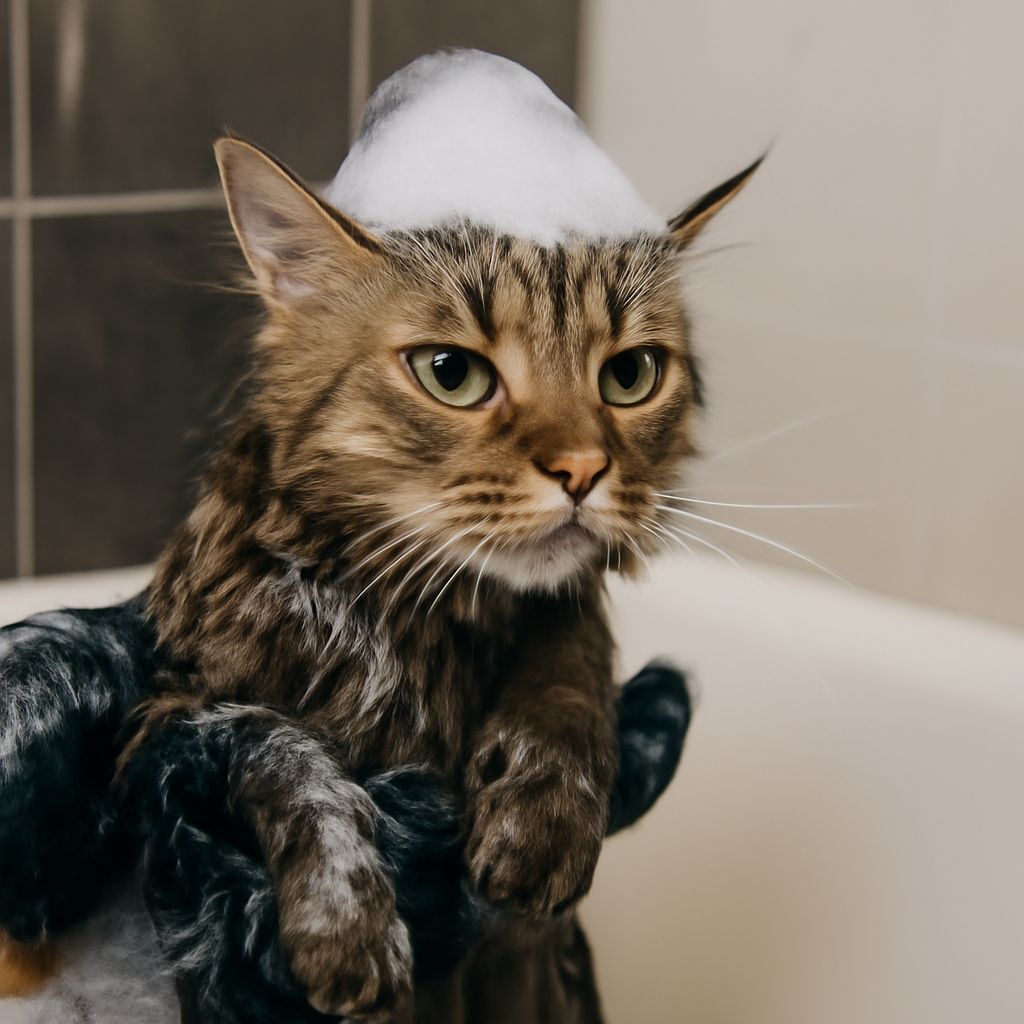
Your cat managed to get into something sticky, or they’ve been rolling in who-knows-what in the yard, and now you’re standing in the bathroom wondering whether you’re supposed to bathe cats or whether you’ll lose a hand trying. It’s a reasonable question. Should you bathe your cat, or is this a boundary cats and humans are better off not crossing? The answer depends on the situation, the individual cat, and what you’re hoping to accomplish.
Do you bathe cats routinely as part of standard grooming? Most cats don’t need it. Do cats need to be bathed at all? Sometimes, yes. Should you bathe a cat who is visibly clean and odor-free? Probably not. This guide breaks down the situations where bathing makes sense, how to do it with minimal trauma, and what ‘minimal trauma’ actually looks like in practice.
When Bathing Is Actually Necessary
Cats are fastidious self-groomers and under normal circumstances keep themselves clean without any human assistance. However, several situations call for a bath.
Visible Contamination
If your cat has rolled in something toxic (motor oil, certain garden chemicals, pesticides), or gotten into something sticky that they can’t safely lick off, bathing is necessary. Cats who are allowed to groom off these substances ingest them, which can cause illness. For chemical contamination, contact your vet before bathing to confirm the appropriate cleaning approach.
Flea Infestations
A flea bath can help reduce the live flea burden quickly, but it isn’t a standalone solution. Flea shampoos kill fleas on contact but leave no residual protection, and fleas in the environment will reinfest within hours. Should you bathe your cat as part of flea treatment? Yes, if they’re heavily infested, but immediately follow up with a veterinary-recommended flea prevention product.
Medical Skin Conditions
Some skin conditions require medicated shampoos as part of treatment. Ringworm, seborrhea, and certain bacterial skin infections are treated with specific prescription shampoos that need to stay on the skin for a set contact time. In these cases, bathing is medical care, not optional grooming.
Cats Who Cannot Self-Groom
Very obese cats, elderly cats with arthritis, or cats with injuries may not be able to reach parts of their body to groom effectively. These cats can develop matting, odor, and skin issues from lack of grooming. Regular bathing or professional grooming helps maintain coat and skin health when the cat can’t manage it independently.
How to Bathe a Cat with Minimal Stress
Do you bathe cats by dumping them in a full tub? That’s a good way to end up with a terrified cat and scratches up both arms. A better approach takes preparation.
Preparation Steps Trim your cat’s nails before bathing. Have everything you need within arm’s reach before the water is running: cat-specific shampoo, two towels, and a cup or gentle sprayer for rinsing. Close the bathroom door. A non-slip mat in the sink or tub gives cats more confidence than slipping around on a smooth surface.
Water Temperature and Technique
Use warm (not hot, not cold) water. Start by wetting the body from the neck back, avoiding the head initially. Lather gently, rinse thoroughly. Shampoo residue left in the coat causes skin irritation. Rinse until the water running off the coat is fully clear.
Do cats need to be bathed for long periods? No. Aim to get in and out in under ten minutes. The faster the experience, the less distressing it is for the cat and the more likely they’ll tolerate the next one.
Drying
Towel dry thoroughly first. A low-heat blow dryer on the lowest setting works for cats who tolerate the noise; most don’t. For long-haired cats who won’t tolerate drying, make sure they’re in a warm room until completely dry to prevent chilling.
Safety recap: Never use human shampoo, dish soap, or flea products labeled for dogs on cats. Many contain ingredients toxic to cats, including certain essential oils and permethrin. Always use products specifically formulated for cats, and read labels before applying anything to your cat’s skin or coat.