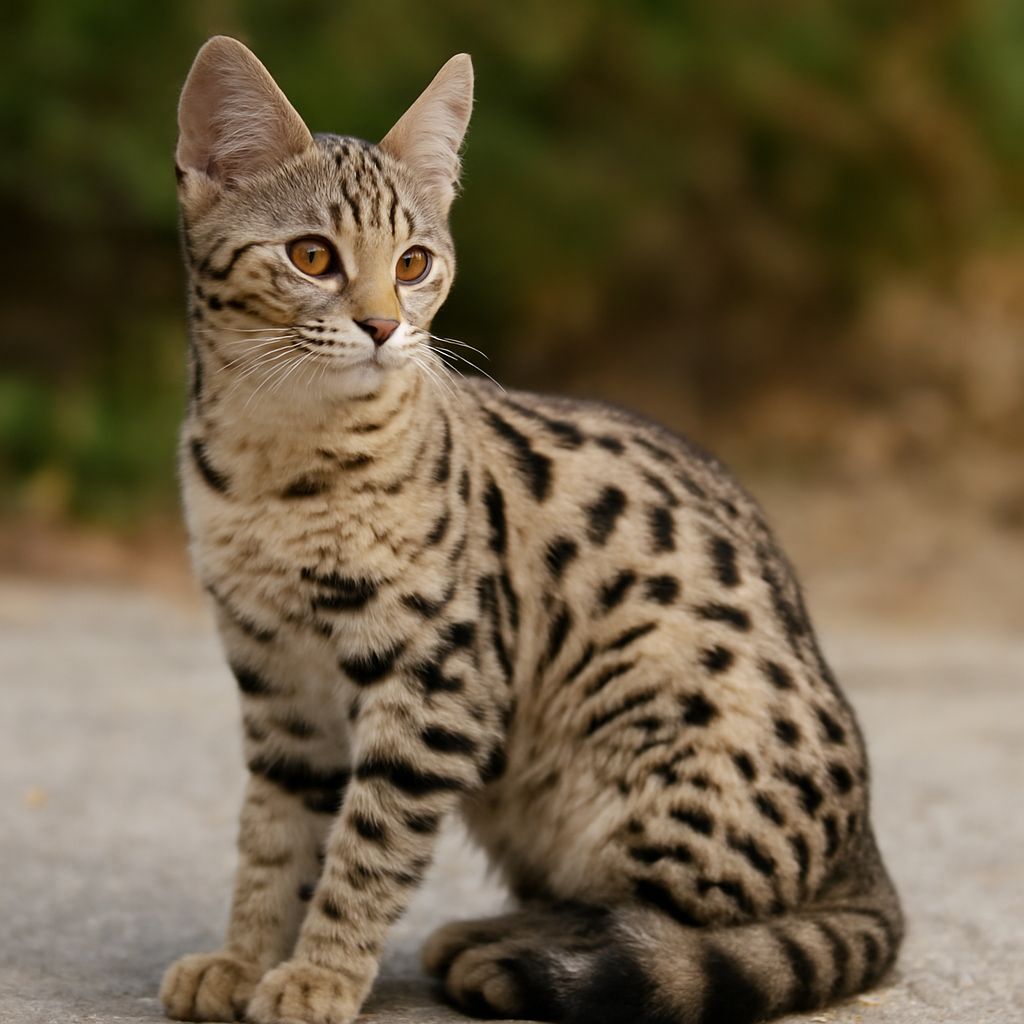
You’ve seen photos of a long-legged, spotted cat with the build of a small cheetah and the eyes of something wild, and now the idea of owning one has taken hold. The search for a savannah cat for sale is genuinely exciting, but it’s also a process with more steps and considerations than buying most other cat breeds. These animals are the result of crossing domestic cats with servals, a medium-sized African wild cat, and that hybrid lineage shapes everything from their temperament to their legal status in your state.
Whether you’ve been searching for savannah cats for sale for months or you just discovered the breed, there are things worth knowing before you put money down. A serval cat for sale and a Savannah cat are different animals entirely; the serval is a wild species, while the Savannah is a hybrid domestic breed. Similarly, serval cats for sale from exotic animal dealers operate in a completely different (and often legally murky) space from reputable Savannah breeders. Knowing where to buy a savannah cat safely is the most important question to answer first.
Savannah Cat Generations Explained
Savannah cats are classified by filial generation, noted as F1 through F7 and beyond. F1 Savannahs have a serval parent and are the closest to wild; they can be 50 to 75% serval. Each subsequent generation has less wild ancestry. F1 and F2 cats are significantly more challenging to own, require more space, are often louder, and may not be legal in your state or city. F4 and later generations behave much more like standard domestic cats while retaining the distinctive spotted appearance and athletic build.
Legal Considerations by Generation Savannah cat legality varies dramatically by location. F1 and F2 cats are banned or restricted in several states, including Georgia, Hawaii, and Massachusetts. Some cities have their own ordinances even within states where higher generations are legal. Before contacting any Savannah cat breeder, check your state and local laws for exotic or hybrid cat ownership. This isn’t a formality; it determines whether you can legally own the cat at all.
What to Expect from Different Generations
F3 through F5 Savannahs are the most commonly recommended for first-time Savannah owners. They retain the visual drama of the breed, including the long legs, spotted coat, and large ears, but have temperaments closer to highly active domestic cats. They tend to bond closely with their owners, enjoy water, and benefit from high-quality interactive play daily.
Finding a Reputable Savannah Cat Breeder
The most important factor when looking for savannah cats for sale is the quality and transparency of the breeder. TICA (The International Cat Association) registers Savannah cats and maintains a breeder directory. A breeder registered with TICA and willing to show you health testing documentation, kitten socialization practices, and parental records is a good starting point.
Red Flags to Watch For
- No health guarantees or genetic testing documentation
- Kittens available immediately with no waitlist (reputable breeders usually have waiting lists)
- Reluctance to let you visit the cattery
- Prices dramatically below market rate (F4 kittens typically start at $1,500 to $2,500)
- Claims of a “serval cat for sale” presented as if it’s the same as a Savannah
What Questions to Ask
Ask about the generation and percentage of wild blood, vaccination and health records, temperament testing, and what the breeder’s policy is if the cat develops health issues. A good breeder answers these questions easily and completely. One who deflects or gets defensive about any of them is worth moving on from.
Costs and Long-Term Considerations
Beyond the purchase price, Savannah cats require vertical space, enrichment, and more active daily engagement than a typical domestic cat. They don’t do well as solo animals in apartments where owners are gone all day. Many owners pair them with another active cat or a dog for companionship. Veterinary care sometimes requires finding a vet experienced with hybrid breeds, as standard dosing for some anesthetic agents differs for cats with significant serval ancestry.
Key takeaways: Knowing where to buy a savannah cat safely means going through TICA-registered breeders only, verifying your local legal requirements before committing, and choosing a generation that matches your lifestyle rather than the one with the most wild blood. The breed is rewarding for the right owner in the right situation.