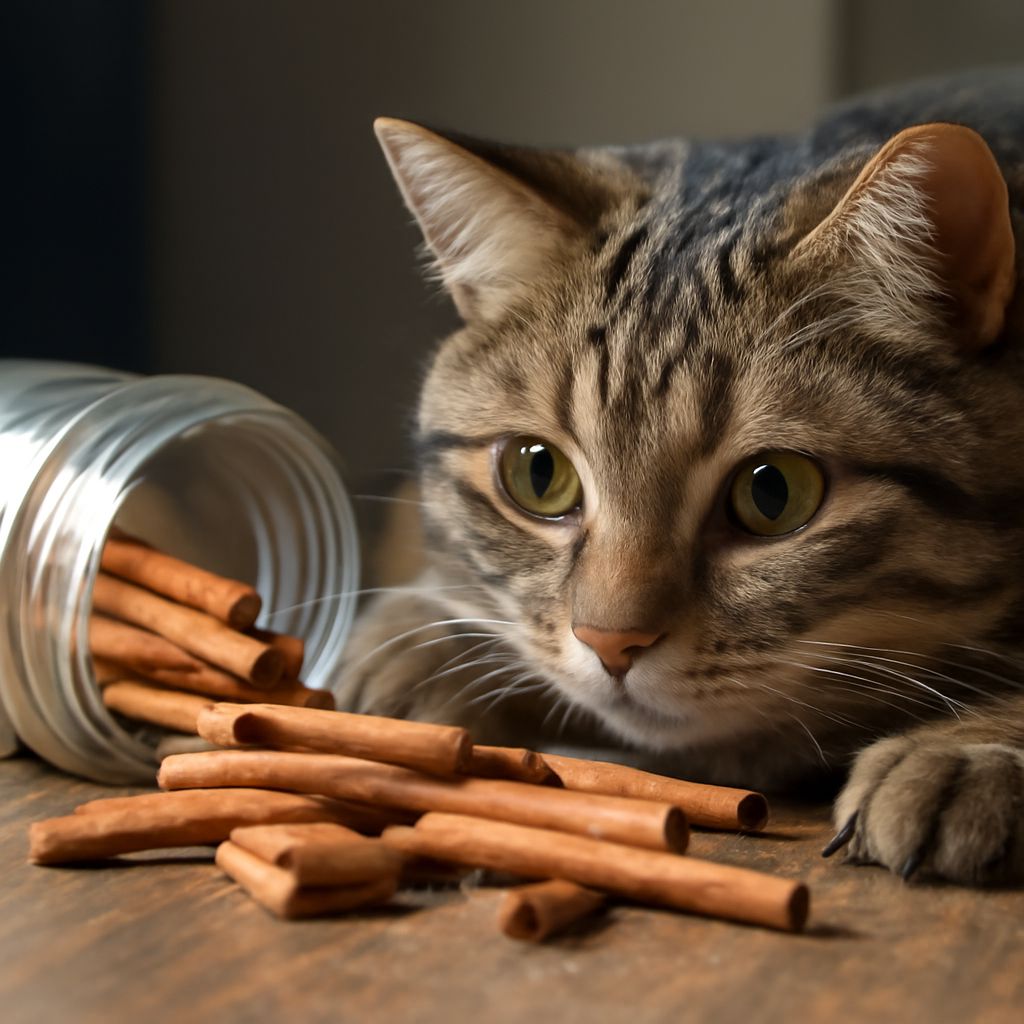
You’re baking a batch of cinnamon rolls on a Sunday morning when your curious feline leaps onto the counter and sniffs the jar of spice. In that moment, you may wonder: can cats eat cinnamon, or should you shoo your pet away immediately? Many cat owners face this same scenario without knowing the answer. Understanding whether is cinnamon safe for cats can help you react quickly and appropriately.
The world of cinnamon cats interactions is more nuanced than a simple yes or no. While a tiny incidental sniff is unlikely to cause harm, deliberate or repeated exposure raises real concerns. Knowing is cinnamon harmful to cats in various forms and amounts will empower you to protect your pet. The short answer to whether cinnamon is cinnamon safe for cats as a regular part of their environment: proceed with caution.
Is Cinnamon Safe for Cats? Understanding the Risks
Cinnamon contains compounds — including cinnamaldehyde and coumarin — that can be irritating or even toxic to cats depending on the form and amount. Unlike humans, cats lack certain liver enzymes needed to metabolize these compounds effectively, which makes their bodies more vulnerable to the spice’s effects.
What Makes Cinnamon Potentially Harmful to Cats Cinnamaldehyde, the primary active compound in cinnamon, is a known irritant for cats’ mucous membranes. Ingesting cinnamon in meaningful quantities can cause oral irritation, low blood sugar, liver disease, and vomiting. Even inhalation of cinnamon powder can trigger coughing and breathing difficulties in sensitive cats.
Types of Cinnamon and Their Relative Dangers Not all cinnamon is created equal. Ceylon cinnamon contains lower levels of coumarin compared to the more common Cassia variety found in most grocery stores. Cassia cinnamon poses a greater hazard to felines due to its higher coumarin concentration, which can stress the liver over time. Essential oil forms of cinnamon are especially dangerous — far more potent than the powdered spice.
How Much Cinnamon Is Too Much for a Cat Even small amounts of cinnamon can cause irritation, but the dose matters. A tiny lick of cinnamon-flavored food is far less concerning than a cat burying its nose in a spice jar. Cinnamon-scented candles or baked goods with trace cinnamon residue pose minimal immediate risk, but cinnamon oil, supplements, or large quantities of the powder can be genuinely hazardous.
Signs Your Cat Has Ingested Cinnamon Watch for these warning signs if you suspect your cat consumed cinnamon: drooling, pawing at the mouth, vomiting, diarrhea, low blood sugar symptoms (weakness, trembling), or difficulty breathing. Skin or eye contact with cinnamon oil can cause redness and irritation as well.
Practical Steps If Your Cat Gets Into Cinnamon
If your cat has gotten into cinnamon powder or a cinnamon-containing product, stay calm. Remove the source of exposure, rinse your cat’s mouth gently with water if possible, and monitor closely for symptoms. Do not induce vomiting unless specifically directed by a veterinarian.
When to Contact Your Veterinarian
Contact your vet or an animal poison control hotline any time your cat ingests more than a trace amount of cinnamon, has contact with cinnamon essential oil, or shows any symptoms of distress. Prompt guidance from a professional is always the safest path when cats and spices collide.
Safe Alternatives to Cinnamon for Cat-Friendly Treats
If you enjoy making homemade treats for your cat, stick to ingredients known to be safe for felines — plain cooked chicken, tuna, or vet-approved cat treats. Skip any human baking spices, including cinnamon, nutmeg, and allspice, which are all potentially harmful to cats.
Keeping Your Home Safe for Cinnamon Cats
Protecting cats from cinnamon exposure is mostly a matter of mindful storage and awareness. Keep spice jars sealed and stored in closed cabinets. Avoid using cinnamon essential oil diffusers in areas your cat frequents. Wipe down surfaces after baking with cinnamon to prevent paw contact. When shopping for pet-safe holiday decor or scented candles, check labels for cinnamon-derived ingredients.
Pro tips recap: Store all cinnamon products — especially essential oils — out of your cat’s reach. If your curious feline does make contact with cinnamon, monitor carefully and call your vet if any symptoms appear. Choosing cat-safe treats and scents keeps your home enjoyable for you without putting your feline companion at unnecessary risk.