
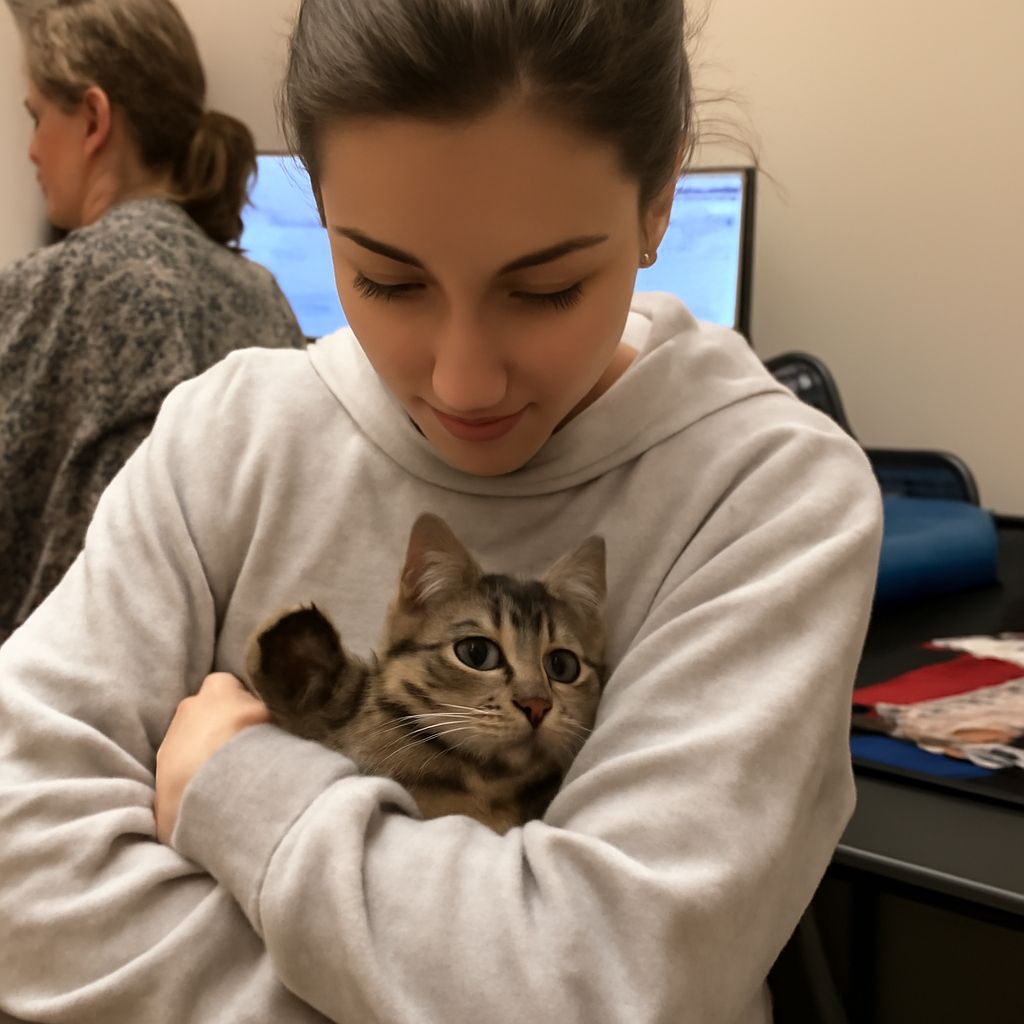
Your cat settles onto your lap after a stressful day, begins to purr, and almost immediately you feel your shoulders drop and your breathing slow. If you’ve ever noticed how reliably a purring cat seems to melt tension, you’ve experienced the cat purring effect on humans firsthand. This isn’t just wishful thinking — there’s a growing body of research exploring how feline vibrations influence human physiology and wellbeing.
The concept of cat purr healing dates back centuries in folklore, but modern science has begun to validate what cat owners have always instinctively sensed. Understanding the mechanisms behind cats purring healing properties helps explain why so many people report sleeping better, feeling calmer, and even recovering faster from illness when a cat is nearby. This guide explores what we know about cat purring healing — and how to take full advantage of what cats purr healing offers in daily life.
The Science of Cat Purring: How and Why Cats Purr
Before exploring the effects on humans, it helps to understand the mechanism itself. Purring is a uniquely feline form of communication that operates during both inhalation and exhalation — distinguishing it from most other animal vocalizations.
The Mechanics Behind a Cat Purr Cats purr by rapidly dilating and constricting the glottis — the part of the larynx surrounding the vocal cords — during both inhale and exhale cycles. This creates the characteristic continuous rumble. Domestic cats produce purring frequencies typically ranging from 25 to 150 Hz, with the most common range falling between 25 and 50 Hz. Notably, this frequency range overlaps with therapeutic vibration ranges used in sports medicine and physical therapy research.
Why Cats Purr: Communication and Self-Soothing
Cats purr in a variety of emotional states — not only contentment. They purr when nursing, when stressed, when in pain, and even when dying. This suggests purring serves multiple functions: social bonding with humans and other cats, self-soothing during discomfort, and potentially self-healing through vibrational stimulation of bone and muscle tissue.
Purring Frequency and Its Significance
Research in vibrational therapy has found that frequencies between 25 and 50 Hz can promote bone density and accelerate healing of soft tissue. The fact that domestic felines naturally produce vibrations in this range has led some researchers to theorize that purring evolved partly as a survival mechanism — a way for cats to maintain bone health and recover from injury during long periods of rest.
Cat Purring Effect on Human Health
The benefits of living with a purring cat extend beyond simple comfort. Research has linked cat ownership — and exposure to purring specifically — with measurable physiological benefits in humans.
Stress Reduction and Cortisol Levels
Studies have shown that interacting with cats reduces cortisol levels — the primary stress hormone — in humans. The rhythmic sound of purring activates the parasympathetic nervous system, promoting the rest-and-digest response that counters the fight-or-flight stress state. Cat owners report lower perceived stress during difficult periods, and the calming effect of a purring cat has been compared to the relaxation response produced by meditation and mindfulness practices.
Cardiovascular Benefits of Living With a Purring Cat A landmark study from the University of Minnesota found that cat owners had a 40% lower risk of dying from heart attacks compared to non-cat owners over a 10-year period. While cat purring is not the sole variable, researchers identified the calming presence of cats — including their purring — as a contributing factor in reduced cardiovascular stress responses. Lower blood pressure, reduced anxiety, and improved sleep quality all support cardiovascular health over time.
Bone and Tissue Healing Frequency Research
Several studies in orthopedic medicine have explored how vibration at 25–50 Hz promotes the production of bone-building cells and inhibits bone-degrading cells. While research directly linking cat purring to accelerated human healing remains limited, the biological plausibility is well-established. Some physical therapists have begun incorporating low-frequency vibration devices — operating in the cat’s natural purring range — into treatment protocols for bone healing and muscle recovery.
Maximizing the Healing Benefits of Your Cat’s Purr
You don’t need a laboratory to benefit from your cat’s purring. Spend deliberate time each day with your cat in physical contact — on your lap, beside you in bed, or held gently against your chest — to maximize vibration transmission. Create a calm, predictable environment that encourages your cat to purr rather than stay guarded: regular routines, quiet spaces, and positive interactions all increase purring frequency. For people who live alone or experience chronic stress, a purring cat companion has been shown to reduce feelings of loneliness and improve mood measurably. Allowing your cat to sleep near you provides continuous low-frequency exposure that many owners report improves sleep depth and reduces nighttime waking.
Key takeaways: The cat purring effect on humans is backed by both scientific research and centuries of lived experience — from measurable cortisol reduction to cardiovascular protection. Cat purring frequencies align with therapeutic vibration ranges associated with bone and tissue healing. Daily close contact with a purring cat is one of the simplest, most enjoyable wellness practices available to any cat owner.