Why Are Cats Afraid of Cucumbers? The Real Explanation
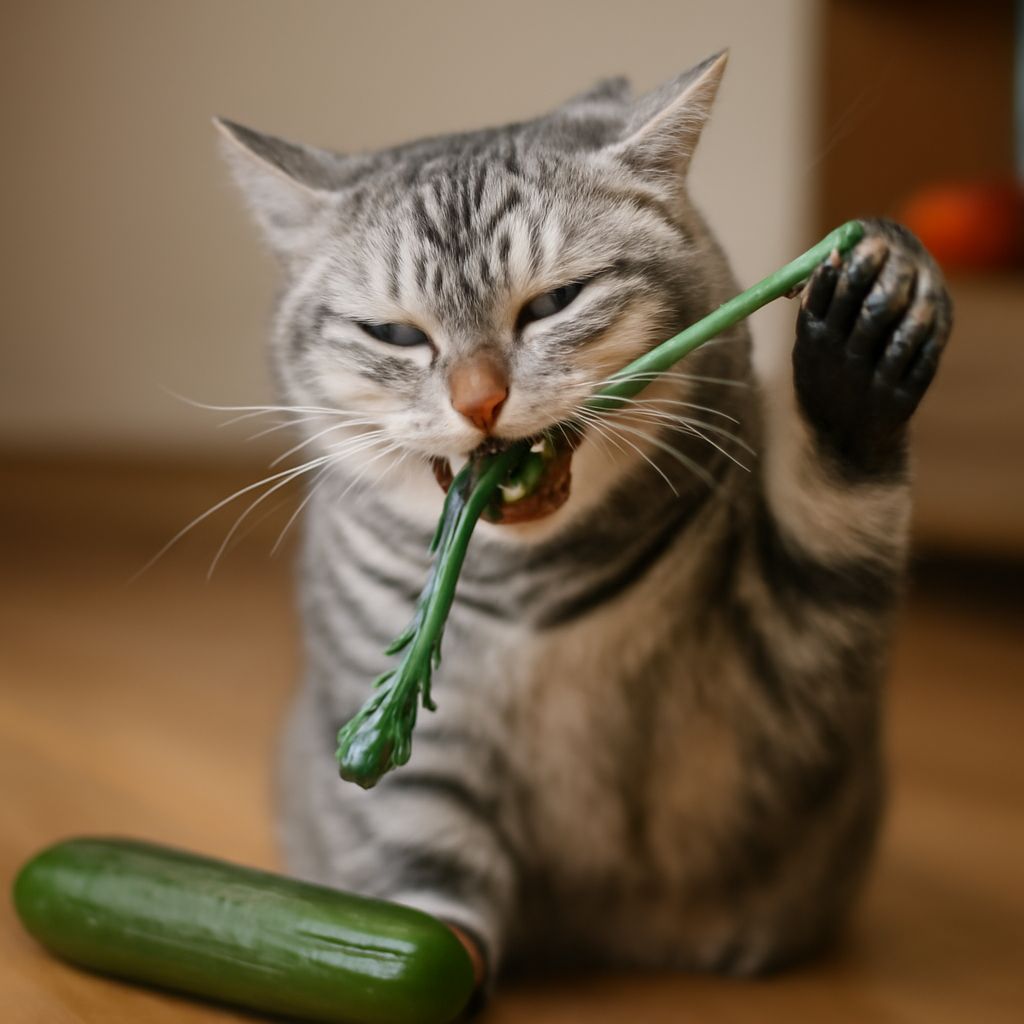
You’ve seen the videos — someone places a cucumber behind a cat while it’s eating, the cat turns around and leaps three feet into the air. It’s funny, but if you’re wondering why are cats afraid of cucumbers, the answer actually tells you something important about how cats process their world.
Are cats scared of cucumbers specifically? Not really — the cucumber is almost incidental. The real question is why do cats get scared of cucumbers placed quietly behind them. Understanding why cats scared of cucumbers react so dramatically is about instinct, not vegetable phobia. And why cats are afraid of cucumber, or anything else that appears suddenly without warning, comes down to something deeply wired into their survival behavior.
The Startle Response and Predator Instincts
It’s About Surprise, Not Cucumbers
Cats are both predators and prey animals. Their nervous systems are finely tuned to detect sudden changes in their environment. When a cat is absorbed in eating and turns around to find an unexpected object right behind it, the startle response fires immediately. The brain processes “unexpected large object near me” before it has time to identify “cucumber.”
The Snake Theory
One popular explanation is that the elongated shape of a cucumber triggers an innate fear response associated with snakes. While this is plausible — many mammals have hard-wired responses to snake-like shapes — it hasn’t been confirmed by controlled research. The simpler explanation is that any unexpected object would produce a similar reaction. Studies using other objects placed the same way have produced comparable startle responses.
Context Matters Enormously
Cats that discover a cucumber in an open area without the surprise element don’t react dramatically. They sniff it, ignore it, or walk away. The fear response in the viral videos depends on the shock of finding something where nothing was before, not on the cucumber itself.
Why You Shouldn’t Recreate This at Home
Stress Is Not Entertainment
Triggering a genuine startle response in a cat is stressful. Chronic stress in cats leads to real health problems including urinary issues, digestive upset, over-grooming, and suppressed immunity. The fact that something is amusing to watch doesn’t mean it’s harmless to do.
The Food Bowl Is a Vulnerable Moment
Cats feel most exposed while eating. Disrupting this moment repeatedly can cause a cat to become anxious around its food area, eat less, or develop guarding behaviors. This is particularly damaging in multi-cat households where competition already creates tension.
Trust Takes Time to Rebuild
If your cat associates its feeding spot with unexpected frights, that anxiety lingers. Cats remember stressful events and may become more generally reactive or withdrawn. The damage from seemingly minor stress events accumulates.
Bottom Line
Cats aren’t specifically afraid of cucumbers — they’re startled by unexpected objects appearing in their space, and the cucumber just happened to be what’s handy. Respect your cat’s instincts by keeping its environment predictable, especially around food and rest areas. A calm cat is a healthy cat.