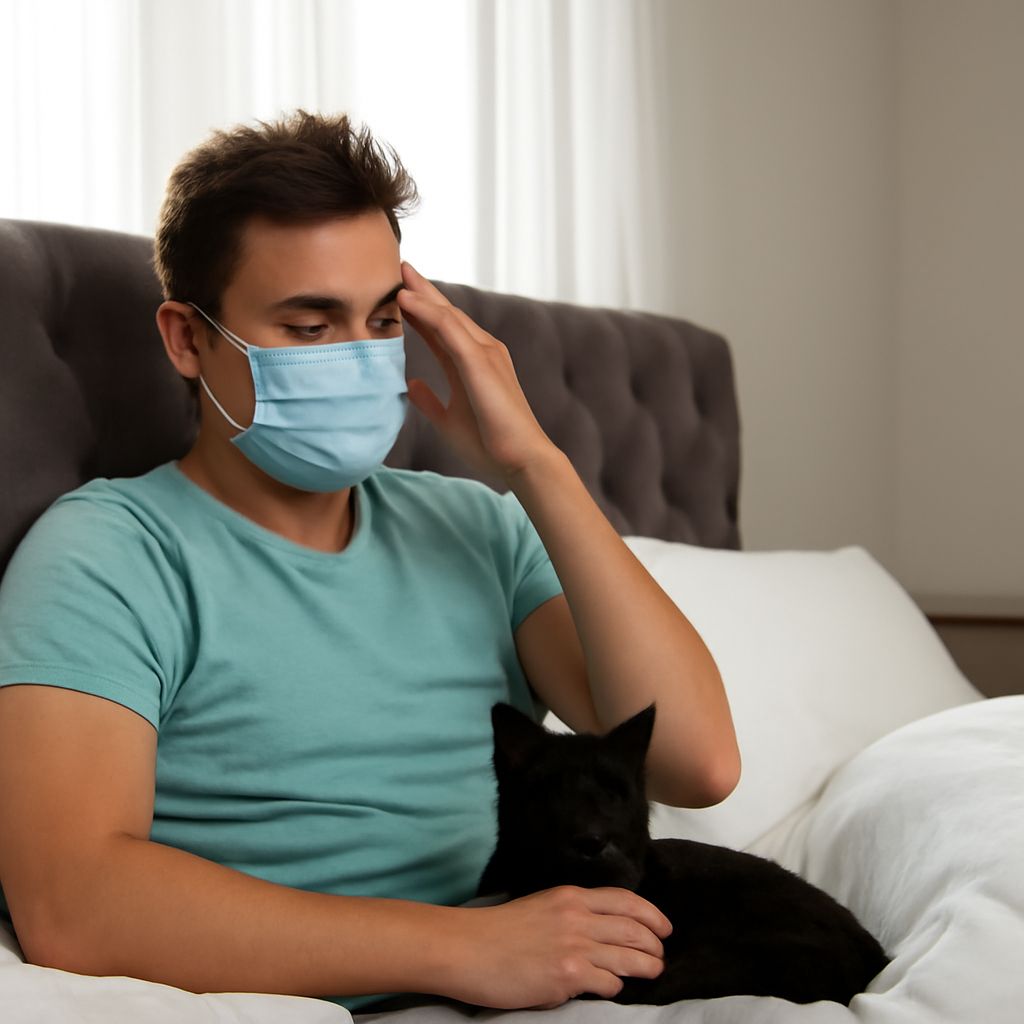
You’re down with a bad cold, sneezing into tissues every few minutes, and your cat keeps climbing onto your lap. You start wondering: can cats get sick from humans? The concern is reasonable, and the answer is more nuanced than a simple yes or no.
Can I get my cat sick? In most cases, the cold and flu viruses that affect humans are species-specific — they evolved to infect human cells, not feline ones. Can a cat catch a cold from a human in the traditional sense? Usually not. But the question of can I get my cat sick if I’m sick involves a few documented exceptions worth knowing. And can a cat catch a human cold at all? Mostly no, but there are a handful of pathogens where zoonotic transmission going the other direction — or rarely, in either direction — is possible.
Species Barriers and Why They Matter
How Disease Transmission Works
Most viruses and bacteria are adapted to specific host species. The rhinovirus responsible for the common cold has receptors it needs to latch onto that exist in human respiratory cells but not feline ones. This is why your cat is safe from your standard head cold. Influenza is more complex — certain strains have shown limited transmission to cats in research settings, but this is rare under normal household conditions.
Exceptions to Watch
A small number of pathogens can cross species. MRSA (methicillin-resistant Staphylococcus aureus) can pass between humans and cats, typically through direct contact with infected wounds or skin. H1N1 influenza has been documented in cats exposed to sick owners. These cases are rare but real. If you have a confirmed serious or unusual illness, basic hygiene — washing hands before handling your cat, avoiding face contact — is sensible.
Protecting Your Cat When You’re Ill
Practical Steps That Help
- Wash hands before and after handling your cat
- Avoid letting your cat lick your face when you’re unwell
- Cover coughs and sneezes, even around pets
- If you have a confirmed zoonotic illness, ask someone else to care for the cat temporarily
What to Monitor in Your Cat
If your cat develops sneezing, nasal discharge, lethargy, or reduced appetite around the same time you’ve been ill, mention it to your vet. Feline upper respiratory infections are common and usually caused by feline-specific pathogens, but ruling out anything unusual is worthwhile after a known illness in the household.
Reverse Transmission: Can Cats Make You Sick?
The reverse direction — zoonotic diseases from cats to humans — is more established. Cat scratch disease (from Bartonella bacteria), ringworm, toxoplasmosis, and certain intestinal parasites can all pass from cats to people. Immunocompromised individuals face higher risk. Regular vet care, parasite prevention, and basic hygiene protect everyone in the household in both directions.