Cat Throwing Up White Foam: Causes and What to Do
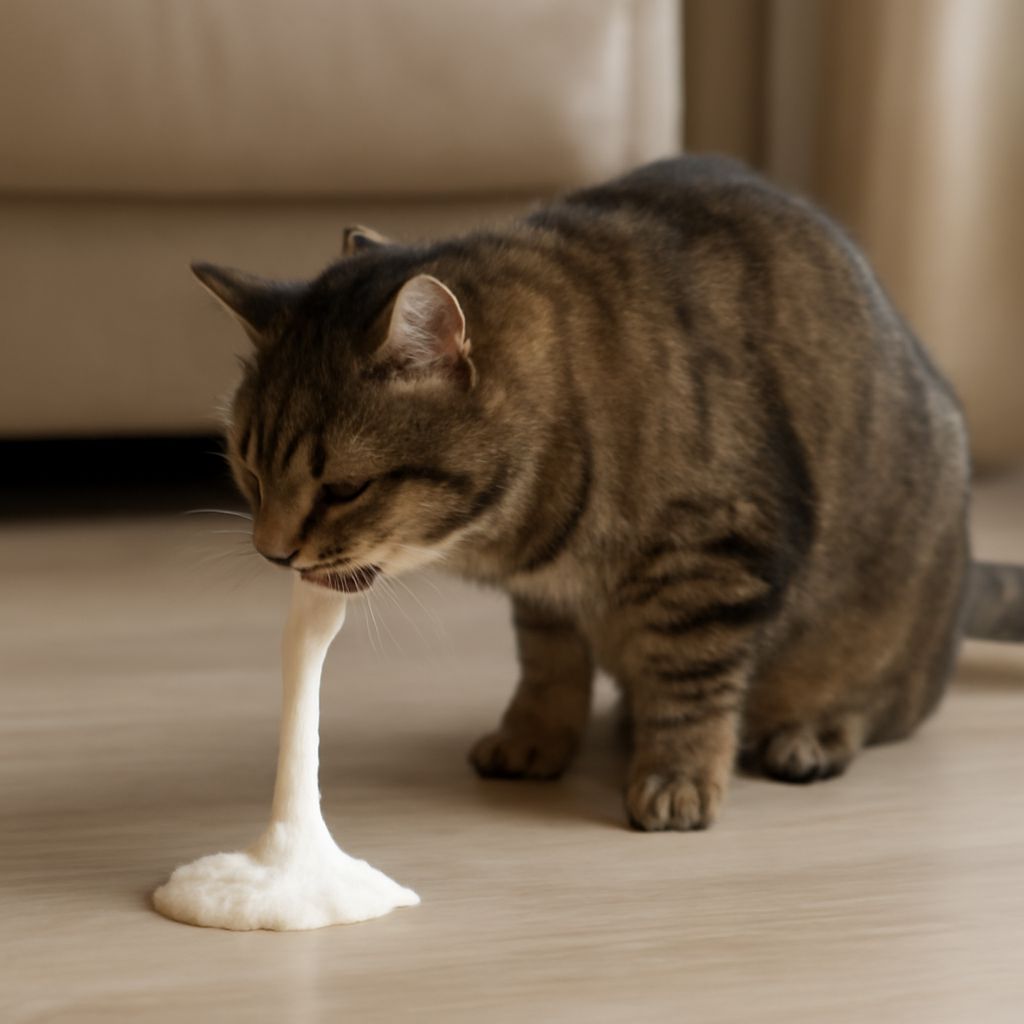
You come downstairs to find a small pile of white, frothy material on the kitchen floor and your cat sitting nearby looking mildly offended. A cat throwing up white foam once in a while is not automatically a crisis, but it is worth understanding what drives it and when to take action.
Cat vomiting white foam looks different from food-based vomit — it’s light, airy, and often happens on an empty stomach. A cat puking foam occasionally, particularly first thing in the morning, may simply be dealing with excess stomach acid. But cat foamy vomit that happens repeatedly or includes other symptoms is a different matter. Knowing what normal cat vomit foam looks like versus a pattern that needs veterinary attention helps you respond appropriately.
Why Cats Vomit White Foam
Bilious Vomiting Syndrome
When a cat’s stomach sits empty for too long, stomach acid and bile accumulate and irritate the lining. The result is white or yellow foam vomiting, often first thing in the morning before breakfast. Feeding smaller, more frequent meals or offering a small snack before bed often resolves this.
Hairballs
A cat in the process of bringing up a hairball may produce white foam before or after the actual mat of hair comes up. If foam appears frequently without any hair, something else may be going on.
Gastritis and Stomach Upset
Eating something irritating, switching food too quickly, or stress can cause acute gastritis. Foam vomiting from gastritis is usually short-lived. Withholding food briefly and reintroducing it slowly often helps.
Inflammatory Bowel Disease
Chronic foamy vomiting combined with weight loss, poor coat quality, or changes in appetite can indicate IBD. This condition requires diagnosis through bloodwork, imaging, and sometimes intestinal biopsy.
Other Medical Causes
Kidney disease, hyperthyroidism, pancreatitis, and intestinal obstruction can all produce vomiting. When a cat pukes foam alongside lethargy, blood in the vomit, or refusal to eat, a vet visit is needed promptly.
When to Call the Vet
A single episode on an otherwise normal cat can be monitored at home. Contact your vet if:
- Vomiting happens more than twice in 24 hours
- You see blood in the foam
- The cat is lethargic, not eating, or hiding
- Vomiting has been going on for more than two days
- The cat is losing weight or showing other symptoms alongside the vomiting
Next Steps
If foamy vomiting is a new pattern for your cat, start by tracking frequency, timing, and what came before each episode. Feed smaller, more frequent meals and make sure fresh water is always available. If you suspect bilious vomiting, try a small pre-bedtime meal. For anything beyond occasional or clearly stress-related vomiting, a vet visit with that observation log in hand will give your vet the most useful information to work with.