asthma in cats: Symptoms, Causes, and Care Options
You watch your cat crouch low, neck extended, sides heaving, and you’re not sure if they’re trying to cough up a hairball or if something more serious is happening. Asthma in cats looks a lot like the former, which is why it often goes unrecognized for months. The difference matters because untreated feline asthma can cause permanent airway damage over time.
Cat asthma symptoms range from mild to severe, and some cats have episodes so brief that owners never notice them. Can cats get asthma is a question vets hear often, and yes, they absolutely can. Cats asthma affects an estimated 1 to 5 percent of all domestic cats, making it one of the more common respiratory conditions in the species. Understanding asthma cats present with helps you recognize an episode and respond appropriately.
How to Recognize cat asthma symptoms
The Classic Episode
A cat mid-asthma attack typically crouches low with neck extended and elbows flared slightly outward. Breathing is rapid and labored, sometimes with an audible wheeze or whistle. The episode may last 30 seconds to several minutes. Afterward, the cat often recovers completely and acts normal, which makes it easy to dismiss as a one-time hairball attempt. If you see this posture more than once or twice, it warrants investigation.
Chronic Mild Symptoms
Not all cats with airway inflammation have dramatic episodes. Some cats with asthma cough occasionally, breathe slightly faster than normal, or tire more quickly during play. These mild signs can persist for months before owners connect them to a respiratory condition. If your cat’s exercise tolerance seems reduced or you notice occasional coughing that produces nothing, mention it at the next vet visit.
Differentiating from Hairballs
Both produce similar postures, but the outcomes differ. A successful hairball attempt produces a cylindrical tube of fur. An asthma episode produces nothing. If your cat repeatedly crouches in the hairball position and brings up nothing, and especially if the episodes are getting more frequent, feline asthma is more likely than a stuck hairball.
Diagnosing and Treating Asthma in Cats
How Vets Diagnose It
Diagnosis typically combines chest X-rays and a physical examination with history from the owner. X-rays in cats asthma cases show characteristic changes to the airway walls, sometimes an overinflated appearance to the lungs. Bloodwork rules out infection. A bronchoscopy is occasionally used for complex cases. The goal is to confirm the diagnosis before starting long-term treatment.
Inhaled Corticosteroids
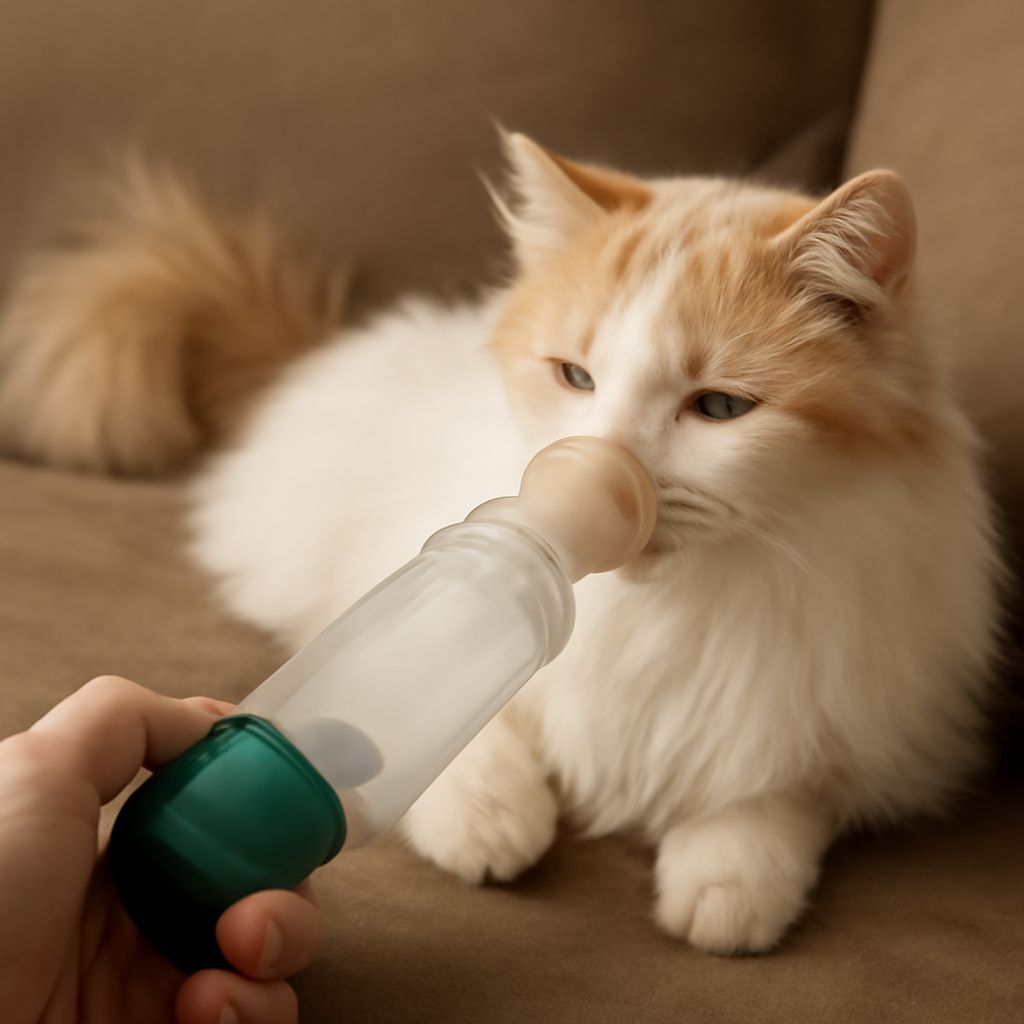
The preferred treatment for most cats with asthma is inhaled corticosteroids delivered through a feline-specific spacer device called an AeroKat. This approach delivers medication directly to the airways with minimal systemic absorption, which matters for long-term safety. Most cats adapt to the spacer mask within a few training sessions using treats and positive reinforcement.
Rescue Bronchodilators
For acute episodes, short-acting bronchodilators like albuterol can open the airways quickly. These are also administered via inhaler and spacer. Having a rescue inhaler on hand for severe episodes provides reassurance and reduces emergency vet visits. Discuss with your vet whether a rescue inhaler is appropriate for your cat’s situation.
Environmental Management
Reducing airway triggers is as important as medication. Dusty clay litters, aerosol sprays, candles, incense, plug-in air fresheners, and cigarette smoke all worsen feline asthma. Switch to a low-dust unscented litter, use unscented cleaning products, and keep the home well-ventilated. These changes often reduce episode frequency even before medication takes full effect.
Next Steps
If you suspect your cat has asthma, record any episodes on video to show your vet. This often makes diagnosis faster since the posture and breathing pattern are more informative than any verbal description. Schedule a dedicated respiratory evaluation rather than mentioning it as an afterthought at a routine checkup. Early diagnosis and consistent management keep most asthmatic cats comfortable and active for years.