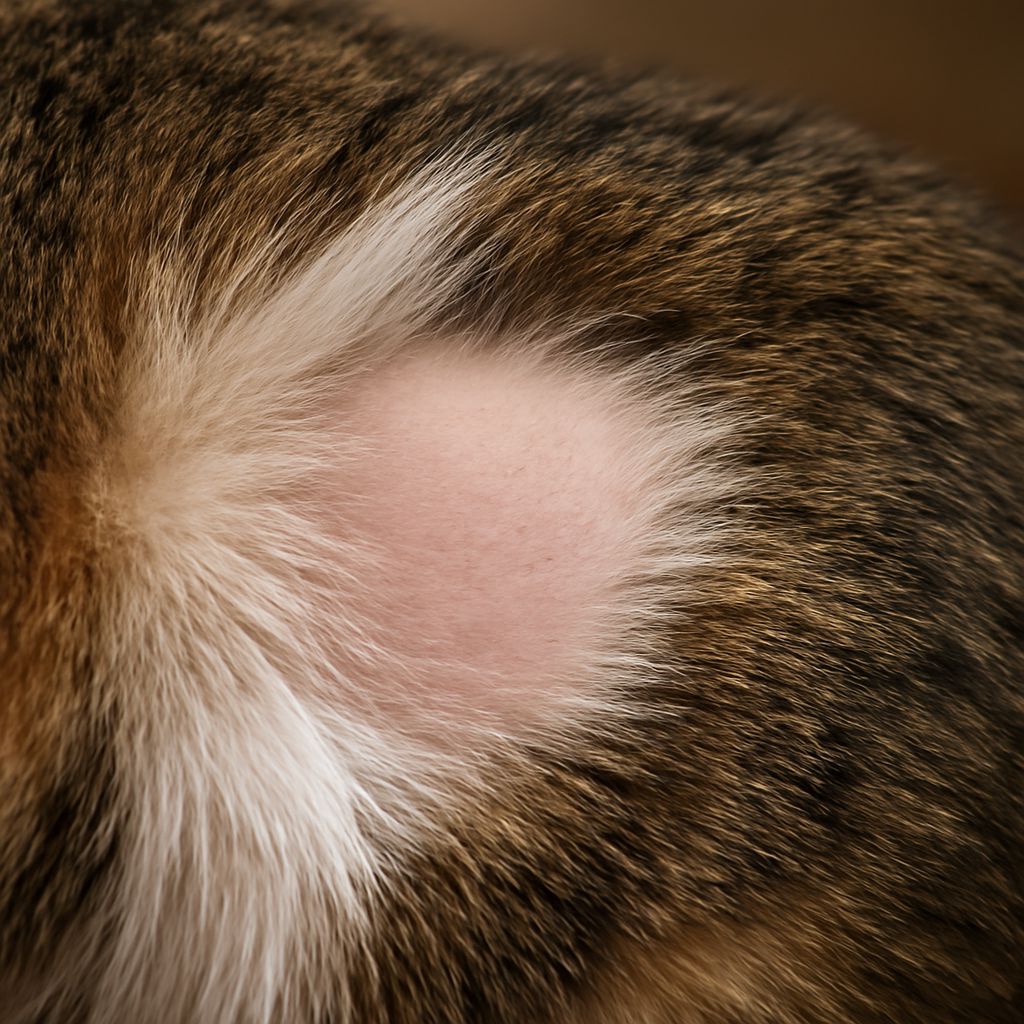
Cat Bald Spot: Why Is Your Cat Losing Hair and What to Do
You’re stroking your cat when your fingers suddenly trace an unexpected patch of bare skin. Finding a cat bald spot can be alarming, especially when you notice the area is growing or your pet seems uncomfortable. Hair loss in cats is rarely cosmetic — it almost always reflects something happening internally or environmentally that deserves attention.
Whether you’ve noticed your cat losing hair on back legs, a thinning patch near the tail base, or a smooth bald area on the abdomen, each location offers important clues. Asking why does my cat have bald spots is the right starting point. This guide walks through the most common causes of cat losing fur on belly and cat losing fur on back legs, and explains when it’s time to seek veterinary care.
Common Causes of Cat Bald Spots
Feline hair loss — also called alopecia — can stem from a wide range of causes. Some are highly treatable; others require ongoing management. Identifying the root cause is essential before any treatment can be effective.
Parasites: Fleas, Mites, and Ringworm
Parasitic infestations are among the most frequent causes of patchy fur loss in cats. Flea allergy dermatitis causes intense itching that leads to excessive scratching and subsequent hair thinning, particularly at the base of the tail and on the back legs. Mange mites burrow into the skin, creating scaly, hairless patches. Ringworm — a fungal infection despite its name — produces circular, bald areas often accompanied by a crusty ring at the edge.
Allergies and Skin Irritation
Environmental allergens, food sensitivities, and contact irritants can all trigger skin reactions that lead to over-grooming and bald patches. Cats with food allergies often develop hair thinning around the face, neck, or abdomen. Dust mites, pollen, or cleaning product residue on floors may irritate paws and legs, prompting repeated licking that strips the fur away over time.
Stress and Over-Grooming in Cats
Psychogenic alopecia — hair loss driven by stress or anxiety — is surprisingly common in domestic cats. An over-grooming cat will lick, chew, and pull out its own fur compulsively in response to environmental stressors such as a new pet, moving homes, or changes in routine. The resulting bald areas typically appear on the belly, inner thighs, or flanks — wherever the cat can easily reach.
Hormonal Imbalances and Medical Conditions
Hyperthyroidism, Cushing’s disease, and other hormonal disorders can disrupt the normal hair growth cycle, producing symmetrical fur thinning across large body areas. These conditions are more common in middle-aged and senior cats and typically require blood testing to diagnose accurately.
Location Clues: What Bald Patches Tell You
Where on your cat’s body the hair loss appears can help narrow down the most likely cause. Veterinarians pay close attention to the location and pattern of alopecia as part of diagnosis.
Why Cats Lose Hair on the Back Legs
A cat losing hair on back legs is often linked to flea allergy dermatitis or excessive self-grooming driven by irritation in that region. Arthritis or pain in the hips or lower back can also cause a cat to lick its back legs obsessively, mistakenly attributing discomfort to the area above. Sparse fur on the hind limbs of older cats may also reflect natural age-related coat thinning.
Fur Loss on the Belly: Causes and Signals
The belly is the most common site for stress-related over-grooming. If your cat’s abdomen is losing fur but the skin beneath looks otherwise healthy, anxiety or boredom is a likely contributor. Inflamed or red skin underneath the thinning fur points more toward an allergic or parasitic cause.
Symmetrical vs. Patchy Hair Loss
Symmetrical hair loss — appearing equally on both sides of the body — typically indicates a hormonal or internal medical cause. Patchy, asymmetrical bald areas are more consistent with parasites, ringworm, or localized skin infections. This distinction is one of the first things a vet will observe during a physical examination.
When to See a Vet and How Hair Loss Is Treated
Any bald spot that is growing, accompanied by redness, crusting, bleeding, or behavioral changes warrants a veterinary visit. Even if your cat seems otherwise healthy, progressive hair loss can indicate an underlying condition that benefits from early intervention. Your vet may perform skin scrapings, fungal cultures, allergy testing, or blood panels to reach a diagnosis.
Treatment varies by cause: antiparasitic medications for fleas and mites, antifungal therapy for ringworm, dietary changes or elimination trials for food allergies, and environmental enrichment or anti-anxiety support for stress-related grooming. Hormonal disorders are typically managed with medication and ongoing monitoring.