Cat Perch: Choosing the Best Elevated Spot and Cat Tree Carpet for Your Home
You set up a brand-new cat perch by the window, and within minutes your cat claimed it as their undisputed territory. That elevated vantage point satisfies some of the deepest feline instincts — the need to observe, to feel safe above ground level, and to survey the world on their own terms. Whether you are shopping for standalone cat perches, a multi-level tower, or trying to decide on the best carpet for cats in terms of durability and claw resistance, the choices you make directly affect how much your cat actually uses the furniture you buy.
Understanding what makes a perch genuinely appealing — height, stability, surface texture, and cat tree carpet quality — helps you invest in something your cat will use every day rather than ignore after the novelty wears off.
Why Cats Need a Good Perch
In the wild, cats instinctively seek high ground for safety and hunting advantage. A cat perch inside the home fulfills the same psychological need. Cats with access to elevated resting spots show lower stress levels, are less likely to engage in territorial conflicts with other pets, and tend to use their claws on appropriate surfaces rather than furniture.
A well-placed perch near a window also provides environmental enrichment — watching birds, squirrels, or street activity keeps indoor cats mentally stimulated. This is especially important for cats that spend most of their time inside.
Perch vs. Cat Tree: Which Is Right for You
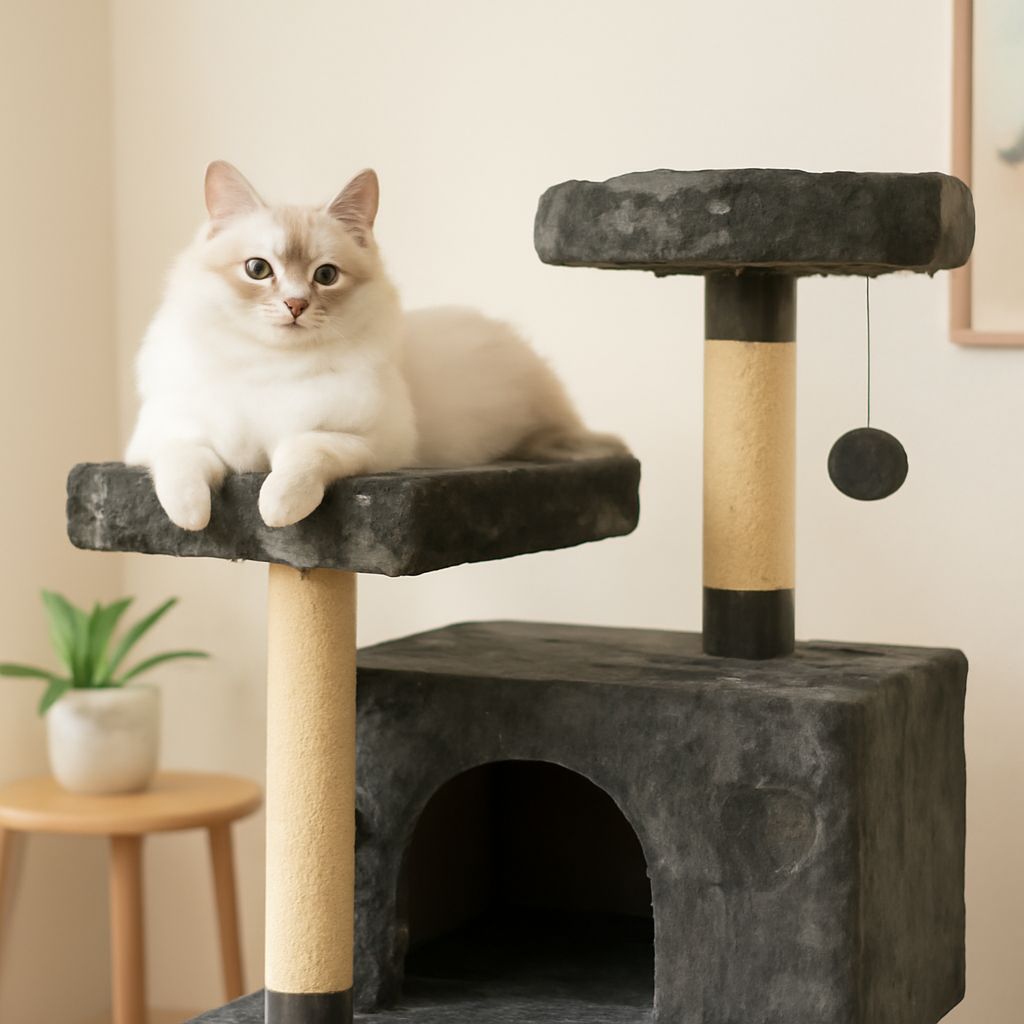
A single cat perch — whether wall-mounted, window-mounted, or freestanding — works well for apartments and smaller homes. Multi-level cat trees with multiple cat perches built in suit households with more than one cat or cats with very high energy. Consider your space, your cat count, and your budget before choosing.
Types of Cat Perches and Mounting Options
Cat perches come in several configurations. Wall-mounted perches attach directly to the wall using brackets and can be arranged at multiple heights to create a climbing path. These are space-efficient and sturdy, but require drilling into walls. Window perches attach to the glass or window frame using suction cups or clamps, giving cats a bird-watching station without using floor space. Freestanding cat perches are versatile and portable but must be heavy enough at the base to resist tipping when your cat jumps on them.
When evaluating cat perches, weight capacity matters. Most domestic cats weigh eight to fifteen pounds, but heavier breeds like Maine Coons can exceed twenty. Always check the manufacturer’s listed weight limit before purchasing.
Stability and Safety
A perch that wobbles or tips is both useless and dangerous. Test any freestanding perch by pressing firmly on the platforms before letting your cat use it. Wall-mounted options should be secured into studs whenever possible. For window perches using suction cups, check the attachment points weekly — suction can weaken over time.
Choosing the Best Carpet for Cat Trees
The surface covering of a cat tree perch affects both appeal and longevity. The best carpet for cat trees is dense, looped pile rather than cut pile — looped fibers are more resistant to snagging and pulling from claws. Sisal is often used alongside or instead of carpet and provides an excellent scratching surface that cats naturally prefer.
When evaluating the best carpet for cats in general — both on cat furniture and in your home — look for commercial-grade nylon with tight weave and high stain resistance. Polypropylene (olefin) is another good option: it is naturally stain-resistant and cleans easily, though cats with very active scratching habits will wear it faster than nylon.
Cat tree carpet color matters less than texture, but darker tones show cat hair less prominently. Replaceable carpet panels — offered by some manufacturers — extend the life of the cat tree significantly; when the surface wears out, you swap the panel rather than buying a new tree entirely.
Replacing Worn Cat Tree Carpet
Signs that cat tree carpet needs replacement include visible fraying, exposed foam or wood underneath, or your cat avoiding the surface. Replacement carpet kits are available online cut to standard sizes, and most can be secured with a hot glue gun for a simple DIY repair.
Maintaining Your Cat Perch Long-Term
Regular maintenance extends the life of any perch and keeps it hygienic. Vacuum the carpet surface weekly to remove loose fur and debris. Spot-clean stains with a pet-safe enzyme cleaner — avoid harsh chemical cleaners that can leave residues your cat might ingest during grooming. Check all screws, bolts, and mounting hardware monthly and tighten anything that has loosened.
Pro tips recap: Place your cat perch near a window for maximum enrichment value. Choose looped or sisal surfaces for the best carpet for cat tree durability. Verify weight capacity before purchase, and inspect mounting points monthly to keep the structure safe. A well-maintained perch is a perch your cat will actually use for years.