
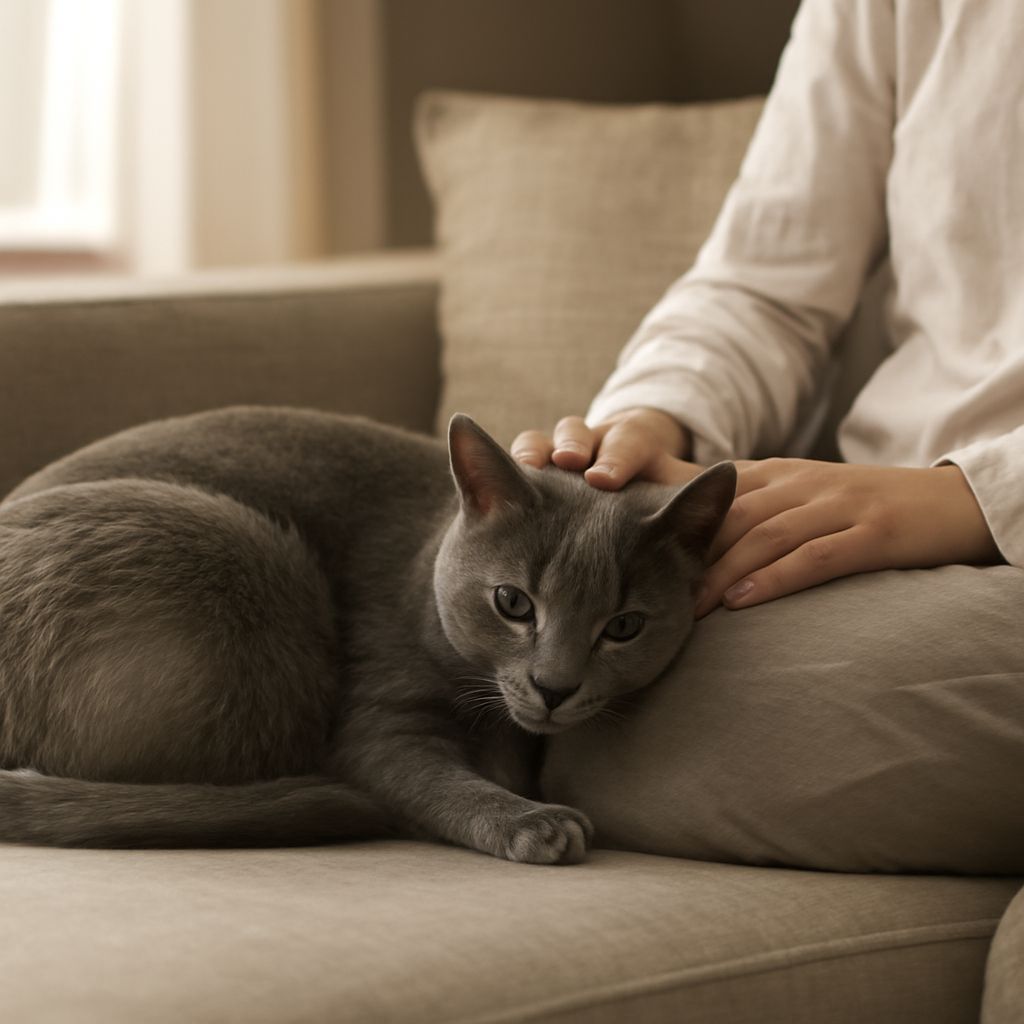
A cat crosses a sunny room and its gray coat seems to catch a silver light. For someone considering a blue-coated Russian cat, that soft shimmer is memorable. The more useful question for daily life is how the animal feels about a busy household, a predictable dinner hour and a person who wants to share the sofa.
Blue Russian Cat: Understanding the Name and Coat
The Russian blue cat breed has a short, dense double coat with silver-tipped hairs. In cat terminology, “blue” describes a shade of gray, not the color of the sky. The International Cat Association describes the breed’s green eyes and plush coat, which stands away from the body and gives the fur its distinctive texture.
A blue Russian cat can resemble other gray shorthaired cats, so coat color and green eyes alone cannot establish a pedigree. Ask for registration and ancestry records if documented breed identity matters to you, and check that the details match the individual cat. A Russian grey cat with an unknown family tree may be a lovely companion, whatever its ancestry.
A Quiet Observer With a Playful Side
Russian blue cats are often described as affectionate with familiar people and reserved with strangers. That can look like a cat sitting on a high shelf while visitors arrive, quietly considering the situation before coming down. Another may walk straight into the room and inspect everyone’s shoes. Ask the current caretaker how the individual responds to new people, handling and time alone.
A reserved greeting does not tell you everything about a relationship. Give the cat a choice of hiding places and let it approach visitors on its own. Ask guests to sit quietly, avoid reaching into its hiding spot and offer a toy at a comfortable distance. If it stays away, let that be an acceptable answer for the afternoon.
The same thoughtful approach helps with children. Teach them to notice when a cat turns away, crouches or leaves, and to allow an undisturbed retreat. A calm home may suit an individual who takes time to adjust; a busier family can still be a good match when it provides quiet spaces and respects the cat’s boundaries.
Games That Reward Curiosity
Blue Russian cats often enjoy climbing, retrieving and puzzle toys. Try placing a sturdy perch near a window, with a clear route up and down. From there, a cat can watch the neighborhood without being expected to attend its meetings. Secure the perch and nearby furniture so a jump does not send anything toppling.
For play, move a wand toy across the floor or behind a chair and let the cat stalk and catch it. Some individuals enjoy fetching a small toy; others prefer a food puzzle or a box with a toy hidden inside. Offer a few short sessions and watch which game brings the cat back for another turn. Put string toys away when play is over.
A Russian shorthair cat, like any kitten or adult, needs opportunities to explore safely. Kittens especially benefit from frequent play and supervision. Protect cords, remove hazardous plants and small objects, and provide scratching surfaces. Older cats can continue to play at a gentler pace. If a cat suddenly avoids a favorite jump or game, ask a veterinarian about the change instead of assuming it has simply lost interest.
Building a Comfortable Routine
The International Cat Association notes that these cats often appreciate structure. Serve measured meals at roughly consistent times and set aside time for interaction when you are home. An eager request for a second breakfast can be charming, especially when delivered with professional confidence. Agree on portions with your veterinarian and make sure everyone in the household knows when the cat has already eaten.
Provide fresh water, a clean litter box in a quiet, accessible location and a comfortable place to sleep. If you have other animals, introduce them gradually: begin with separate spaces, exchange bedding and proceed to short supervised meetings when both are settled. Each needs its own access to food, water, litter and rest without having to pass the other.
Regular gentle combing helps remove loose hair from a dense coat and gives you a chance to notice skin changes. Whether your Russian gray cat has a documented pedigree or an unknown background, use a soft brush and stop if the cat becomes uncomfortable. Trim nails as needed, offer a scratching post and ask your veterinarian about a toothbrushing routine using cat-safe toothpaste. Keep preventive appointments and share changes in appetite, activity or litter-box habits with the vet.
A move, a new work schedule or the arrival of another pet may change what feels comfortable. Keep the familiar parts of the day steady, introduce changes gradually and observe whether your cat still eats, plays and rests normally. Adjust the amount of company, play and quiet space to the individual over time; its own habits will tell you more than a perfect daily schedule on paper.