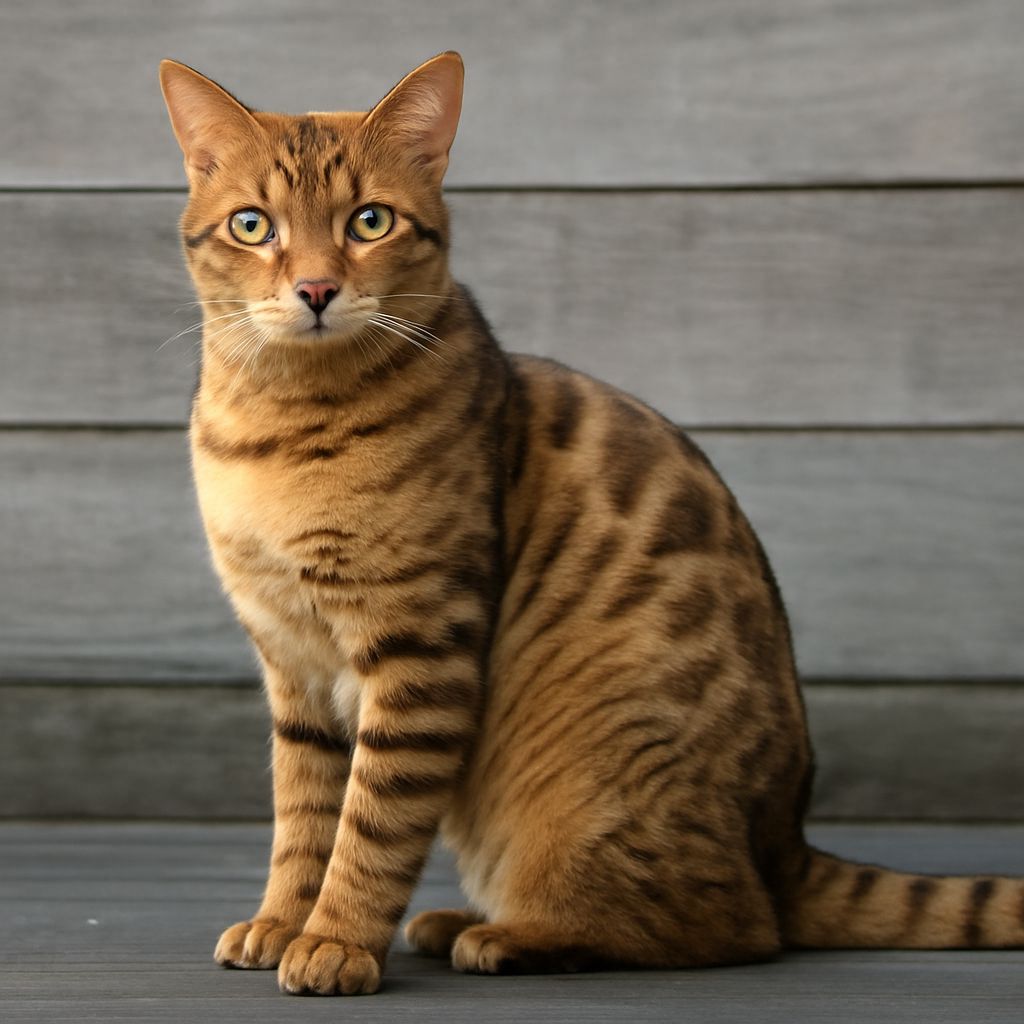
You’ve probably looked at your cat stretched across the windowsill and noticed something ancient in those eyes. That’s not your imagination. Domestic cats share ancestry with a wide range of wild relatives, and exploring the different types of wild cats shows just how varied the family tree really is. From massive apex predators to small, secretive forest hunters, the diversity is remarkable.
This wild cats list covers species from every continent except Antarctica and Australia, ranging from the iconic to the obscure. Whether you’re curious about the names of wild cats you’ve seen in documentaries, or you want to understand the type of wild cats that live closest to where you are, this guide gives you a solid foundation. The species of wild cats alive today number around 38, and each has adapted to fill a specific ecological role.
The Big Cats: Familiar Icons
Lion
Lions are the only truly social wild cats, living in prides of related females with a coalition of males. Found across sub-Saharan Africa and a small population in India’s Gir Forest, lions are among the most recognizable of all wild cat types. Males weigh up to 250 kg; females do most of the hunting.
Tiger
The tiger is the largest species of wild cats alive today. Nine subspecies existed historically; three are now extinct. The remaining six — Bengal, Amur, South China, Sumatran, Indochinese, and Malayan — all face varying degrees of threat. Tigers are solitary ambush predators built for dense forest hunting.
Leopard
Leopards are the most adaptable of the big cats. Their range stretches from sub-Saharan Africa into South and Southeast Asia. Among the different types of wild cats, leopards are notable for their ability to thrive near human settlements, hoisting prey into trees to keep it from scavengers.
Jaguar
The jaguar is the largest cat in the Americas and the only big cat in the Western Hemisphere capable of a true roar. Jaguars have the strongest bite relative to size of all wild cat species, capable of crushing turtle shells and piercing caiman skulls.
Snow Leopard Snow leopards live across the high mountain ranges of Central Asia. Unlike other big cats, they cannot roar — instead they produce a haunting sound called a chuff or prusten. Their thick tail, nearly as long as their body, doubles as a blanket in extreme cold.
Cheetah
The cheetah holds the speed record among all land animals, reaching 70 mph in short bursts. Unlike all other big cats, cheetahs cannot retract their claws fully, which gives them traction like running spikes. They are also the most genetically uniform of any wild cat species — a bottleneck event thousands of years ago nearly wiped them out.
Medium Wild Cats Worth Knowing
Cougar (Mountain Lion)
The cougar has the widest natural range of any terrestrial mammal in the Western Hemisphere. Known by many regional names — puma, panther, catamount — it occupies habitats from Canadian forests to Patagonian grasslands. As a type of wild cats, the cougar is notably adaptable and can take prey many times its size.
Clouded Leopard
Found across Southeast Asia and the eastern Himalayas, clouded leopards have the longest canine teeth relative to skull size of any living cat. They are exceptional climbers, able to descend trees headfirst. Two species exist: the mainland clouded leopard and the Sunda clouded leopard.
Lynx Species
Four lynx species make this wild cats list: the Canada lynx, Eurasian lynx, Iberian lynx, and bobcat. The Iberian lynx is one of the most endangered cats on earth; the bobcat is among the most common wild cats in North America. All four share tufted ears and broad paws suited to walking on snow.
Caracal
Caracals inhabit Africa, the Middle East, and parts of Central Asia. Their most distinctive feature is their long, black-tipped ear tufts. Caracals are exceptional jumpers and can bat birds out of the air mid-flight — a skill historically used by falconers in India and Iran.
Small Wild Cats: The Overlooked Majority
Most of the names of wild cats belong to small species rarely featured in wildlife documentaries. The rusty-spotted cat of Sri Lanka and India weighs as little as 1 kg — possibly the smallest wild cat alive. The sand cat survives in the Sahara and Arabian deserts, getting all its moisture from prey. The black-footed cat of southern Africa is pound for pound one of the most successful hunters among all wild cat species, with a hunting success rate above 60 percent.
Other small species include the fishing cat of South and Southeast Asia, which actively wades into water after fish; the margay of Central and South America, with ankle joints that rotate far enough to let it descend trees headfirst; and the Pallas’s cat of the Asian steppes, with an extraordinarily expressive flat face. These smaller members of the cat family make up the majority of wild cat diversity but receive a fraction of conservation attention.