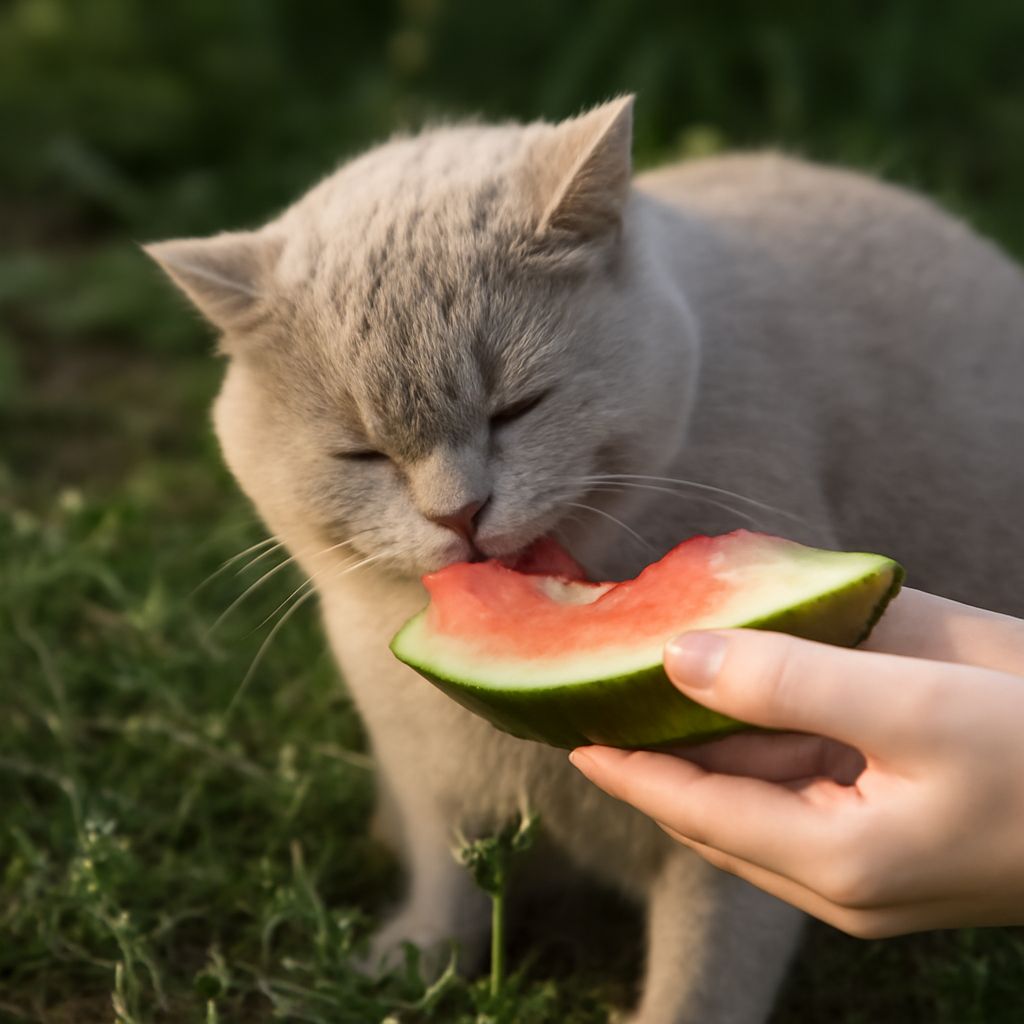
Imagine it’s a warm summer afternoon, and you are enjoying a refreshing slice of watermelon. Your curious cat, intrigued by the bright red fruit, paws at your plate with eager interest. You wonder, can cats eat watermelon? You’ve heard various opinions, but want to make sure this popular human treat is safe for your feline friend. With a little guidance, you can explore whether watermelon is a suitable addition to your pet’s diet.
Introduction to Cats and Watermelon
Cats are known for their inquisitive nature, often showing interest in what their owners are eating. Watermelon, with its vibrant color and juicy texture, can be particularly enticing. However, before sharing this treat, it’s important to understand if it fits into their nutritional needs. In considering whether watermelon is appropriate for cats, it is essential to weigh both its benefits and potential risks.
Is Watermelon Safe for Cats?
Watermelon is generally safe for cats to consume in moderation. The fruit itself is not toxic, making it a permissible snack under certain conditions. Although cats do not require fruits for their diet—being obligate carnivores—the occasional treat like watermelon can be a delightful surprise for them. It is crucial, however, to remove all seeds and rind before offering watermelon to your cat, as these parts can pose choking hazards or cause digestive issues.
Nutritional Benefits of Watermelon for Cats
While cats derive most of their nutrients from animal proteins, small amounts of watermelon can provide hydration due to its high water content. Watermelon is comprised of about 92% water, making it a hydrating option, particularly in warmer months. Additionally, it contains vitamins A and C, which can support overall health.
However, it’s essential to remember that these nutritional benefits are supplementary. Cats mainly rely on meat for their nutritional requirements, and watermelon should not replace their regular diet. Offering watermelon in moderation ensures that your cat receives its needed hydration and a minor boost of vitamins without disrupting its essential protein intake.
How to Serve Watermelon to Your Cat
When preparing watermelon for your cat, ensure that you serve only the flesh of the fruit. Remove any seeds, which can be a choking hazard or cause intestinal blockage. The rind should also be discarded as it’s tough to digest and can lead to gastrointestinal upset.
Cut the watermelon into small, manageable pieces to prevent choking and help your cat eat it more easily. Serving a few small cubes as an occasional treat is best. Always monitor your cat when introducing any new food to observe any adverse reactions, such as allergies or digestive issues.
Potential Risks and Precautions
Despite its safety in small quantities, watermelon is not without risks. Cats have sensitive digestive systems, and sudden dietary changes can lead to gastrointestinal problems. It’s critical to introduce any new food, including watermelon, gradually.
Overconsumption can lead to diarrhea or stomach upset, so it’s best to limit the portion size. Additionally, due to the sugar content in watermelon, it is not suitable for cats with diabetes. Always consult with a veterinarian if you have concerns about food allergies or specific dietary needs before offering watermelon or any new treat.
Pro tips recap: When considering watermelon for your cat, remember: remove seeds and rind, serve in moderation, and observe your pet’s reaction. Prioritize your cat’s regular protein-rich diet while occasionally offering watermelon as a hydrating treat. This approach ensures a safe and enjoyable experience for your feline companion.