The red dot darts beneath a chair. Your cat pounces, lifts a paw and finds the floor exactly where the prize ought to be. That missing catch is why owners wonder whether laser pointers are harmful to cats and whether chasing a laser is bad for a cat’s well-being. The answer depends on eye safety, how the game ends and what the individual does afterward.
Are Lasers Bad for Cats? The Catch Problem
Are laser pointers bad for cats? A moving light can encourage stalking and chasing, but a cat cannot grab or bite it. Some may enjoy the chase and settle afterward; others may become frustrated or continue searching. Watch the whole game, including what happens once the light disappears.
Research offers a reason to pay attention without proving that every cat is harmed. A 2021 survey of cat guardians found an association between more frequent laser play and reports of certain repetitive behaviors. The study relied on owner reports and was observational: it could not establish that laser use caused the behavior. Cats already interested in lights might also have encouraged their owners to use a pointer more often.
So, are lasers bad for cats in every household? The evidence does not support that blanket conclusion. Whether a laser is harmful to a cat depends in part on its response to the game. It does support taking persistent searching seriously and choosing a different game if your cat has trouble disengaging.
Give the Chase a Real Ending
If you use a pointer, have a physical toy ready before you begin. Move the light slowly enough for the cat to follow across a clear floor, with pauses that let it stalk and pounce. Toward the end, guide the dot onto a soft toy, switch off the light and let the cat grab and wrestle the toy. A small treat after the catch can offer another clear end to the activity. The VCA guide to kitten games also recommends rewarding a cat when it catches the light.
That handoff is a practical way to offer a tangible catch, not a proven cure for frustration. Notice whether your cat accepts the toy and then relaxes. If it ignores the toy and keeps searching for the dot, the pointer may be upsetting your cat; end laser play and try a physical game another time.
Keep sessions brief and guided by the cat’s interest. Slow down if it seems tired or stops participating. Avoid sending the dot up walls, toward stairs or across slippery floors; an enthusiastic leap can end with a collision. Provide space to stop, turn and hide, and put away objects that might fall.
Protect Eyes and Keep Control of the Light
Never shine the beam into a cat’s eyes or anyone else’s. Aim only at the floor in an open area, away from mirrors, glass and other reflective surfaces that could redirect the beam. The FDA warns that laser light aimed into an eye can cause injury. Keep the device under adult control and store it where children cannot use it unsupervised.
If a beam may have struck your cat’s eye, contact your veterinarian for advice, especially if you notice squinting, pawing at the eye or a change in vision. Do not wait for an obvious injury before asking what to do. A cat’s eye can be difficult to assess at home.
For cats and laser pointers, the safest choice may be to skip the light entirely if you cannot control where it goes or if the cat becomes distressed. There are plenty of other ways to have a satisfying game, and none requires your living room to become a tiny disco.
Compare the Alternatives
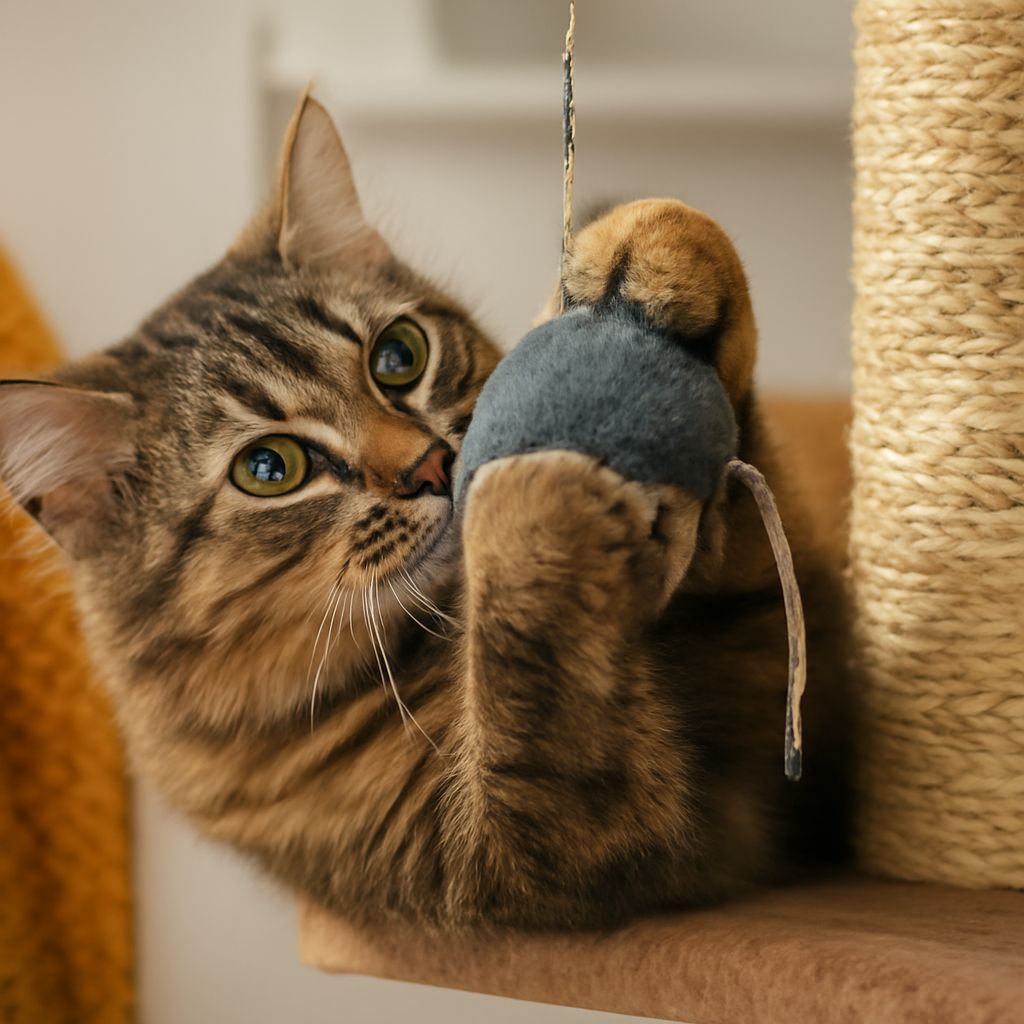
A wand toy can move like prey and give the cat something to catch, kick and carry. Let it disappear behind a cushion, pause and reappear, then allow a successful pounce. A soft ball, toy mouse or food puzzle gives the cat a different task and can be tailored to its energy and mobility. Put string and wand toys away after supervised play, and choose toys without small parts that could be swallowed.
With laser pointers and cats, pay attention to the same signs you would during any game: whether the cat approaches willingly, follows the toy and can stop comfortably. A cat that walks away has ended the session. A tense body, frantic movements or inability to settle is a reason to stop and offer space. A physical toy lets you see whether the cat prefers a game with something it can actually hold.
Some owners find that a cat and a laser pointer make an exciting pair, but excitement alone is not the measure of a good session. Look for an animal that can transition from play to grooming, eating or resting. A short game with a catch is useful only if this particular cat appears comfortable with it.
When the Search Continues
After you put the pointer away, watch for repeated scanning of the floor, fixation on reflections or restless searching that continues instead of giving way to normal activity. Stop using the laser, avoid creating extra light games and offer ordinary physical play when your cat is ready. Note when the behavior occurs and, if it persists, interferes with rest or daily life, or worries you, contact your veterinarian. A brief video can help explain what you are seeing and guide the next steps.