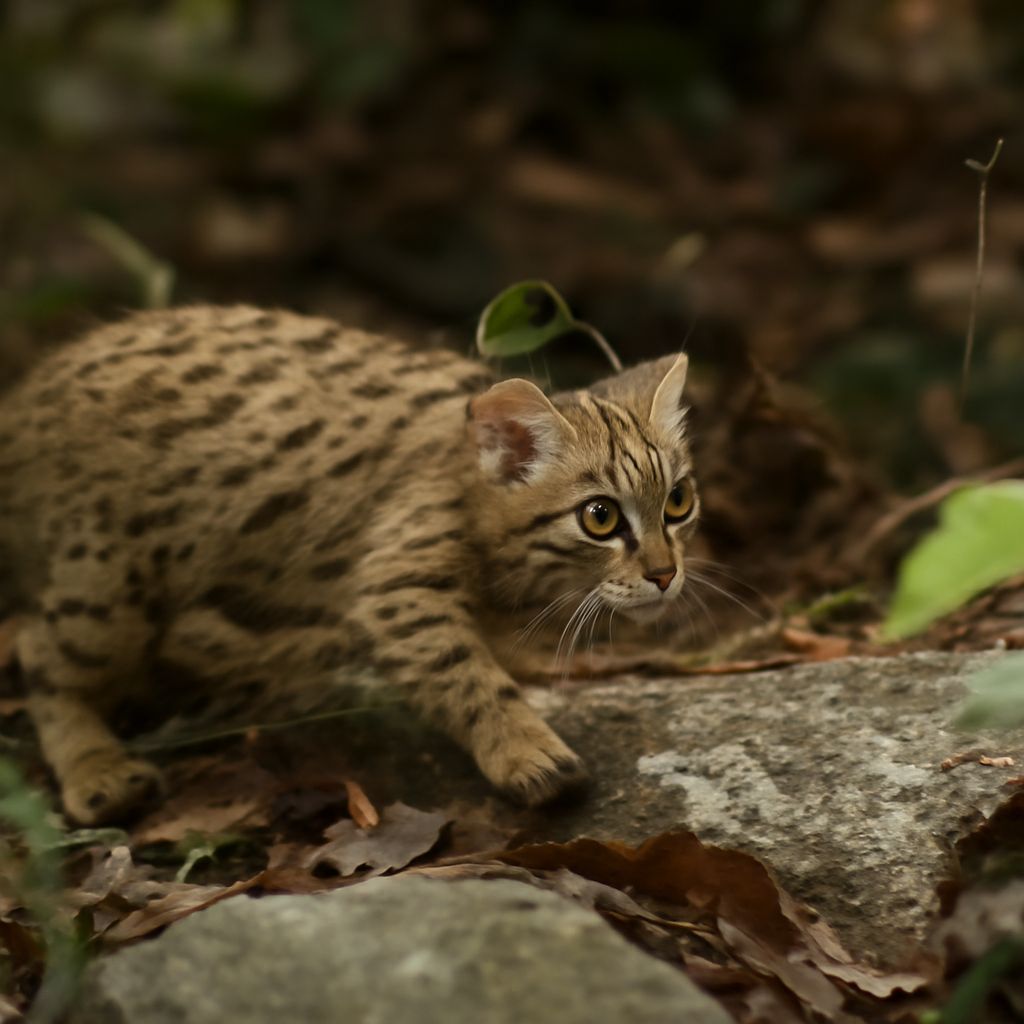
Imagine wandering through the dense forests of India or Sri Lanka, and out of the underbrush emerges a creature so small and delicate, it could be mistaken for a kitten. Yet, this is no ordinary feline—it is the smallest big cat in the world, the rusty spotted cat. Known for its diminutive size and striking appearance, the rusty spotted cat captivates all who are fortunate enough to glimpse its elusive presence.
Introduction to the Rusty Spotted Cat
The rusty spotted cat, often referred to as the “hummingbird of the cat family,” is a marvel in the feline world. Its scientific name is Prionailurus rubiginosus, and it holds the title of the world’s smallest wild cat. Weighing between 2 to 3.5 pounds and measuring just 14 to 19 inches in body length, it’s easy to see why they are sometimes confused with domestic kittens. This cat’s natural habitat includes forests and grasslands, where it plays a crucial role as both predator and prey.
Habitat and Distribution
The rusty spotted cat primarily inhabits the deciduous forests, grasslands, and scrublands of India and Sri Lanka. They are particularly adapted to a variety of environments, ranging from the dry forests of southern India to the wet and dense canopies of Sri Lanka. Despite their adaptability, they are often hard to spot, thanks to their elusive nature and preference for dense cover.
These cats are known to utilize trees for hunting and refuge, skillfully navigating the branches with agility. Their habitat is under constant threat from human encroachment, leading to habitat fragmentation, a growing concern for conservationists aiming to protect these unique creatures.
Physical Characteristics and Behavior
The rust-spotted cat’s physical characteristics are as charming as they are striking. Their coats are adorned with rusty-brown spots that provide them with excellent camouflage against the forest floor. Their underbelly is lighter, often a soft white, complementing their grayish-brown coat.
Behaviorally, these cats are solitary and nocturnal, spending daylight hours hidden in the underbrush or high up in trees. They are agile hunters, preying on small animals like rodents and birds. Their small size allows them to pursue prey into burrows and other tight spaces, showcasing their remarkable hunting prowess.
Conservation Status and Threats
The rusty spotted cat is currently listed as Near Threatened on the IUCN Red List. The primary threats to their survival include habitat loss due to agriculture, urbanization, and deforestation. These factors contribute to their declining population, making conservation efforts essential.
Wildlife protection organizations are increasingly focusing on habitat preservation and anti-poaching measures. Educating local communities about the ecological importance of these cats also plays a vital role in their conservation. Despite these efforts, the battle to save these remarkable creatures from extinction is ongoing.
Why the Rusty Spotted Cat is the Smallest Big Cat
The rusty spotted cat holds the distinction of being the smallest big cat due to its size and genetic lineage. While they share the same biological family as tigers and lions, their size sets them apart dramatically. This unique position in the animal kingdom makes them a subject of interest for scientists and cat enthusiasts alike.
Their diminutive stature doesn’t hinder their presence in the ecosystem. Instead, it allows them to thrive in environments that larger predators cannot, underscoring their adaptability and significance in biodiversity.
The intricacies of their genetic makeup and their evolutionary path are still being studied, contributing to a deeper understanding of feline diversity and evolution. This exploration provides insights that may be crucial for the conservation of other small wild cat species as well.
Key Takeaways: The rusty spotted cat, known as the smallest big cat, is a fascinating and elusive species. Its unique physical traits, behavior, and ecological significance make it an essential subject of conservation efforts. Protecting its natural habitat is crucial for ensuring its survival.