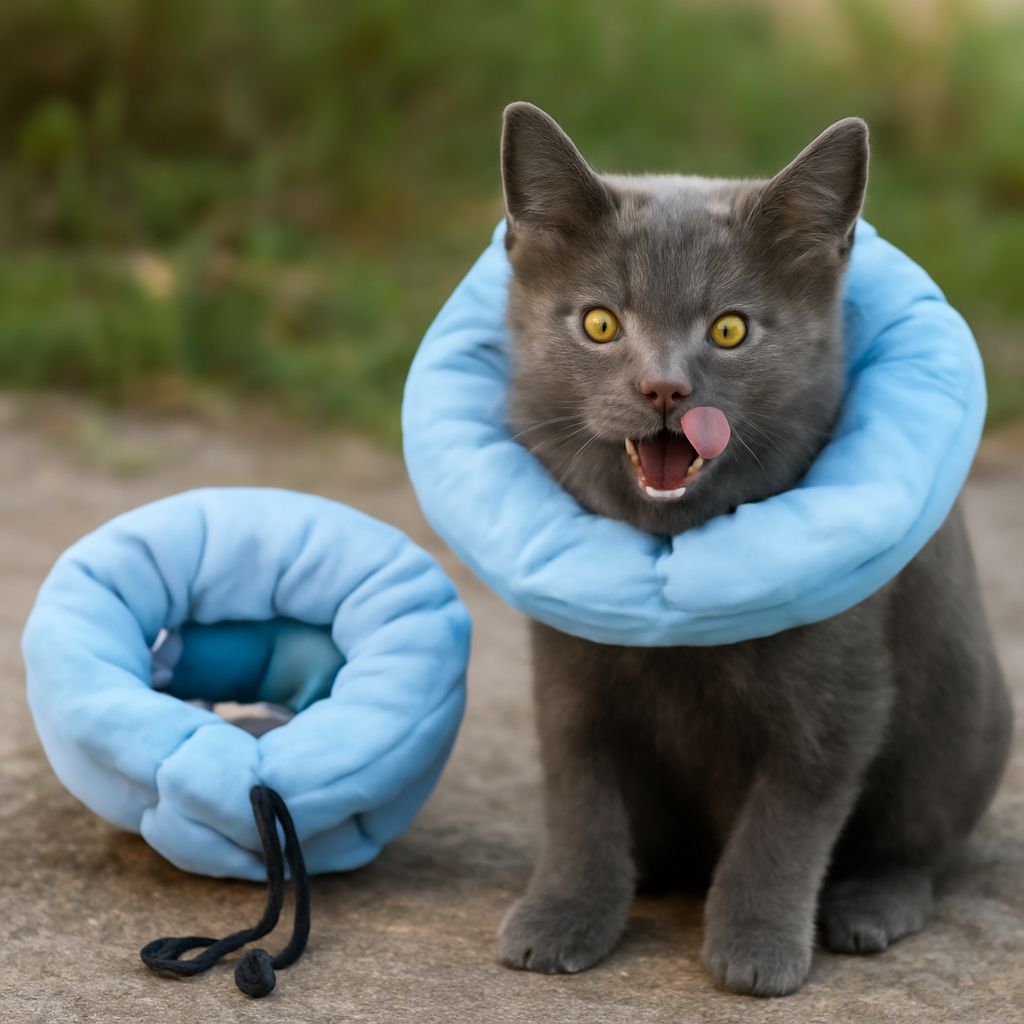
Your cat just had surgery or has a wound that needs to stay untouched, and now you’re dealing with the aftermath: a cat wearing a cone who is crashing into furniture, struggling to eat, and deeply unhappy. A cat cone is a standard post-surgical tool, and a cat cone collar prevents licking and biting at healing tissue. But not all cones are equal, and understanding the options makes recovery significantly easier for both of you.
Whether you need a cone for cats after a spay or neuter, a cone for cat wound management, or you’re looking for a more comfortable cat head cone alternative, here’s a practical breakdown.
Why Cats Need a Cone
Preventing Self-Trauma
Cats lick wounds obsessively. What starts as natural grooming instinct quickly becomes a serious problem after surgery or injury — cat saliva is not sterile, and repeated licking introduces bacteria to healing tissue, delays closure, and can reopen sutures entirely. A cone for cats that fits properly prevents access to the site while healing occurs.
When to Use One
A cat head cone is typically needed after spay or neuter surgery, after wound closure, during treatment of skin conditions (hotspots, allergies, ring worm), and after bandage application. Your vet specifies how long the cone stays on — usually 10 to 14 days for sutures, longer for slower-healing conditions.
Types of Cat Cone Collar
Standard Plastic Elizabethan Collar
The classic hard plastic cone for cat recovery is still the most reliable option for preventing access to most body areas. It’s rigid, easy to clean, and unmistakable in its coverage. The downsides: it’s loud when hitting walls and furniture, it impairs peripheral vision, and many cats refuse to eat while wearing it. A cat cone collar of this type should extend just past the cat’s nose to be effective.
Soft Fabric Cones
Soft fabric or padded cat cone options are more comfortable and less disruptive to daily movement. They work well for wounds on the body but may not prevent access to the head, face, or upper neck. Many cats adjust faster to fabric versions, making compliance better during recovery.
Inflatable Donut Collars
An inflatable ring cat head cone sits around the neck like a travel pillow. It doesn’t restrict vision or access to the food bowl, which dramatically reduces stress. However, it’s ineffective for wounds near the tail, lower belly, or back legs — flexible cats maneuver around it. For post-neuter recovery in male cats (small scrotal incisions that cats can’t reach anyway), these work well.
Helping Your Cat Adjust to the Cone
Raise food and water bowls to a height where the cone rim doesn’t block access. Offer smaller, flatter bowls. Supervise the first hour after fitting to check for distress. Many cats adapt within 12 to 24 hours once the initial panic passes. Remove only under direct supervision — most cats will lick immediately without it.
Key Takeaways
A well-fitted cat cone collar is the most reliable way to protect healing tissue. Soft and inflatable alternatives offer more comfort for specific wound locations. Raise food and water dishes to reduce cone-related feeding difficulty, and keep the cone on for the full duration your vet recommends — removing it early is the most common reason sutures fail or healing is delayed.