You look at your cat lounging on the couch and something catches your eye — a rounder belly, a face that’s filled out, or difficulty jumping onto surfaces she used to reach easily. Now you’re wondering: is my cat fat, or is this just a winter coat? The question matters more than it might seem, because feline obesity is linked to serious health problems including diabetes, arthritis, and liver disease.
Figuring out how to tell if your cat is overweight doesn’t require a vet visit for a first assessment — there are reliable at-home checks you can do right now. Understanding how to tell if cat is overweight accurately means going beyond the scale and using your hands. If you’ve been asking yourself is my cat too fat for a while without acting on it, this guide gives you the tools. And if you want to know how to tell if your cat is fat vs. just naturally large or fluffy, the body condition score system makes the distinction clear.
The Body Condition Score: Your Best Assessment Tool
What It Measures
The Body Condition Score (BCS) is a standardized 9-point scale used by vets to assess feline weight. A score of 4–5 is ideal. Scores of 6–7 indicate overweight, and 8–9 indicate obesity. The scale evaluates fat deposits over ribs, spine, hips, and abdomen — not just body weight, which varies dramatically by breed.
How to Feel the Ribs
Place your thumbs along your cat’s spine and spread your fingers over the ribcage. You should feel the ribs easily, like running your fingers over the back of your hand with slight padding. If you can’t feel individual ribs without pressing hard, your cat is carrying excess weight. If the ribs feel sharp with no padding at all, she may be underweight.
Checking the Waist
Look at your cat from above. A healthy cat has a visible waist — an indentation between the ribcage and hips. If your cat’s sides bow outward instead of curving inward, that’s a sign of excess body fat. The waist check is especially useful for long-haired cats where belly fat is harder to see directly.
The Belly Check
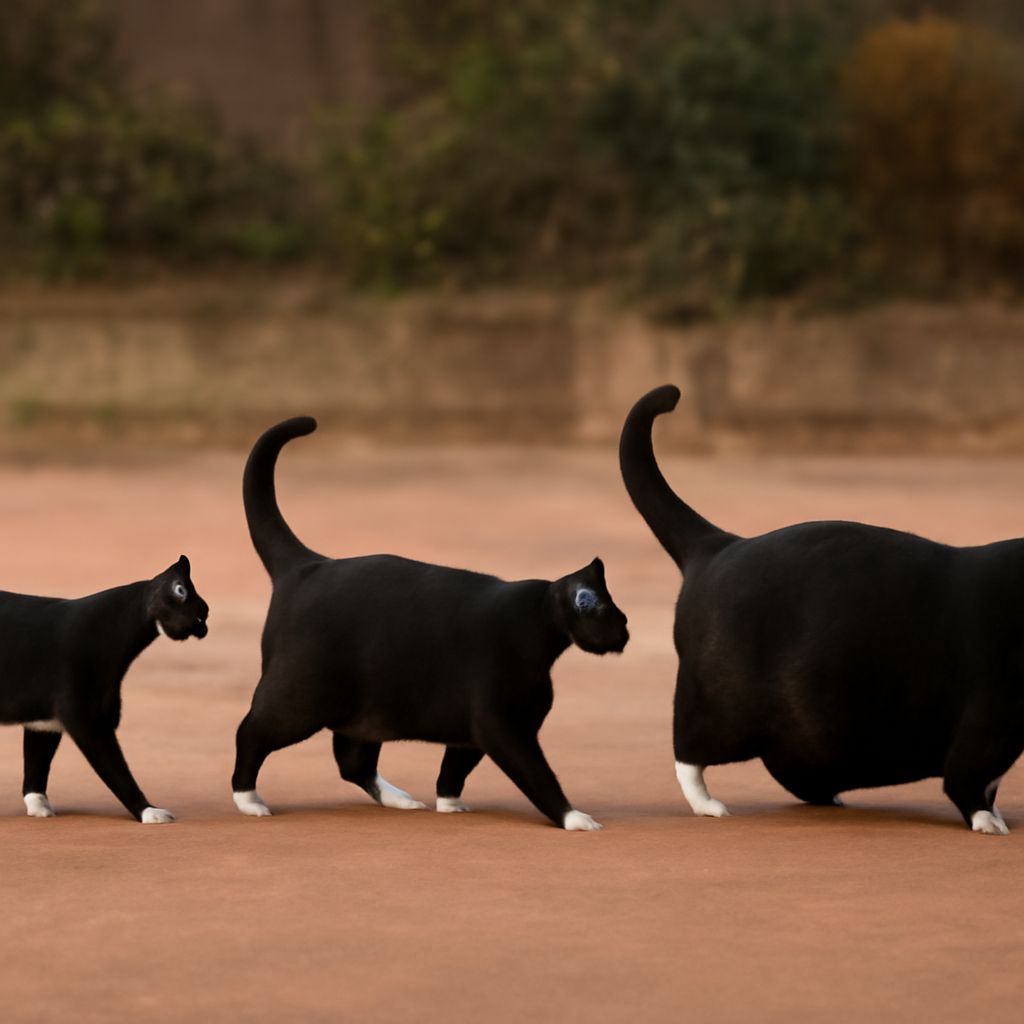
A small amount of belly skin — the primordial pouch — is normal in cats and shouldn’t be confused with obesity. This loose flap of skin along the lower belly is present even in lean cats. Actual abdominal fat feels solid and round when you gently cup the belly. A cat who is overweight will have a pendulous belly that swings noticeably when she walks.
What Causes Weight Gain in Cats?
The most common cause is simple: too many calories and not enough movement. Free-feeding dry kibble — leaving a bowl topped up all day — is particularly associated with feline obesity because cats graze more than they need when food is constantly available. Spaying and neutering reduces metabolic rate somewhat, which means a fixed cat needs fewer calories than an intact one at the same activity level.
Age plays a role too. Older cats are typically less active than younger ones, and their energy needs drop. If the feeding amount stays the same but activity decreases, weight accumulates steadily over months and years. Certain medical conditions, including hypothyroidism (rare in cats) and acromegaly, can cause weight gain — which is why a vet exam is worthwhile if your cat has gained weight rapidly without a clear dietary cause.
What to Do If Your Cat Is Overweight
Don’t put an overweight cat on a crash diet — rapid weight loss in cats can cause hepatic lipidosis, a serious liver condition. Work with your vet to set a safe rate of loss, typically around 0.5–1% of body weight per week. Switch from free-feeding to scheduled meals with measured portions. A food scale is more accurate than cup measures. Consider a weight-management food that’s higher in protein and lower in carbohydrates to help maintain muscle while losing fat.
Increase activity with daily play sessions. Even 10–15 minutes of active play with a wand toy burns meaningful calories for a sedentary cat. Puzzle feeders slow down eating and provide mental stimulation. If you have multiple cats, feed them separately to prevent competition-eating or food stealing between animals.
Key Takeaways
Use the rib feel and waist check to assess your cat’s body condition — the scale alone isn’t enough. Gradual dietary adjustment and increased activity are the right approach; crash diets are dangerous. If your cat’s weight has changed quickly or the cause isn’t obvious, a vet check rules out underlying medical conditions.