auto cat feeder guide: from RFID models to outdoor options
You are gone for ten hours on a workday and your cat’s feeding schedule is completely dictated by whenever you remember to fill the bowl. An auto cat feeder changes that entirely, delivering consistent portions at set times whether you are home or not. The category has expanded well beyond the simple timed dispensers of a decade ago, and now includes technology-forward options that most cat owners do not know exist.
An rfid cat feeder can identify each individual cat by microchip and only open for that specific animal, which is a solution that would have seemed like science fiction not long ago. An outdoor cat feeder introduces a whole different set of requirements, particularly if you are feeding in a yard where other animals are involved. A raccoon proof cat feeder is not a niche product, it is a practical necessity in many parts of the country. And if you have multiple cats or an older cat with dietary restrictions, an elevated cat feeder may be part of the conversation too.
Types of Automatic Cat Feeders
Standard Timed Feeders
Basic automatic feeders use a timer and gravity or a motorized disc to dispense food at set intervals. Most allow you to program two to six meals per day with portion control. These work well for single-cat households without dietary conflicts and for owners who mainly need to automate consistent feeding times.
Look for units with a backup battery so power outages do not disrupt feeding schedules. A feeder that loses its programming during a brief outage and defaults to dispensing everything at once is worse than no automation at all.
RFID and Microchip-Based Feeders
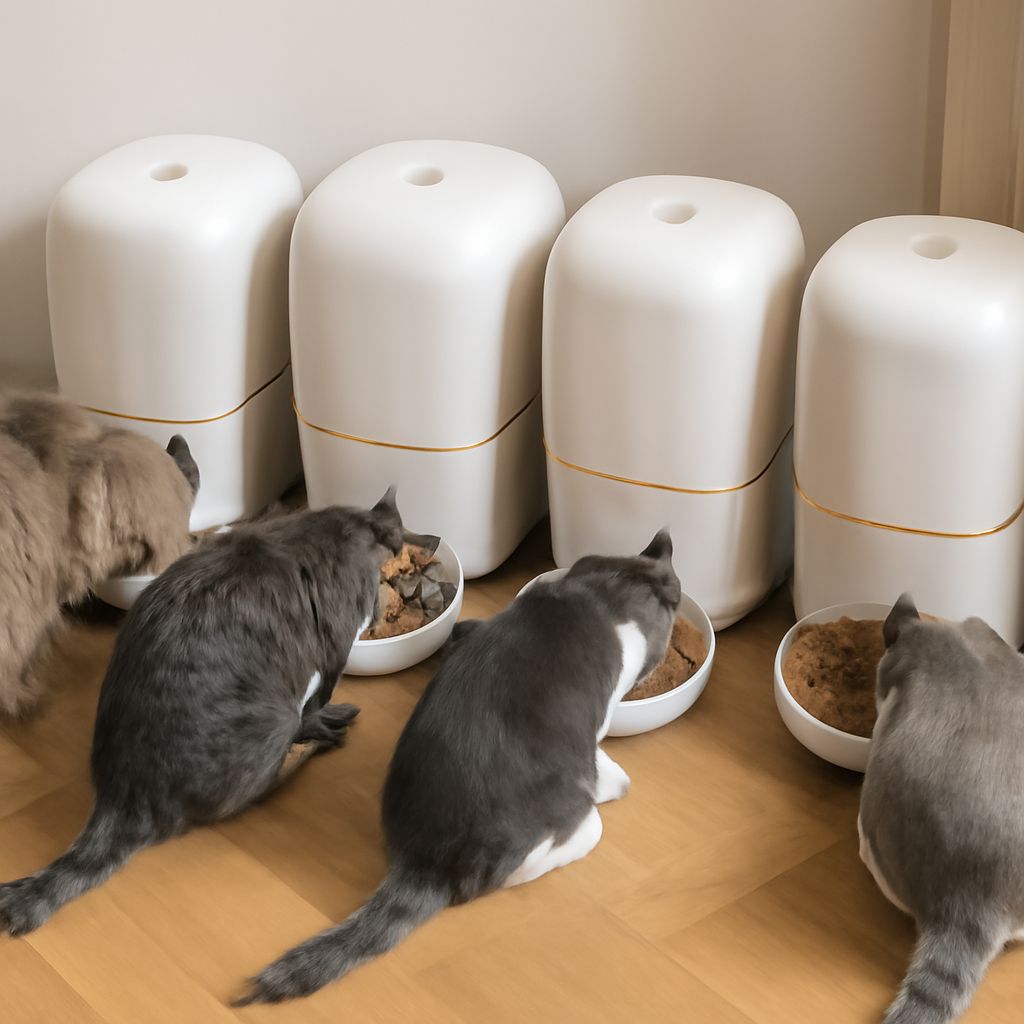
An rfid cat feeder reads your cat’s existing microchip or a companion RFID tag on the collar and opens the food compartment only for that animal. This design was built for multi-pet households where one animal needs a restricted diet. The bowl opens when the correct cat approaches and closes when they walk away.
RFID-enabled feeders are more expensive than standard models but pay for themselves in veterinary bills avoided when an overweight cat can no longer steal food from a pet on a weight-management diet. Setup involves registering the microchip or tag once, and most units handle this with a simple pairing process.
Outdoor Feeders for Feral and Community Cats
Outdoor feeding setups are typically larger, weather-resistant stations designed for continuous access rather than timed portions. An outdoor cat feeder needs to handle rain, temperature variation, and the practical reality that you cannot always control who shows up to eat.
A raccoon proof cat feeder uses weight-sensitive platforms that close under heavier animals or weighted lids that cats can lift but raccoons cannot easily manipulate. No design is completely raccoon-proof under all conditions, but these feeders substantially reduce overnight raid problems.
Elevated Feeders
An elevated cat feeder raises the food and water bowls to a height that reduces the angle at which a cat swallows. For cats with megaesophagus, where food must fall down rather than being moved by peristaltic action, elevation is a medical necessity. For cats with arthritis in the neck or spine, raised bowls reduce discomfort during meals. For cats that vomit frequently after eating, elevation sometimes helps though the evidence for this in otherwise healthy cats is mixed.
Choosing the Right Feeder for Your Situation
Start with the problem you are trying to solve. If you need consistent meal timing, a standard timed feeder works. If you have multiple cats with different dietary needs, an RFID model is worth the investment. If you feed community cats outside, weather resistance and wildlife deterrence are the primary specs. If a specific health condition drives the need, match the feeder design to what your vet recommends.
Read reviews specifically from owners with the same situation as yours. A feeder that works well for dry kibble may jam with wet food. A model praised in dry climates may have seal issues in humid environments. Real-use feedback from people in your circumstances is more informative than manufacturer claims.
Key takeaways: automatic cat feeders range from simple timers to microchip-activated smart feeders with app connectivity. Match the technology to the problem, whether that is portion control, multi-cat feeding separation, outdoor wildlife access, or health-related positioning. Buy once for your actual needs rather than the minimum and upgrade later.