
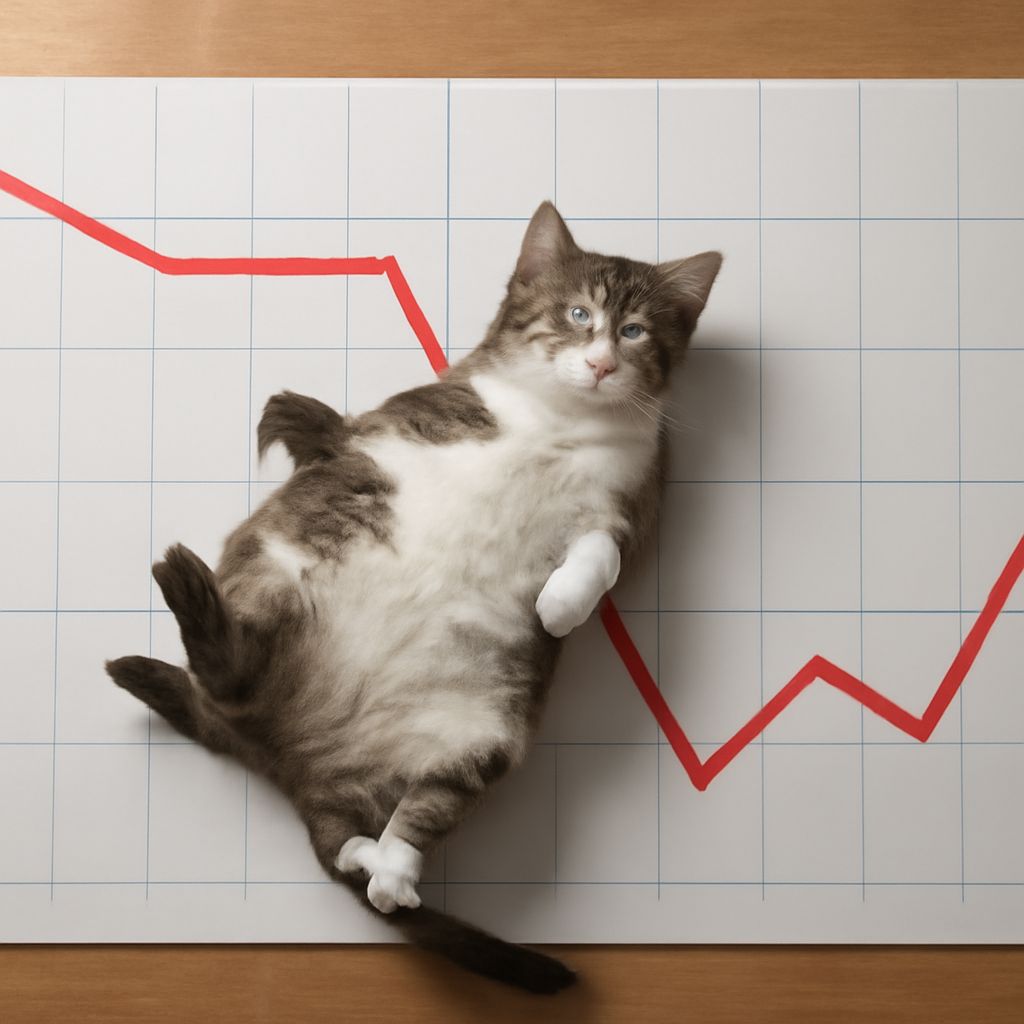
Imagine you’re observing the stock market, keenly watching as a seemingly defeated stock suddenly and unexpectedly rises. You can’t help but recall the intriguing market term, dead cat bounce. This phenomenon captivates you as much as the day of the dead cat does for market analysts. Just as a cat licking another cat displays instinctual behavior, these market movements reveal patterns that defy initial appearances. It’s a concept that links the primal instinct of survival with the unpredictable nature of financial markets.
What Is a Dead Cat Bounce?
A dead cat bounce is a brief and somewhat deceptive recovery in the stock market. This temporary rise typically occurs after a significant decline. While it may look like a recovery, this upward movement is usually short-lived and followed by further declines. Much like a cat’s agility and resilience, the market exhibits a fleeting bounce, misleading investors into a false sense of recovery.
Investors often mistake this rebound for a genuine reversal, but more experienced traders recognize it as a temporary blip. Historically, these bounces occur because of investors buying the dip, only to see prices fall again. Being aware of these can save investors from potential losses.
The Origins of the Term and Market Implications
The term “dead cat bounce” derives from the notion that even a dead cat will bounce if it falls from a great height. This rather vivid imagery serves as a cautionary tale in financial markets: not all rebounds indicate a return to long-term growth. Understanding the origins of this phrase helps investors remain skeptical of short-term gains in a declining market.
Market implications of this term include a better understanding of the difference between temporary recoveries and sustained growth. By examining past instances of dead cat bounces, traders can better anticipate market behavior and make informed decisions.
Day of the Dead Cat: A Deeper Dive
The day of the dead cat refers to the specific point at which the bounce occurs. On this day, investors may experience a false sense of relief, thinking the worst is over. However, seasoned investors know this is merely a momentary upward tick.
This day is crucial for traders to recognize because it offers insights into market psychology. Understanding this phenomenon helps identify the emotions driving investor behavior. It’s a pivotal moment that can determine whether investors hold or sell their positions.
Behavioral Insights: Cats and Market Movements
Just as a cat demonstrates unpredictable and instinctual behaviors, market movements can be equally erratic. Observing a cat’s sudden changes in direction can be likened to abrupt shifts in the stock market. These movements are not random but are driven by underlying instincts and external stimuli.
In the market, these stimuli might include economic indicators, geopolitical events, or investor sentiment. By drawing parallels between cat behavior and market trends, investors can cultivate a more instinctual understanding of market dynamics.
Cat Instincts: Licking and Beyond
A cat licking another cat is a sign of social bonding and cleanliness, reflecting the innate behaviors that guide animals. Similarly, in markets, there are instinctual reactions to market stimuli. These instincts can be protective or opportunistic in nature.
Investors often act on instinct when they sense a shift in market trends, much like a cat responding to environmental changes. By honing these instincts, traders can better navigate the complexities of financial markets. Recognizing patterns in both feline behavior and market trends can lead to more strategic decision-making.
Understanding Cat Dead Details Later
The specifics of a dead cat bounce might be fully appreciated later as market trends unfold. Understanding the nuances of these bounces helps traders avoid misinterpretations that can lead to financial missteps. As one reflects on past bounces, the intricate details of timing and market conditions become clearer.
Just like piecing together a puzzle, analyzing these details requires patience and a keen eye for patterns. Over time, this understanding can enhance an investor’s instinctual responses to future market fluctuations, much like a cat that learns from its surroundings.
Next steps: To effectively utilize the concept of a dead cat bounce, practice by observing historical market data and identifying past bounces. Develop your instincts by recognizing the signs early. Maintain awareness of market news and trends to refine your skills. With time and experience, you’ll be better prepared to navigate the complexities of market movements, just as a cat relies on its instincts to adapt and survive.