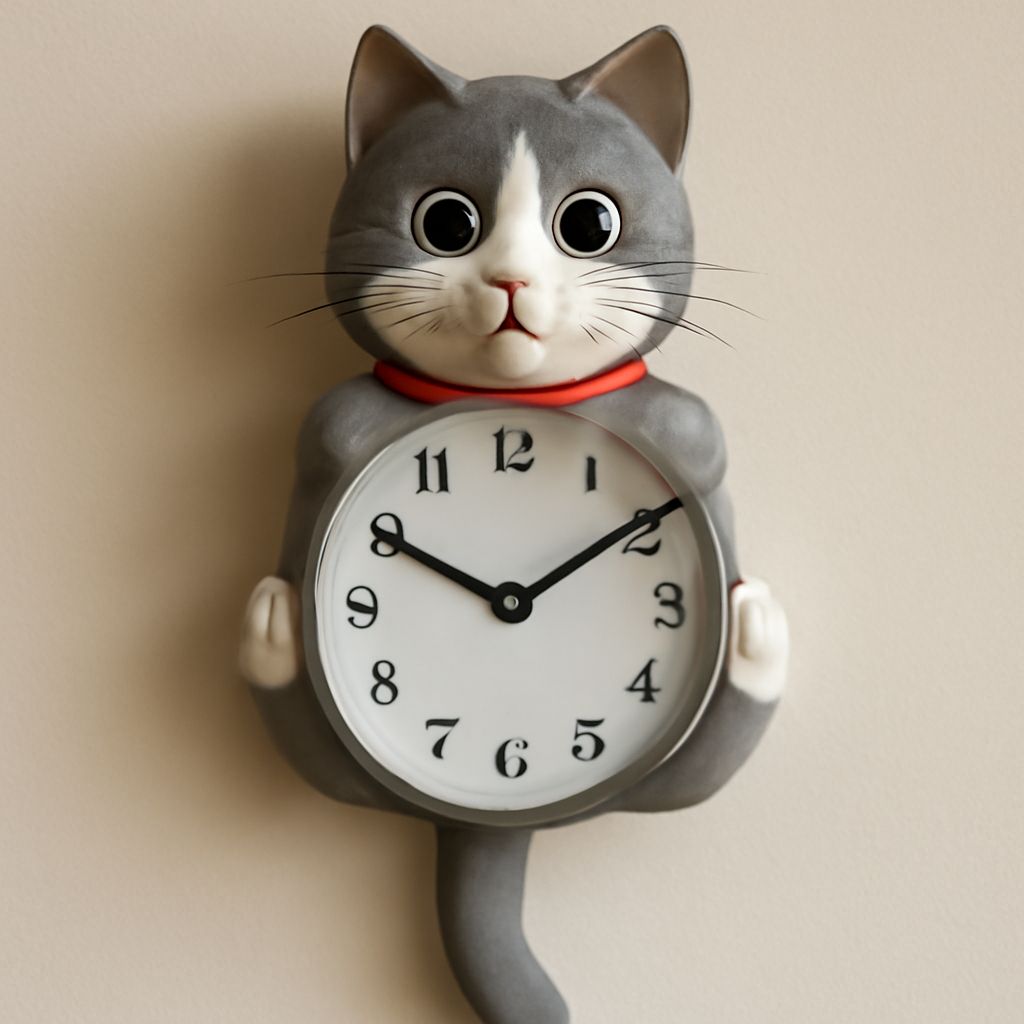
Imagine walking into your living room, where the vibrant room decor immediately catches your eye. Among the myriad of delightful items, a quirky cat clock with moving eyes stands out, adding a playful yet elegant touch to your space. The rhythmic swaying of the tail not only brings a smile to your face but also seems to fill the room with an animated charm. As you settle in, you wonder how such a seemingly simple piece of decor could create an inviting and lively atmosphere. There’s more to these cat clocks than meets the eye, and as you delve deeper, you uncover a world of enchantment and functionality.
Introduction to Cat Clocks
Cat clocks are more than just timepieces; they are whimsical works of art that have graced homes for decades. Known for their distinctive design, these clocks typically feature a feline figure with animated eyes and a pendulum-like tail that moves with each tick. Beyond their visual appeal, cat clocks serve as conversation starters, bringing a touch of fun and nostalgia into any room.
The History of Cat Clocks
The origins of cat clocks can be traced back to the 1930s in the United States. The iconic Kit-Cat Clock first appeared during the Great Depression, offering a cheerful reprieve from the hardships of the era. With its engaging design and playful movements, the cat clock quickly became a beloved household item. Over the years, these clocks have evolved in style and functionality, yet they have retained their timeless charm.
Features of Cat Clock with Moving Eyes and Tail
At the heart of a cat clock’s appeal is its charming animation. The eye movements and tail swaying are not just for show; they bring these clocks to life in a way that few other timepieces can.
How the Eyes Move
The eyes of a cat clock move rhythmically side-to-side in sync with the ticking seconds. This motion is powered by the clock’s internal mechanism, which cleverly integrates the movement of the eyes with the clock’s hands. This feature not only adds an element of charm but also ensures that the clock remains a centerpiece in any room.
The Functionality of the Moving Tail
The pendulum-like tail of a cat clock swings with the steady ticking of time. Acting as a visual representation of each second, the tail adds to the playful nature of the clock. This movement is more than decorative; it can have a calming effect, much like watching a pendulum swing, providing a gentle rhythmic backdrop to your living space.
Health Benefits of Cat Clocks
While it might seem surprising, cat clocks can contribute to mental well-being. The predictable movement of the clock’s eyes and tail can be soothing, offering a form of visual meditation that can reduce stress and anxiety. Moreover, their whimsical appearance can boost mood and inspire creativity, making them a delightful addition to home offices or creative spaces.
Choosing the Right Cat Clock for Your Home
When selecting a cat clock, consider the style and color that best complements your decor. Classic black and white designs offer a retro look, while brightly colored versions can add a pop of color to a modern decor scheme. Additionally, pay attention to the size of the clock to ensure it fits well in your designated space. Whether you’re aiming for a subtle accent or a bold statement piece, there’s a cat clock to match every aesthetic.
Conclusion: Why Cat Clocks are Worth the Investment
Cat clocks are more than just decorative items; they are a unique blend of functionality and fun that can enhance any home environment. Their playful design, combined with the soothing movement of their eyes and tail, offers both aesthetic appeal and health benefits. Investing in a cat clock is a delightful way to bring joy and character into your living space.