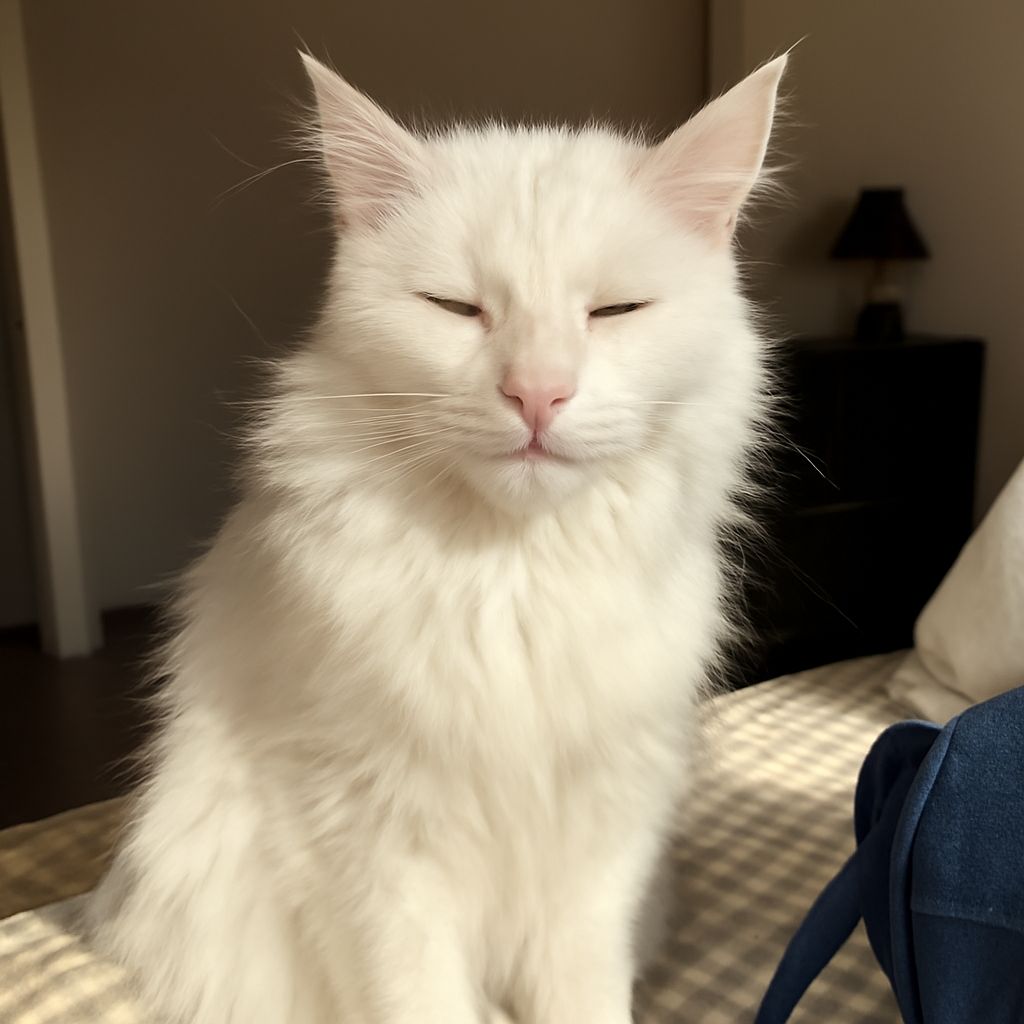
Wondering what life with a cross of these two longhaired breeds might be like? Expect an individual cat, with its own coat, habits, and preferences. The label describes claimed ancestry; it cannot tell you whether the cat on the shelter blanket will enjoy your lap or rearrange your pencils.
Ragdoll Maine Coon Mix: What the Label Means
A Maine Coon Ragdoll mix is a cat said to have ancestry from both breeds. Sometimes that means one parent of each breed; elsewhere, it may refer to more distant or uncertain ancestry. Ask who identified the parents and whether any records exist. If the history is unknown, “domestic longhair” may be a more accurate description of a fluffy cat.
A Ragdoll Maine Coon mix is not a recipe that produces the same cat every time. Even kittens from the same litter can inherit different combinations of traits. And a bushy tail, large paws, or blue eyes alone cannot establish a pedigree. Enjoy the magnificent tail without making it produce its papers.
Comparing parents and meeting a cat
The International Cat Association’s Maine Coon profile describes a substantial cat with a shaggy, uneven coat. Its Ragdoll profile describes a silky, semi-long coat and pointed coloring: a lighter body with darker areas on the face, ears, legs, and tail. These are descriptions of breeds, not a checklist for identifying a particular cross.
A kitten with this mixed ancestry could have different coloring, coat texture, and body proportions from either parent. Adult size varies too. Ask for the cat’s current weight and age, and discuss a healthy body condition with a veterinarian. A kitten’s paws make charming conversation; they do not give you an adult weight forecast.
Breed profiles can also describe tendencies in sociability and play. Your own observations are more useful for planning a home: does this cat approach, retreat, play, or prefer to watch? A shelter can be noisy and unfamiliar, so ask staff what they have noticed over several days and whether the cat behaves differently in a quieter room.
Make grooming a small routine
A long coat may need regular attention around the armpits, belly, and behind the ears, where tangles can hide. Start with a few gentle passes of a suitable comb and a treat, stopping before your cat becomes distressed. Check the coat several times a week and adjust the schedule to how quickly it tangles. Some cats need more frequent combing than others.
Work on loose tangles gently, without pulling the skin. Do not cut tight mats out with scissors: cat skin is thin and can be injured. Ask a veterinarian or experienced groomer for help with mats close to the skin. If grooming suddenly becomes difficult or the coat changes, mention it at a veterinary visit; pain or illness can affect self-care.
The coat is only part of the job. Provide scratching surfaces, trim nails as needed, and ask your vet how to introduce tooth brushing. A sturdy perch and a litter box roomy enough for the individual cat to turn around comfortably will make daily life easier, whatever its eventual size.
Health, history, and everyday life
Request vaccination, parasite-control, and veterinary records, along with the cat’s usual food and any medication. A gradual food change can help avoid an abrupt disruption to its routine; your vet can advise on a suitable diet and portions for its age and condition. Cornell’s guide to choosing and caring for a cat also recommends asking about prior care.
If the claimed parentage is documented, share available family health information with your vet. Hypertrophic cardiomyopathy is a heart disease seen in cats; Cornell explains its signs and diagnosis. A mixed background does not establish whether an individual cat has it. Your vet can suggest appropriate care based on the cat’s history and examination.
Make the first days predictable: offer a quiet room, a hiding place, water, food, and a litter box away from the feeding area. Let the cat choose when to approach. Short play sessions and a consistent routine give you a chance to discover whether your new roommate prefers a feather wand, a cardboard box, or a thoughtful inspection of the wall.
Before bringing the cat home, ask the shelter or current owner:
- What is known about the parents, and are there records supporting that history?
- What food, medication, veterinary care, and grooming has this cat had?
- How does the cat respond to handling, brushing, children, and other animals in familiar settings?
- Where does the coat tangle, what tools work, and how often does it need help?
- What places, toys, routines, or hiding spots help this particular cat feel comfortable?