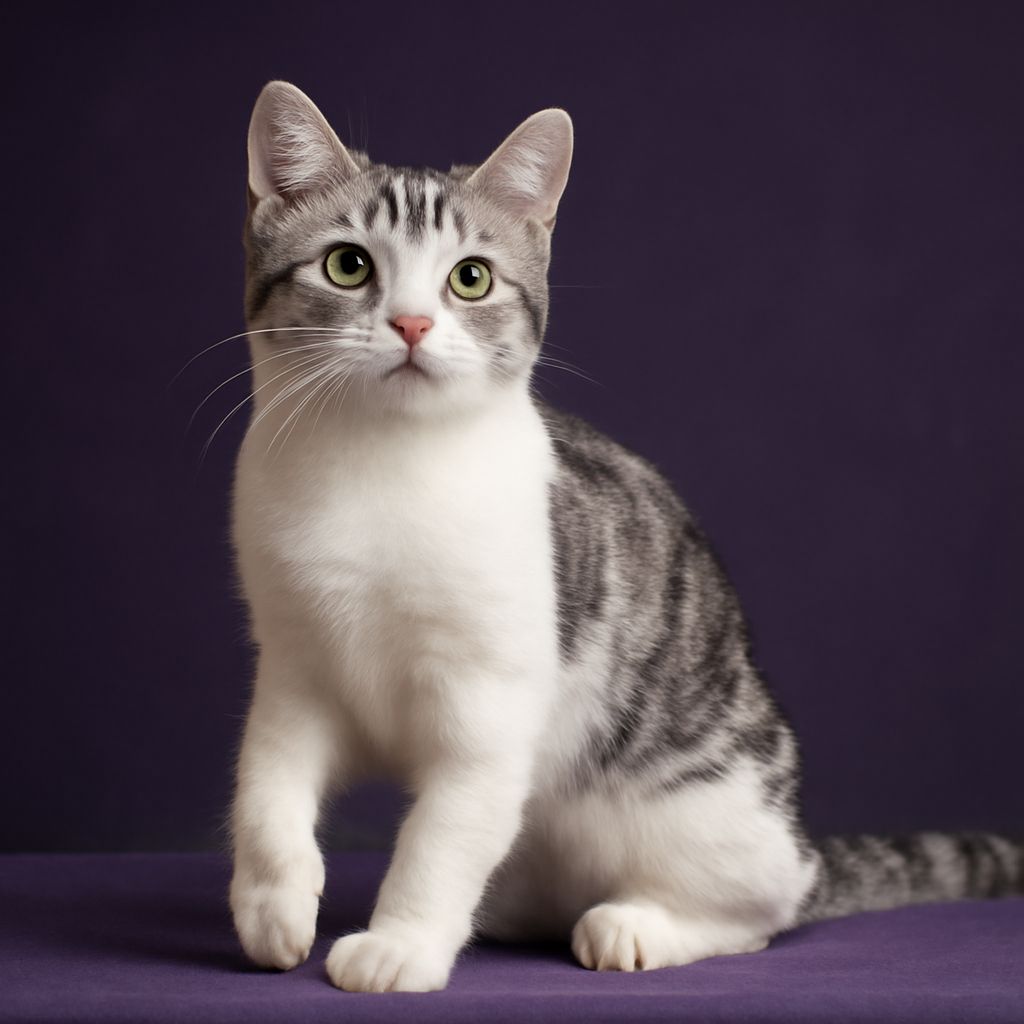
Two silver tabbies can look remarkably alike: one is a registered American Shorthair cat, and the other is a domestic shorthair with an unknown family tree. Both may make excellent companions. Their matching stripes, however, cannot tell you whether either has a documented pedigree.
A domestic shorthair cat in America may come from many different backgrounds. Understanding the distinction helps you read an adoption profile or breeder’s records and, more importantly, prepare for the individual cat who will share your couch.
American Domestic Shorthair Cat and the Registered Breed
An American domestic shorthair cat is a short-coated household cat in the United States; the description alone does not identify a recognized pedigree. “American Shorthair” names a specific breed with registration standards and documented ancestry. The Cat Fanciers’ Association describes domestic shorthairs as cats whose heritage is commonly unknown.
The names have a historical connection. According to the Cat Fanciers’ Association’s breed profile, the breed was once shown under the name Domestic Shorthair before receiving its current name. Today the general coat description and the breed name serve different purposes.
If pedigree matters to you, ask to see registration and ancestry records, check that the identifying details match the cat, and contact the named registry with questions. A photograph, a silver tabby pattern or a shelter label cannot establish a family tree. If records are unavailable, choose based on the cat’s needs and your circumstances rather than assigning it an ancestry you cannot verify.
Appearance and Personality
American Shorthair cats tend to have a muscular build, a broad face and a short, dense coat. They come in many colors and patterns; silver tabby is familiar, but it is only one possibility. A domestic shorthaired cat from America can share those looks, too, because a coat pattern is not a certificate.
The breed is often described as affectionate, adaptable and playful. One American Shorthair may settle beside you during a quiet evening; another may prefer a tour of the kitchen counters. Ask a caretaker how the individual responds to handling, visitors, other pets and time alone. A description of a breed offers a general picture, while the cat in front of you has its own opinions about the furniture.
A small apartment can work if it offers climbing places, scratching surfaces, play and quiet rest. In a busy household, provide a retreat where the cat can get away from noise. Teach children to let it approach and to stop petting when it moves away. Introduce other animals gradually, using separate spaces at first and supervised meetings when both are ready.
Play for Kittens and Adults
American Shorthair kittens need chances to practice stalking, chasing and climbing in a safe space. Set up a sturdy scratching post and low, stable places to explore. Several brief sessions with a wand toy can give a youngster exercise and help build trust. Put strings and small detachable parts away afterward, and use toys rather than hands for mock hunting.
Ask what a young American Shorthair kitten has eaten and what litter it uses before it comes home. Keep the initial setup familiar, then make any changes gradually. Kitten-proof cords, medications, houseplants and small objects, and arrange a veterinary visit to discuss vaccines, parasite prevention and feeding.
An adult American Shorthair cat needs play and attention too, even when their favorite hobby appears to be watching you open a cupboard. Try a toy mouse, a short game of chase or a puzzle feeder with part of the day’s measured food. Let your cat catch the toy, and adapt the pace if it loses interest or has mobility limitations. Rotate toys to keep the game inviting.
Everyday Care That Fits the Cat
Comb the short coat regularly to remove loose hair and check for mats or skin changes; a longer session may be useful during heavy shedding. Introduce nail trims gently, a little at a time, and provide a scratching post. Ask your veterinarian to demonstrate toothbrushing with cat-safe toothpaste and to recommend a dental-care routine.
Offer fresh water and a complete food suited to the cat’s age and health. Ask your veterinarian about portions and body condition, especially after neutering or as activity changes. A sturdy build can make weight changes less obvious, so use the vet’s assessment rather than guessing from a rounded silhouette.
Keep litter boxes clean and accessible, with enough space for the cat to turn comfortably. Notice its normal appetite, drinking, activity and bathroom habits. If those habits change, contact your veterinarian; straining to urinate or being unable to pass urine requires urgent care.
Choose a regular time for play, a quick coat check and litter-box cleaning, and put veterinary appointments on your calendar. That simple routine gives you daily contact with your cat and makes changes easier to notice, whether its ancestry is documented or wonderfully mysterious.