Which dish will your cat actually want to eat from? Start with a stable, easy-to-wash bowl that lets your cat reach the food comfortably, then match its size and shape to the meal and your routine. A feeding dish for a cat does not have to be elaborate; it does need to fit the animal and the place where meals happen.
Cat Food Bowls: Shape, Size and Stability
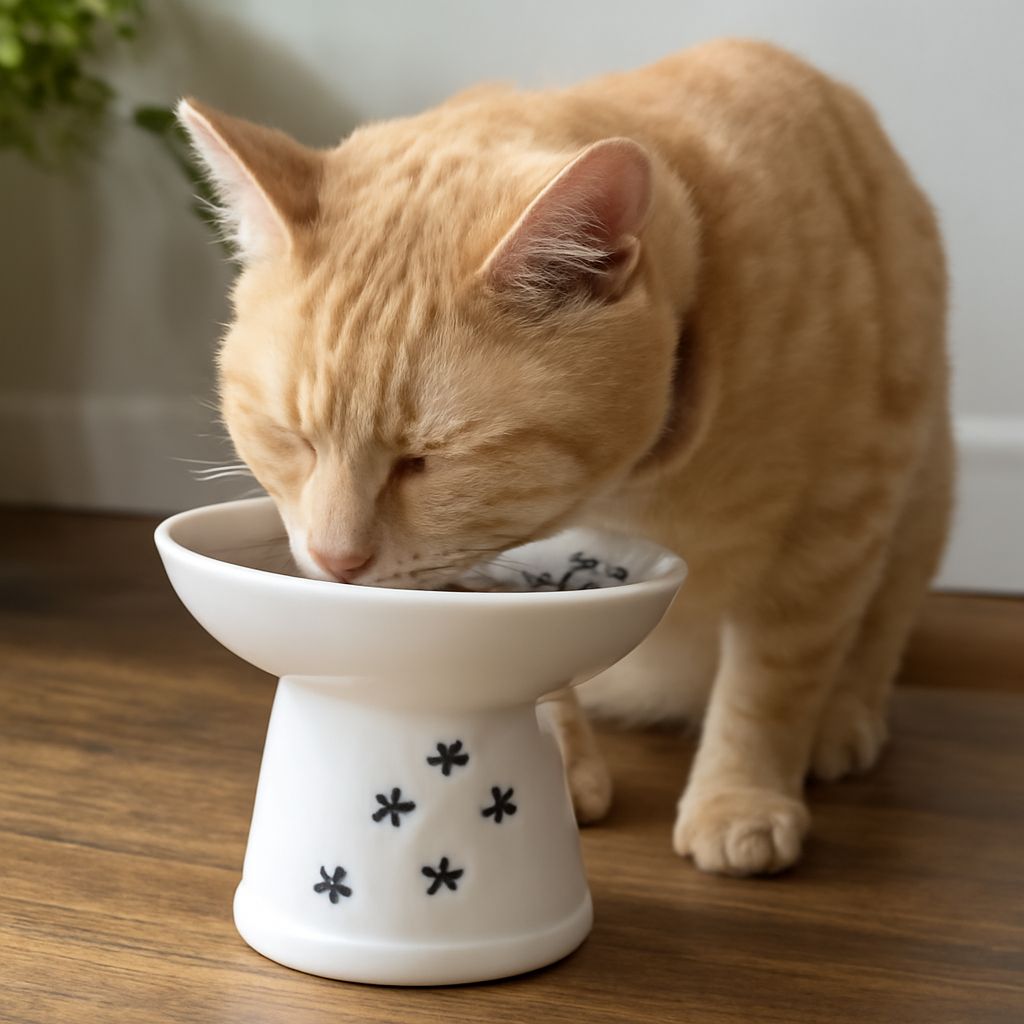
Cat food bowls with a wide, shallow interior give a cat room to reach food without pushing their face deep into a container. Some cats seem to prefer that extra space, while others eat comfortably from a deeper bowl. Watch how your own cat approaches the meal: a dish may be awkward if food collects in corners they cannot easily reach or if the rim gets in the way.
Choose a size that holds the usual portion without piling it against the sides. For wet food, a broad interior can let you spread the meal in a thin layer; a low edge also makes it easier to reach the last bits. For dry food, a slightly deeper dish can help keep kibble contained as the cat eats. Either way, leave enough room to move food around without spilling it at every bite.
A cat food bowl should stay put when nudged. A broad base, a little weight or a washable nonslip mat can help on a smooth floor. If the empty dish slides or tips when nudged, choose a more stable design. Make sure any removable ring or mat can be cleaned and dried.
Compare materials by daily care
Stainless steel is light and generally durable, with a smooth surface that is easy to wash. Thin dishes can slide or make noise against a hard floor, so look at the base as well as the metal. A nonslip support may make a lively eater’s meal quieter and tidier.
Ceramic can be heavier and stable. Choose a food-safe, intact glazed surface and check it regularly for chips or cracks. A damaged area can be harder to clean and may create a sharp edge. Ceramic is also breakable, so consider where the dish will sit and how you will carry it to the sink.
Plastic is light and available in many shapes, but inspect it for scratches and wear. Deep grooves make a dish harder to clean thoroughly. Whatever material you choose, smooth surfaces and accessible edges matter more to everyday washing than an attractive color. Replace a dish that is damaged or no longer comes clean.
There are plenty of cute cat bowls to match a kitchen, but check the inside before buying: molded decorations, narrow corners and glued-on parts can complicate cleaning. A simple shape can still be appealing, and it gives you fewer places to chase dried food with a sponge.
Fit the dish to the meal and the cat
For a cat who eats wet food twice a day, two shallow dishes can make the routine easier: one can be washed and dried while the other is ready for the next meal. Choose a surface you can wipe clean if the cat pushes food over the edge. Follow the food label for handling and storage; the FDA advises promptly refrigerating or discarding unused or leftover canned and pouched food.
For measured dry meals, select a dish large enough to contain the portion without making the cat chase pieces around the floor. Use a separate clean scoop or measuring cup instead of using the dish to scoop from the bag. If you use a puzzle feeder for part of a meal, check that its compartments are accessible to your cat and can be cleaned; it is a feeding option, not a substitute for observing how much your cat eats.
A kitten needs an easily reached rim, while an older cat may move differently or find a particular position uncomfortable. Place the dish where the cat can approach and leave without squeezing into a corner. If eating posture changes, your cat drops food or seems reluctant to eat, discuss the change with your veterinarian rather than assuming the dish alone is responsible.
Give each cat a comfortable place
In a multi-cat home, separate feeding locations make it easier to see who eats what. The Feline Veterinary Medical Association recommends a separate food and water bowl for each cat, in different locations, and suggests visual separation during meals. Choose spots away from litter boxes and busy traffic, with an easy route away from the food.
Watch for one cat waiting nearby, blocking access or taking another’s leftovers. Separate rooms or a visual barrier may help you manage meals and notice changes in appetite. A specialized feeder may be worth discussing if cats must eat different foods, but first check whether each animal can use it comfortably and whether its parts fit your cleaning routine.
Keep the routine simple
The FDA recommends washing feeding dishes and measuring utensils with soap and hot water after each use. Rinse and dry them before the next meal, and keep a clean spare if frequent washing makes the schedule difficult. A dishwasher-safe label can help, provided the dish fits securely and you follow its care instructions.
For one cat eating wet meals in a small apartment, a stable shallow dish and a clean spare may be enough. For two cats eating separately, choose two easy-to-reach dishes and locations where neither cat can guard the other’s food. The right choice is the one both your cats and your washing routine can accommodate every day.