
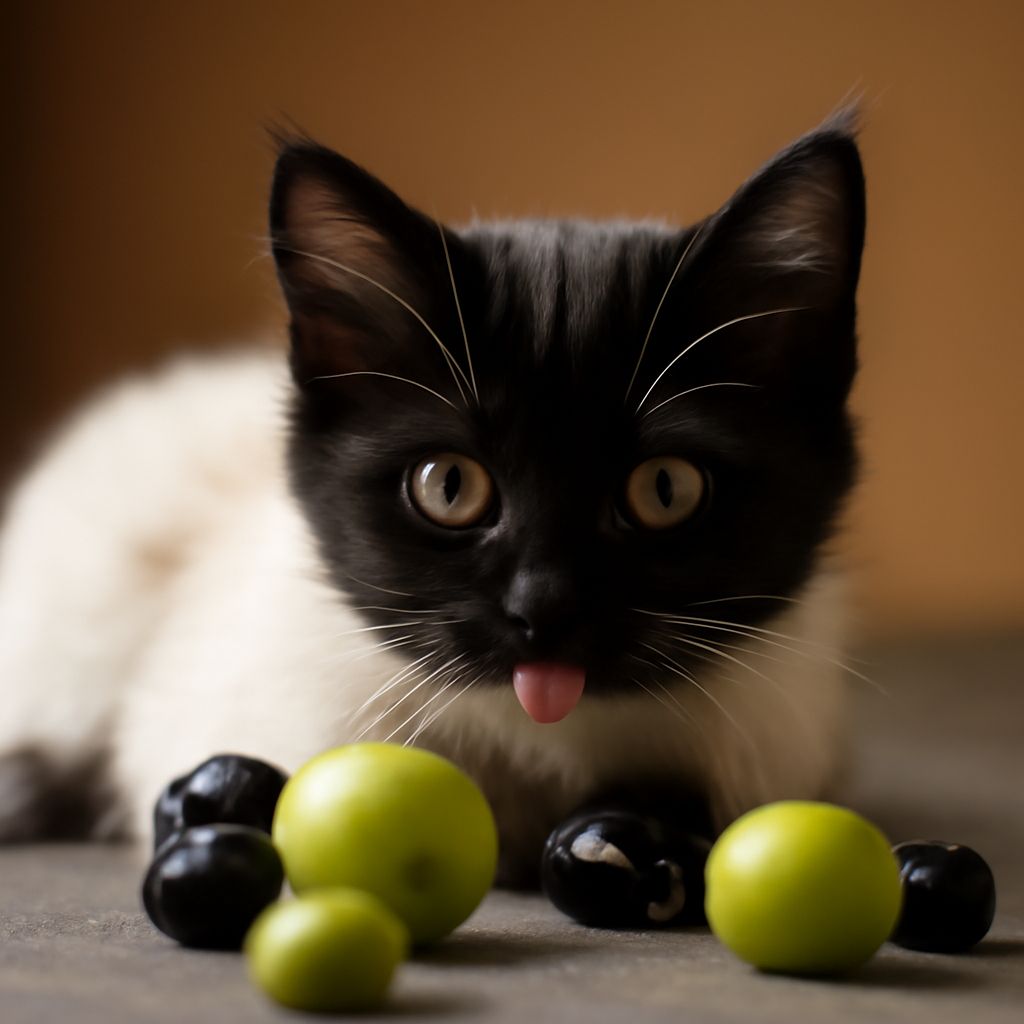
Imagine you’re preparing a salad in your kitchen when your curious cat hops onto the counter, eyeing the glistening black olives with apparent interest. Your immediate thought is whether these olives are safe for her to nibble on. As a responsible pet owner, you wonder, “Can cats eat black olives? Are they bad for cats?” After all, the last thing you want is to unintentionally harm your feline friend. While pondering this, another question arises—might olive oil, known for its health benefits in humans, be good for cats, especially when they’re dealing with constipation?
Can Cats Eat Black Olives?
Black olives, a staple in many kitchens, might attract your cat’s attention due to their distinct aroma and taste. However, while they are not toxic to cats, they aren’t necessarily beneficial either. Olives contain a moderate amount of sodium, which can be unhealthy for cats if consumed in large quantities. Therefore, it’s best to offer olives as an occasional treat, if at all, and always in small amounts to prevent any health issues like dehydration or elevated blood pressure.
Moreover, olives don’t provide any essential nutrients that your feline might need. While they might enjoy playing with or tasting them, it’s crucial to remember that their primary diet should be meat-based, to meet their nutritional demands effectively.
Is Olive Oil Good for Cats?
Olive oil is often praised for its benefits in human diets, but what about its effects on cats? When used in moderation, olive oil can be part of a healthy diet for cats. It contains healthy fats that might aid in digestion and improve coat shine. However, overuse can lead to weight gain and other health issues.
If you consider adding olive oil to your cat’s diet, it should be introduced gradually and in small quantities. Consult your veterinarian to ensure it aligns with your cat’s overall dietary needs and health condition.
Are Olives Bad for Cats?
While olives themselves are not inherently harmful to cats, there are some considerations to keep in mind. The biggest concern is the high sodium content found in brined olives, which can lead to health problems in cats over time if consumed frequently. Excessive sodium intake can cause dehydration and contribute to the development of kidney issues.
Additionally, flavored or spiced olives, such as those with garlic or onion, are particularly dangerous as these ingredients are toxic to cats. Always ensure that any olives given to your cat are plain and unseasoned.
Using Olive Oil for Cat Constipation
Constipation is not uncommon in cats, and olive oil is sometimes recommended as a natural remedy. The oil’s lubricating properties can help ease the passage of stool, offering relief to your pet. However, it’s important to use it judiciously. A small amount mixed into their food can be beneficial, but too much olive oil can lead to diarrhea or stomach upset.
As always, consult with a veterinarian before trying home remedies for constipation to ensure it’s the right approach for your cat’s specific situation.
Urinary Blockage in Cats Aftercare
Urinary blockage is a serious condition in cats and requires immediate veterinary care. After treatment, proper aftercare is crucial in preventing recurrence and ensuring recovery. Although olive oil is not directly related to urinary health, maintaining a balanced diet with adequate hydration can make a significant difference.
Ensure your cat has access to fresh water at all times and consider a diet that promotes urinary tract health. Wet foods can be particularly beneficial as they increase your cat’s overall water intake. Regular veterinary check-ups and monitoring for any signs of recurrence are also essential components of aftercare.
Next Steps: When considering dietary changes for your cat, always prioritize their specific health needs and consult with a veterinarian. Use treats like olives sparingly, and if incorporating olive oil, do so cautiously to avoid adverse effects. Staying informed and proactive about your cat’s diet and hydration will contribute significantly to their overall well-being.