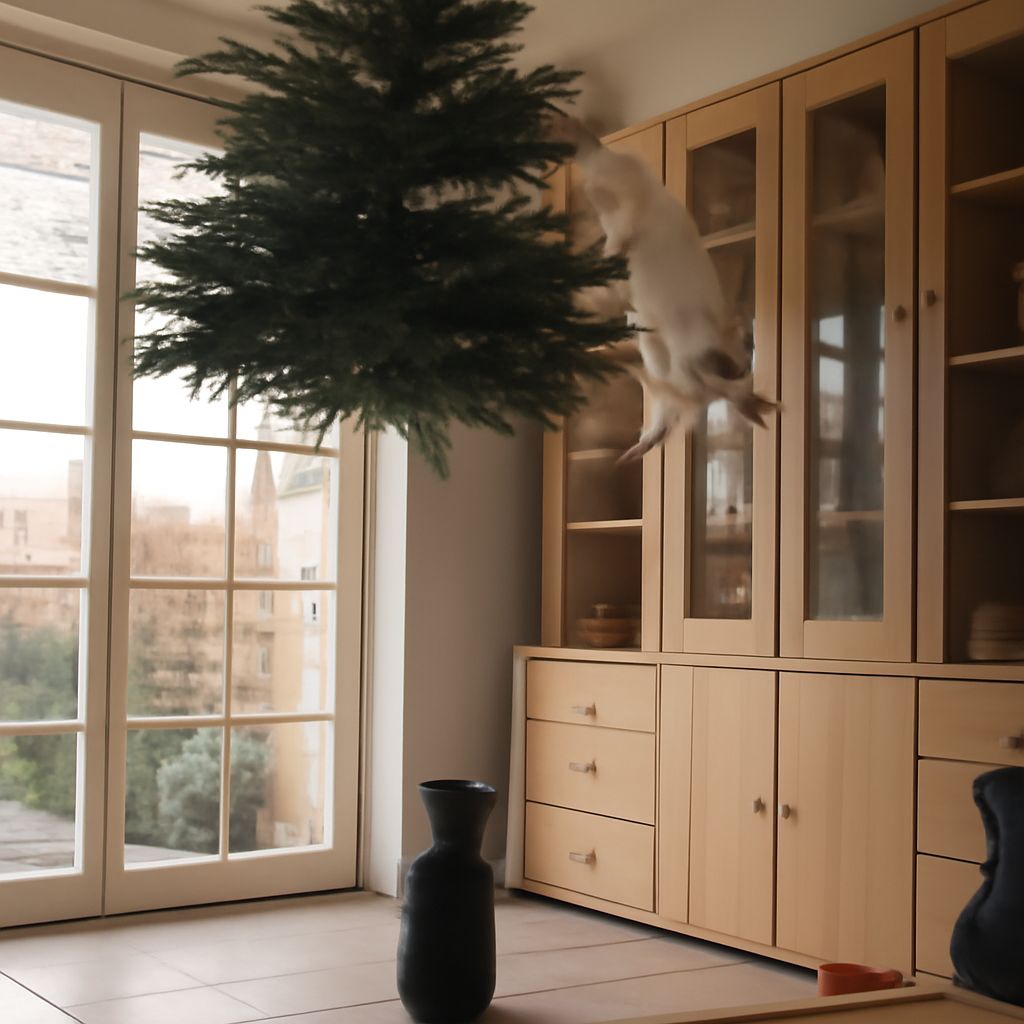
Imagine the twinkling lights of a Christmas tree reflecting off the eyes of your curious cat. Each ornament dangling from the branches seems like an irresistible toy, and the tree itself a mighty tower to conquer. As you prepare for the festive season, you might wonder, “Are Christmas trees poisonous to cats?” This question lingers in your mind as you watch your feline friend eyeing the tree, ready to launch into action. Managing cat and Christmas tree interactions becomes crucial to ensure both the safety of your cat and the preservation of your holiday decorations.
Understanding The Appeal: Cat And Christmas Tree
Cats are naturally drawn to Christmas trees for various reasons. The tree’s vertical structure offers a tempting opportunity for climbing, while its needles and branches provide new textures and scents for exploration. Moreover, the ornaments hanging from the tree resemble toys that entice playful batting or swatting behavior. As you prepare your home for the holiday season, recognizing your cat’s instinctual attraction to the Christmas tree can help you develop strategies to manage their interactions.
Are Christmas Trees Poisonous To Cats?
When it comes to Christmas trees, concerns about toxicity are valid. While most evergreen trees, such as fir, spruce, and pine, are not highly toxic, ingesting any part of the tree can lead to gastrointestinal upset in cats, including vomiting or diarrhea. Pine needles can also cause irritation or puncture the digestive tract if swallowed. Additionally, the water used to keep a tree fresh may contain fertilizers or additives that could be harmful if ingested by your pet. While the level of risk varies, it is essential to monitor your cat’s behavior around the tree and take preventive measures.
Preventing A Cat In A Christmas Tree Incident
To prevent your cat from climbing or attacking the Christmas tree, there are several strategies you can employ. First, secure the tree to prevent tipping or falling, which can cause injury to both your cat and your home. You can also use deterrents such as citrus or peppermint sprays, as these scents are often disliked by cats. Additionally, you might consider placing the tree in a corner or using a baby gate to limit access, effectively managing cat and Christmas tree interactions.
Cats And Christmas Trees: Creating A Safe Environment
Creating a safe environment during the holiday season involves more than just addressing toxicity concerns. To protect both your decorations and your cat, choose shatterproof ornaments that are less likely to break if knocked off the tree. Ensure that all lights and electrical cords are secured and out of reach to avoid chewing or entanglement. Furthermore, avoid using tinsel, which can be a choking hazard and cause intestinal blockage if swallowed. By implementing these precautions, you can maintain a festive yet feline-friendly setup.
Choosing The Right Christmas Tree For Cats
Choosing a Christmas tree that suits both your aesthetic preferences and the safety needs of your cat is crucial. If possible, opt for an artificial tree, as it eliminates risks associated with consuming natural needles and sap. Alternatively, select a smaller tree that can be placed on a table or elevated surface, reducing your cat’s access. Consider tree decorations carefully; prioritize lightweight, durable ornaments that won’t shatter easily. By tailoring your tree choice to accommodate your pet, you can enjoy a harmonious holiday setting.
Safety recap: Ensuring a safe environment for cats during the holiday season involves cautious tree selection, securing decorations, and monitoring interactions. By understanding the potential hazards and taking preventive measures, you can enjoy a festive and cat-friendly holiday.