Imagine adopting a new cat and finding yourself mesmerized by the myriad of colors and patterns displayed on its fur. The allure of cat coats, from striking tabby patterns to the enigmatic tortoiseshell, captivates not only your eyes but also your imagination. As you delve deeper into the world of cats, you discover that the colors of cats are not just about aesthetics; they are a window into their genetics and history. This journey of understanding feline fur patterns opens up a fascinating perspective on what makes each cat unique.
Understanding Cat Fur
Cat fur is more than just a protective layer; it is a tapestry that tells the story of a cat’s lineage and health. The composition of feline fur includes both an undercoat, known for its insulating properties, and a topcoat that provides protection and exhibits the colors and patterns we admire. Each cat’s coat is a unique combination of colors and patterns, influenced by genetic factors inherited from its parents. These variations not only contribute to the aesthetic appeal but also play a role in a cat’s overall well-being.
A Closer Look at Cat Coat Patterns
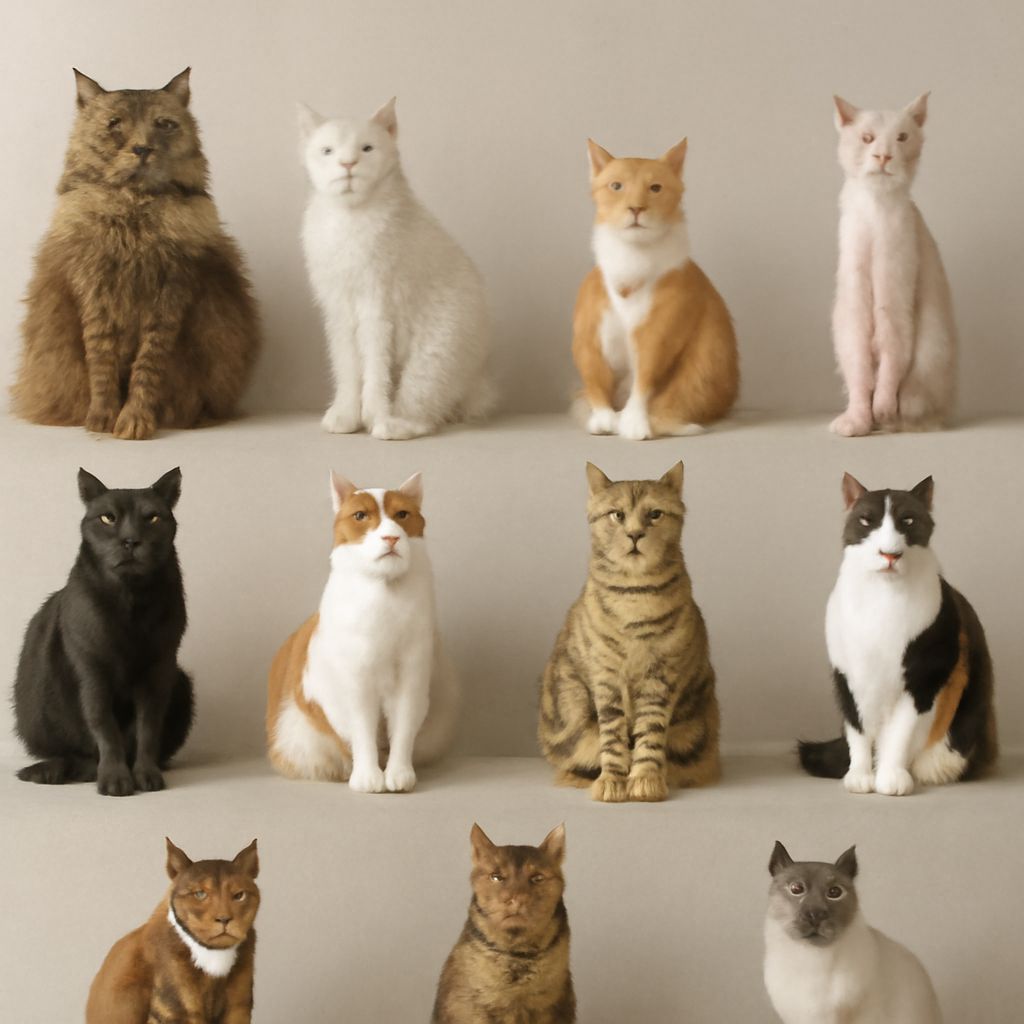
Cat coat patterns are diverse and can range from the classic tabby to the more intricate tortoiseshell designs. The tabby pattern is one of the most common, characterized by stripes, swirls, or spots, often accompanied by an ‘M’ marking on the forehead. Other popular patterns include the solid coat, where the fur is a single, uniform color, and the bicolor, where two distinct colors create a striking contrast.
The tortoiseshell pattern, often seen in females, features a mosaic of orange, black, and sometimes white patches, creating a unique, mottled appearance. Similarly, the calico pattern adds patches of white to the tortoiseshell mix, resulting in a vibrant, tri-colored coat. Each pattern not only enhances a cat’s visual appeal but also signifies particular genetic combinations.
The Variety of Colors in Cats
The spectrum of cat colors is vast, ranging from the classic black and white to more exotic hues like blue and chocolate. These colors arise from two primary pigments: eumelanin, which produces black and brown shades, and pheomelanin, responsible for red and yellow tones. Variations in these pigments, influenced by specific genes, result in the rich palette of feline colors.
For example, a cat may display a blue coat, which is essentially a dilute version of black, while a cream-colored cat exhibits a diluted form of red. Such dilutions are due to genetic modifiers that reduce the intensity of the base colors. The interplay of these pigments and modifiers creates the unique and varied colors that make each cat distinct.
The Connection Between Cat Colors and Patterns
While color and pattern might seem independent, they are closely intertwined in determining a cat’s appearance. The genetic basis that dictates fur colors often influences the patterns as well. For instance, in tabbies, the presence of the agouti gene impacts both the color and pattern, leading to the characteristic ticked appearance.
Moreover, certain colors are associated with specific patterns. For example, the red coloration is often linked with the tabby pattern, resulting in the classic orange tabby. Understanding how colors and patterns connect not only satisfies curiosity but also aids in identifying and appreciating the diverse breeds and variations in the feline world.
How Cat Breeds Influence Coat Appearance
Different cat breeds showcase distinct coat appearances, influenced by their unique genetic make-ups. For instance, the Siamese breed is renowned for its pointed pattern, where the extremities are darker compared to the body. This striking appearance is a result of a temperature-sensitive enzyme that affects fur color based on body temperature.
On the other hand, the Maine Coon is known for its luscious, thick coat, often exhibiting a tabby pattern, while the Persian breed is celebrated for its long, luxurious fur, which can come in a variety of colors and patterns. Breeds like the Bengal exhibit exotic, leopard-like spots, a result of selective breeding to enhance their wildcat ancestry.
By exploring how different breeds influence coat appearance, enthusiasts can gain a deeper appreciation for the diversity and beauty found in the feline world.
Safety recap: When grooming or caring for your cat’s coat, use appropriate tools designed specifically for cats to avoid damaging the fur or skin. Always follow recommended practices for color care to maintain the vibrant appearance of your cat’s coat.