
Imagine you’re watching your cat navigate a cluttered room with ease. As it moves, its whiskers twitch and adjust, seemingly guiding it through the obstacle course effortlessly. You might wonder, what do cat whiskers do that allows this graceful movement? Understanding the purpose of cat whiskers is essential to appreciating how these fascinating features enhance a cat’s instincts and senses.
Introduction to Cat Whiskers
Cat whiskers are more than just adorable adornments on your feline friend’s face. Also known as vibrissae, these specialized hairs are deeply embedded in the cat’s skin and are rich in nerve endings. They serve a unique function that is crucial to a cat’s perception of its environment. Understanding these roles can offer insights into the intricate world of feline behavior and sensory capabilities.
The Anatomy of Cat Whiskers
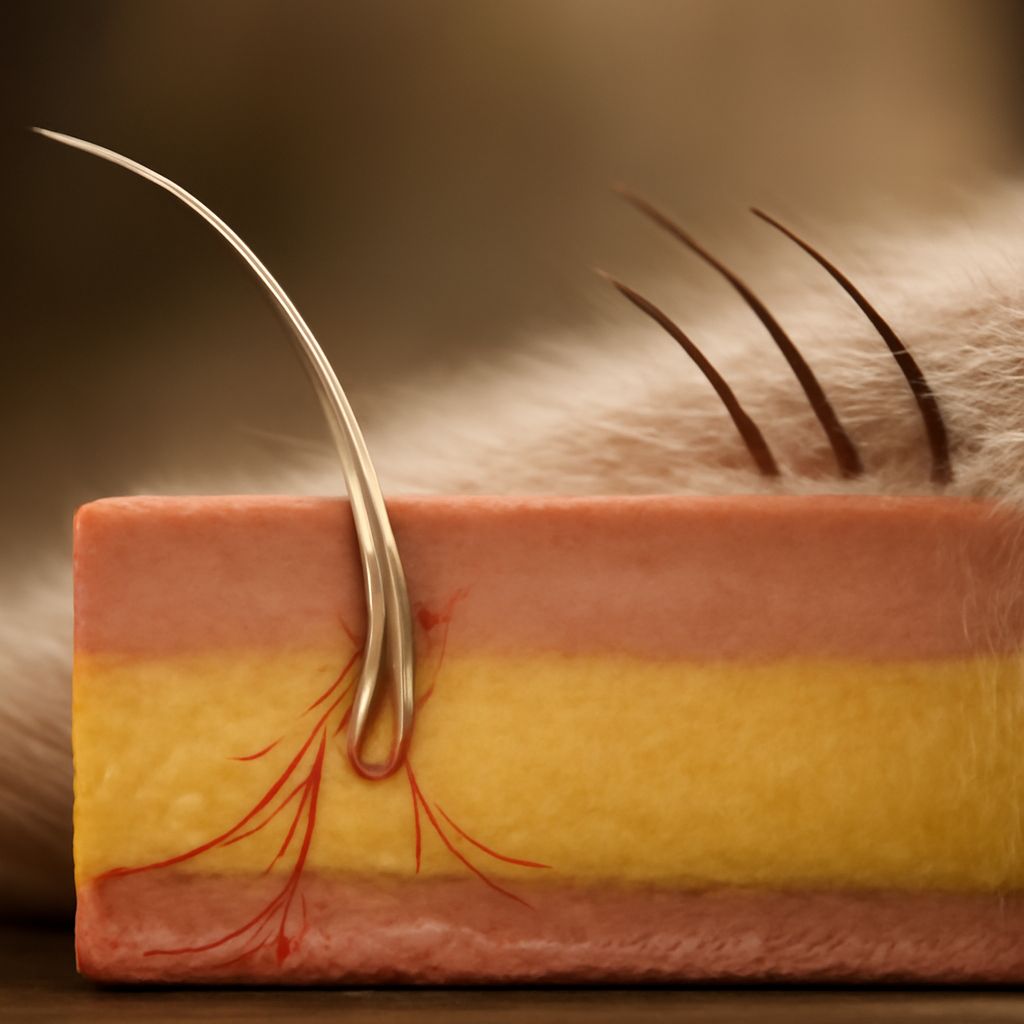
A cat’s whiskers are strategically located not only on its muzzle but also above its eyes, on its chin, and even on the back of its legs. These stiff hairs are significantly thicker than ordinary fur and are deeply rooted in the whisker pad, a highly sensitive area filled with blood vessels and nerves. This structural complexity allows whiskers to detect the smallest changes in surroundings, acting as an essential tool for navigation and exploration.
What Do Cat Whiskers Do?
Whiskers perform multiple functions for a cat. They act as a radar system, helping cats gauge the size of openings and paths. This is why cats can often squeeze through tight spaces without bumping their heads. Additionally, whiskers are highly receptive to vibrations in the air, alerting cats to approaching objects and movements. This ability is particularly useful in low-light conditions where vision might be compromised.
Furthermore, whiskers play a role in hunting and capturing prey. The sensitivity of these hairs allows cats to detect the precise location of their prey, making them effective hunters. Thus, whiskers not only contribute to a cat’s physical navigation but also enhance its predatory skills.
The Purpose of Cat Whiskers in Feline Behavior
Whiskers are integral to a cat’s behavioral expressions and communication. A cat may flatten its whiskers against its face when threatened, signaling aggression or fear. Conversely, when a cat is curious or happy, its whiskers will point forward, indicating interest or contentment. Observing these subtle cues can provide a window into a cat’s emotional state, helping owners understand their pet’s feelings and needs.
Moreover, whiskers assist in maintaining balance and spatial awareness. They help cats judge distances accurately, which is essential when leaping from one perch to another. This spatial intelligence is a key component of feline agility and precision.
How Whiskers Enhance Instincts and Senses
Whiskers are an extension of a cat’s sensory system, amplifying its natural instincts and senses. They connect to the brain’s sensory processing centers, making them a crucial component in a cat’s ability to interpret the world. This heightened perception enables cats to detect changes in their environment quickly, whether it be a shift in air pressure or the presence of another animal.
Additionally, whiskers contribute to a cat’s tactile sensations. As they brush against objects or surfaces, they send detailed information about texture and shape to the cat’s brain. This sensory input is vital for exploration and helps cats make informed decisions about their surroundings.
Bottom line: Cat whiskers are remarkable tools that serve various essential purposes in a cat’s life. From aiding navigation to enhancing sensory abilities, they are integral to a feline’s instinctual behaviors. Understanding what cat whiskers do allows us to appreciate the complex and fascinating nature of these beloved animals.