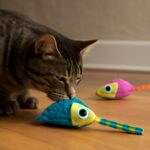
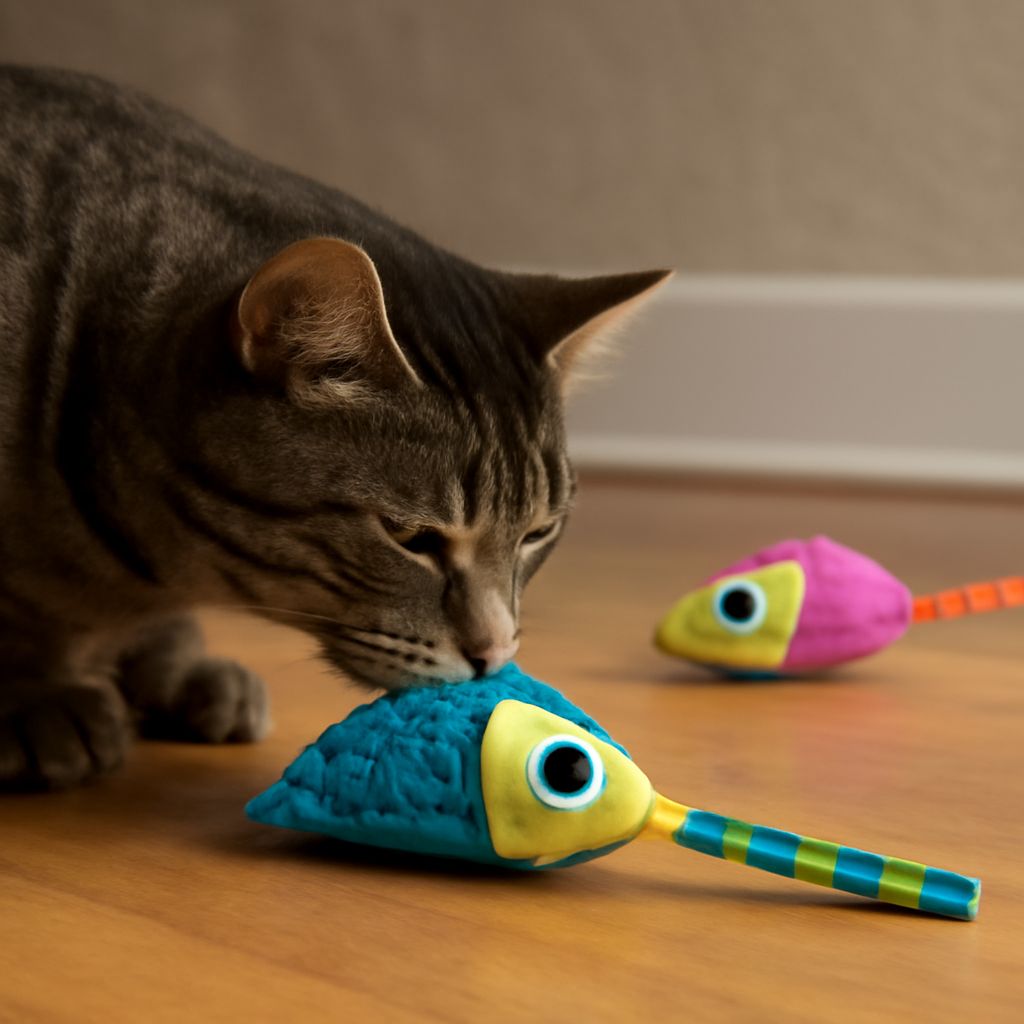
Which catnip-filled plaything will suit your cat? Start with the way your cat likes to play: a sturdy little kicker may appeal to a wrestler, while a light fabric mouse may be easier to chase. Check the seams and remove any loose pieces before offering it.
A cat’s plaything containing catnip can invite sniffing, rolling, or a burst of activity, but some cats show little interest. Watch the first encounter and let your cat decide whether the toy is worth exploring.
Catnip toys for cats: Choose a shape for the game
Think about what your cat already does with favorite objects. A toy that matches those habits gives the scent a role in a game your cat knows. Consider these shapes:
- Small plush shapes: A mouse or ball can be batted across the floor and carried. Choose one large enough that your cat cannot swallow it, with securely attached features.
- Long kickers: A soft, elongated shape gives a cat room to grab with the front paws and kick with the back feet. Look for a covering and seams that can stand up to that grip.
- Refillable pouches: These let you refresh the contents, but their closures need to stay secure during play. Check the opening before and after each session.
- Wand attachments: These let you move the toy like prey and give your cat something to catch. Stay with your cat throughout the game, then put the wand and its cord away.
When comparing catnip toys for cats, feel the fabric and inspect where panels meet. A toy that feels flimsy or sheds fibers in your hands is a poor match for a strong chewer. Avoid decorations that could detach, including glued-on eyes, bells, ribbons, or feathers. The best size and shape are the ones your particular cat can handle without swallowing pieces.
Sealed or refillable?
A sealed catnip toy is simple to offer: there is no opening to manage. Its contents are harder to replace, though, and the whole toy may need replacing when it wears out or loses its appeal. Look for tight, even stitching rather than a gap where stuffing can escape.
A refillable design gives you access to the compartment. Before buying, examine how it closes and whether your cat could pull it open with teeth or claws. Follow the maker’s directions for filling and closing it; check that no loose material is caught in the fastener. Store spare catnip and the toy between sessions somewhere your cat cannot open or reach them.
Scented playthings for cats can be fun without being complicated. If your cat tends to bite through fabric or swallow nonfood items, ask your veterinarian for help choosing an appropriate play option. You can also choose a different kind of enrichment, such as a food puzzle, that suits your cat’s habits.
Introduce the scent and watch the response
Set the new toy on the floor and allow your cat to approach. You might give it a gentle movement to invite a chase, then let your cat catch it. Keep your hands away from the action: use the toy as the object of the game, not your fingers. Watch how firmly your cat bites, whether the fabric holds, and whether the interaction looks comfortable.
Catnip contains a compound called nepetalactone. VCA Animal Hospitals explains that responses vary: some cats become playful or relaxed, while others do not respond. A cat may sniff and walk away, or enjoy batting the toy regardless of the scent. Young kittens may not show a response yet. There is no need to coax a reluctant cat into contact.
If play turns tense or your cat becomes agitated, end the session calmly and put the toy away. In a multicat home, give each cat space and supervise interactions around a new object. If one cat guards it or another seems worried, offer separate play sessions. Speak with your veterinarian if you have concerns about your cat’s behavior or if your cat swallows part of a toy.
Clean, store, and inspect
Read the care label before washing. Some covers can be removed or washed; others may need spot-cleaning or may not tolerate soaking. Follow the manufacturer’s instructions and let a washable item dry fully before returning it. A damp toy tucked into a closed container can remain unpleasantly wet, so give it time to dry in an airy place.
Rotate catnip-filled playthings rather than leaving every option out all the time. Store them in a secure, dry place between sessions, and bring one back when you can supervise. A change in interest can simply mean your cat wants another kind of game; it is a cue to observe, not a promise that more scent will help.
After each game, check the toy closely: pull gently at the seams, look for holes and loose threads, and make sure any refill opening still closes securely. Check the floor for escaped filling or detached parts. Remove a damaged toy from use and replace it before the next play session.