
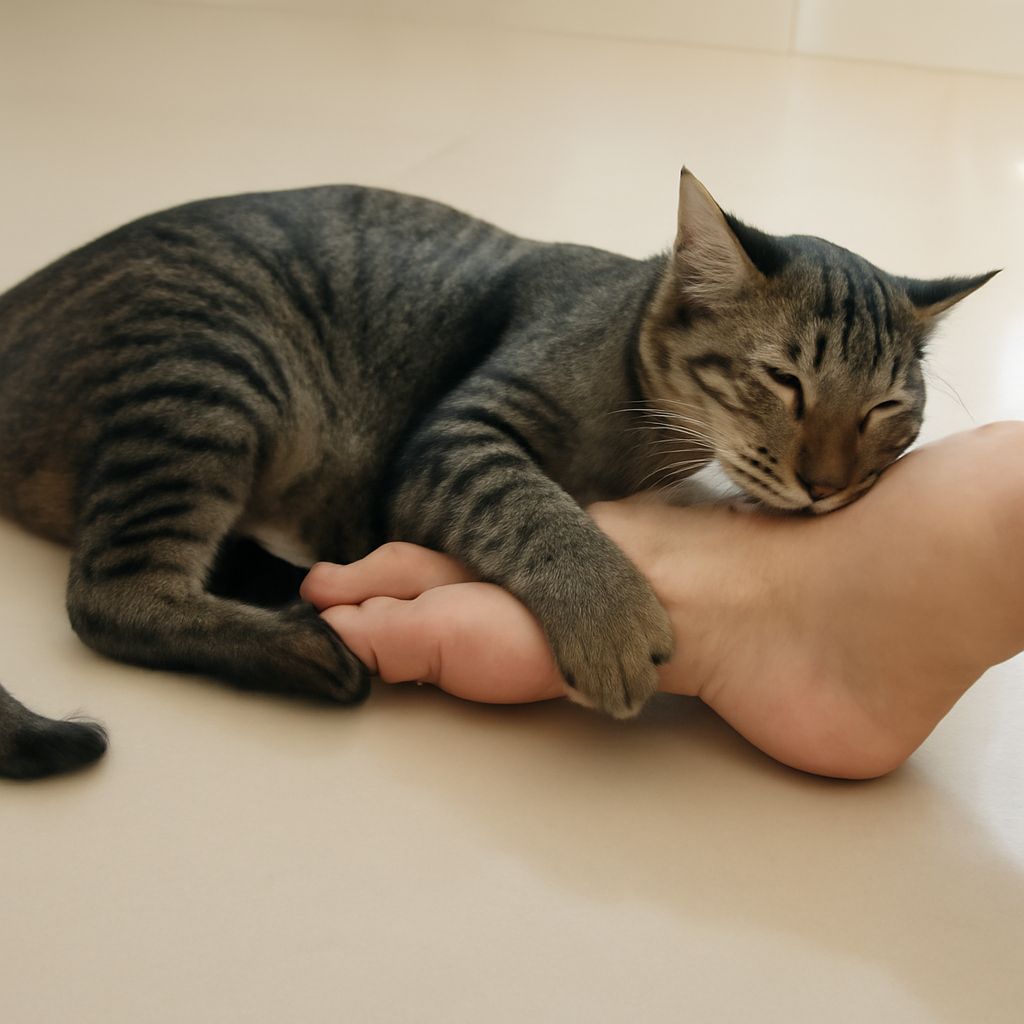
Imagine coming home after a long day, ready to finally relax. As you slip off your shoes, your cat darts across the room and nips at your feet. It’s a familiar scene for many cat owners, leaving you wondering, “Why does my cat bite my toes?” Understanding the reasons behind this behavior can help ease these surprise attacks and improve your relationship with your feline friend. If you’ve ever asked yourself, “Why do cats attack feet?” you’re not alone. By exploring the instincts and triggers behind cat biting feet, you can uncover the reasons for your pet’s seemingly random actions.
Understanding the Instincts Behind Cat Biting Feet
Cats are natural hunters. Even domesticated cats retain strong instincts that drive their actions. The motion of your feet might activate their predatory behavior, inciting them to pounce as if they were stalking prey. This instinctual behavior often translates into playful bites that can sometimes catch you off guard.
Moreover, cats biting feet might be a means for them to satisfy their curiosity. Feet are an interesting target with their constant movement and unique scents, drawing the attention of a curious feline. Understanding these natural instincts can help you make sense of the biting and find ways to channel their energy into more appropriate activities.
Why Do Cats Attack Feet? Exploring Common Triggers
There are several triggers that could explain why your cat attacks your feet. One possible reason is overstimulation. If a cat is overwhelmed by excessive petting or play, this can lead to biting as a way to communicate their discomfort. Alternatively, your cat might simply be bored and looking for something to engage with, and your moving feet become an enticing target.
Another trigger might be that your cat is seeking your attention. When a cat bites, it often gets a reaction from its owner, whether that’s a sudden jump or a verbal response. This interaction can be stimulating for a cat, encouraging them to repeat the action for similar attention.
Why Does My Cat Bite My Toes? Analyzing Specific Behaviors
If you’re finding that your cat bites your toes more than other parts of your body, it may be due to the sensitivity and accessibility of your feet. Your toes are often exposed and within reach, making them an easy target for a curious or playful cat. Cats might also be drawn to toes because they mimic the small, moving prey found in the wild.
Additionally, the texture and warmth of toes can be appealing to cats. They often enjoy exploring textures with their mouths, leading to harmless but surprising nibbles. Observing when and how your cat bites can provide insight into their specific motivations and help you address the behavior effectively.
How to Discourage Cat Biting Feet: Practical Tips
Reducing unwanted biting behavior requires a mixture of redirection and positive reinforcement. Offering your cat toys that mimic prey movement can help redirect their hunting instinct away from your feet. Interactive toys, such as feather wands or laser pointers, can be particularly effective.
Consistently rewarding your cat with treats or praise when they engage in appropriate play also reinforces positive behaviors. Additionally, ensuring your cat has plenty of mental and physical stimulation throughout the day can decrease their boredom and reduce the likelihood of them seeking out your feet for entertainment.
When to Seek Professional Help for Cat Biting Issues
In some cases, cat biting may persist despite your best efforts. If your cat’s behavior becomes aggressive or poses a risk of harm, it may be time to consult a professional, such as a veterinarian or a cat behaviorist. They can offer tailored advice and may uncover underlying issues contributing to the biting.
Consult a professional if the biting is accompanied by other behavioral changes, such as excessive aggression or withdrawal, as these might indicate stress or health problems that require attention.
Safety Recap: When handling your cat and discouraging biting, always prioritize safety. Use toys to create a safe distance between your hands and their teeth. Patience and consistency are key in modifying behavior, ensuring a harmonious environment for both you and your feline companion.