
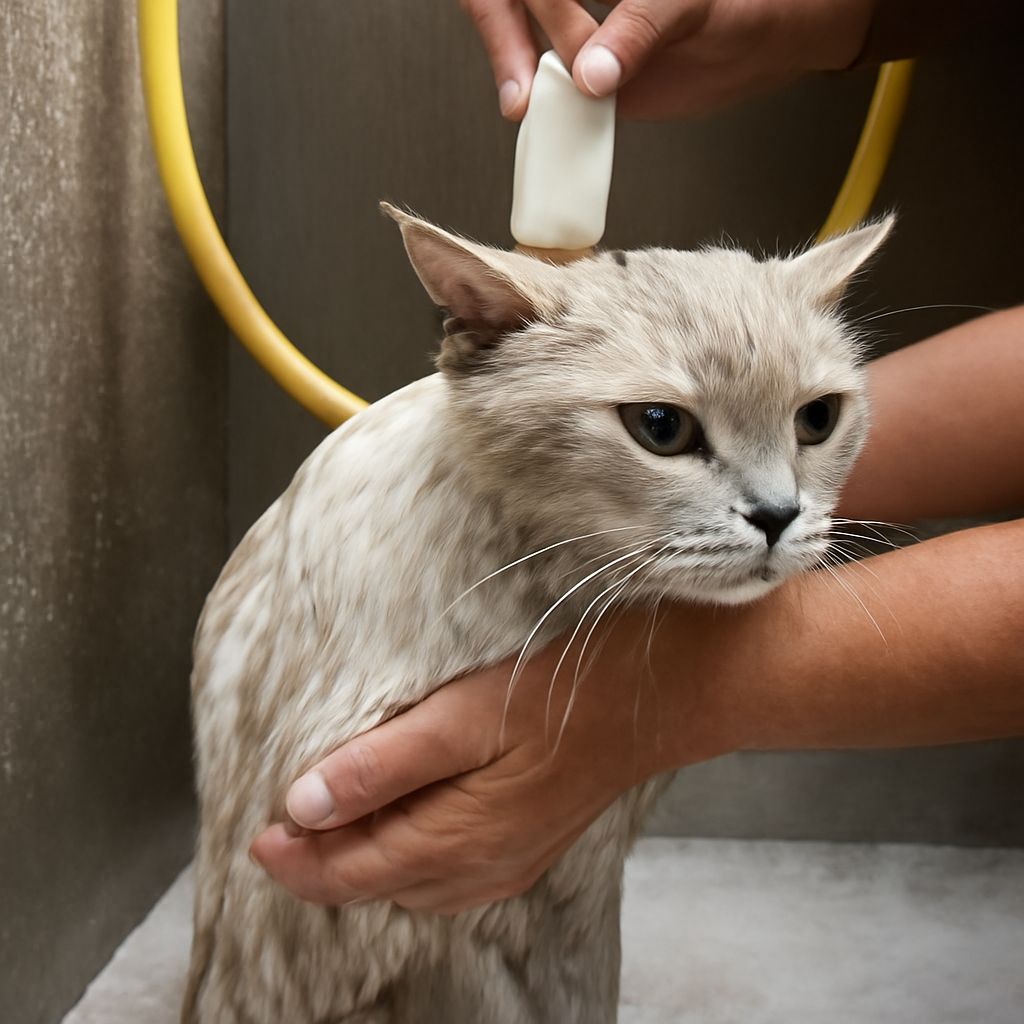
Imagine it’s bath time for your cat, and you’re mentally preparing for the ordeal. As you get closer to the dreaded task, you can already hear the hissing and feel the tension in the air. Bathing a cat that hates water is a challenge you’ve faced before, yet it never seems to get any easier. Even the thought of trying to bathe an aggressive cat or shave a cat that hates it sends shivers down your spine. But fear not, with the right techniques and understanding, you can help your pet feel more like the cat that got the cream after grooming.
As you gather your supplies, you’re determined to turn this experience into a positive one. Understanding why your feline friend behaves this way is the first step towards improving the situation, and with a little patience, you might even earn some trust back if your cat hates you for past attempts.
Understanding Why Your Cat Hates Water
Cats are famously averse to water, and the reason often lies in their natural instincts and anatomy. Unlike other animals, cats are not naturally equipped to handle being wet. Their fur doesn’t dry quickly, leading to discomfort and a drop in body temperature. Furthermore, being submerged or splashed can cause anxiety as it removes their ability to move freely and escape if needed.
In some cases, a cat’s dislike for water can also be attributed to past negative experiences. If a cat associates water with a traumatic event, it will likely react aggressively to future baths. Understanding these factors can provide insight into why your cat may be acting out.
Preparing to Bathe an Aggressive Cat
Preparation is crucial when dealing with an aggressive cat during bath time. First, gather all necessary supplies: a towel, cat shampoo, and a small container for rinsing. Create a calm environment by dimming the lights and playing soothing music.
Trim your cat’s nails beforehand to minimize the risk of scratches. It’s also helpful to have a second person to gently hold the cat if needed. Wearing long sleeves can provide an added layer of protection. Remember, the goal is to reduce stress for both you and the cat.
Step-by-Step Guide on How to Bathe a Cat That Hates Water
Begin by filling the sink or tub with a few inches of lukewarm water. Slowly lower your cat into the water, speaking in a calm and reassuring voice. Use a cup to gently wet the fur, avoiding the face.
Apply a small amount of cat shampoo, lathering from the neck down to the tail. Rinse thoroughly, ensuring no soap residue is left behind, as it can irritate the skin. Once rinsed, wrap your cat in a dry towel and gently pat them dry.
Throughout the process, be patient and remain calm. If your cat becomes too stressed, take a break and try again later. The key is to make the experience as comfortable as possible.
How to Shave a Cat That Hates It
Sometimes shaving is necessary, particularly for long-haired cats prone to matting. However, shaving a cat that hates it requires a delicate touch. Start by introducing the clippers slowly, allowing the cat to get used to the sound and vibration.
Begin shaving in short increments, starting from the back or legs, where the cat may be less sensitive. Ensure you have a firm yet gentle grip to prevent any sudden movements. If the cat becomes agitated, it’s best to stop and let it calm down before continuing.
Consider consulting a professional groomer if you’re unsure. They have the experience and tools needed to handle a feisty feline safely.
Building Trust: What to Do if Your Cat Hates You
If your cat seems to hold a grudge after grooming, don’t despair. Trust can be rebuilt with time and patience. Offer treats and affection after each grooming session to create positive associations.
Engage in regular playtime to strengthen your bond and show your cat that you are a source of fun and comfort. Speak gently and avoid sudden movements that might startle them. With consistency, your cat may begin to see you as a trusted partner rather than an adversary.
Safety Recap: Always prioritize safety for both you and your cat when grooming. Use appropriate tools and techniques to minimize stress and prevent injury. If in doubt, seek the assistance of a professional groomer.