
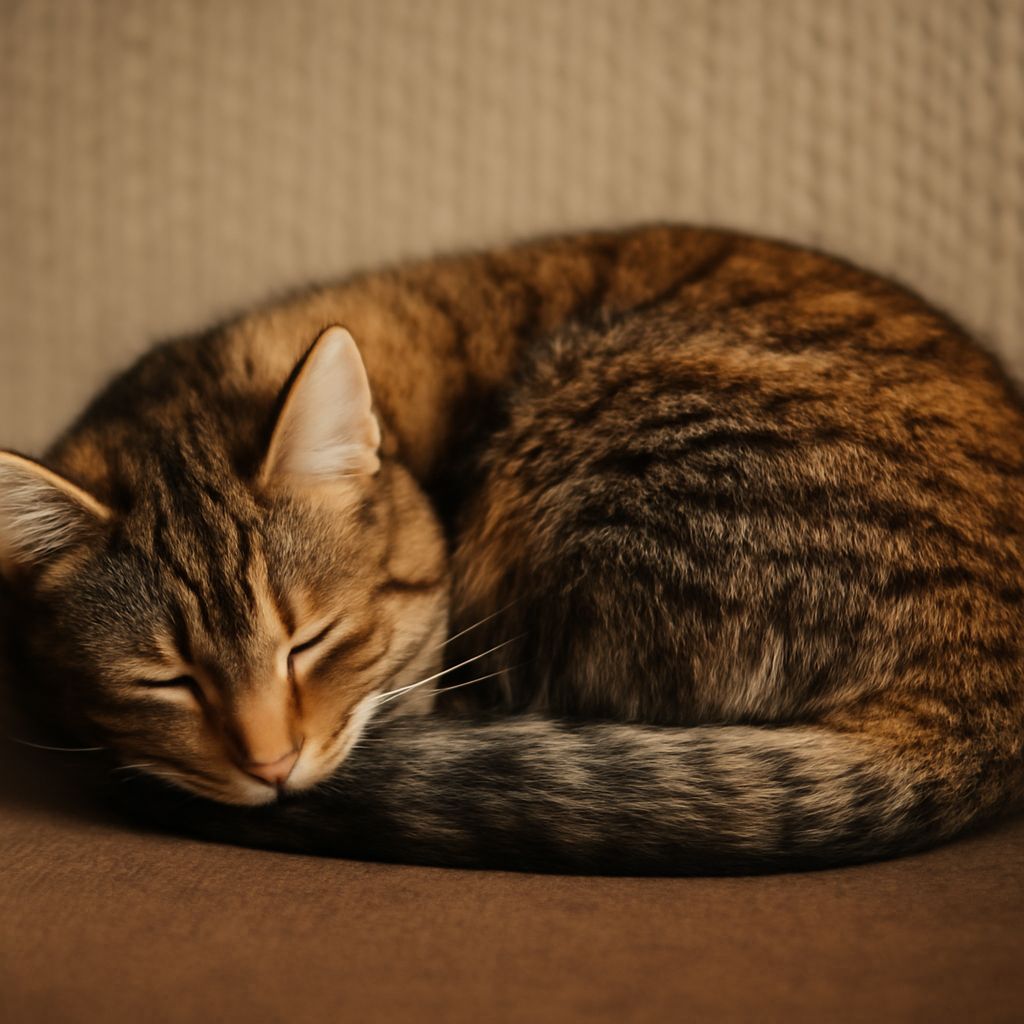
Why does your cat turn into a neat little circle at bedtime? A curled-up kitty may be keeping warm, getting comfortable, or settling where it feels sheltered. Look at the room and your companion’s usual habits for clues; the shape alone cannot tell you exactly what is on a cat’s mind.
A sleeping kitty tucked into a blanket can be a perfectly ordinary sight. The interesting part is what happens around it: the cool draft by the window, the favorite bed, or the sudden arrival of a noisy vacuum cleaner. Context gives you more to work with than the outline of a furry doughnut.
Cat Sleeping Curled Up: Warmth and Comfort
Cats Protection notes that drawing the legs and tail close to the body can help conserve heat. You may notice the position more often on a chilly morning, especially in a room with a draft. On a warmer afternoon, the same animal might sprawl across the floor. Cats have preferences, though, and a circle on a warm day is not evidence that the room is cold.
A cat curled up sleeping may also simply like the way the position feels. A soft surface can support the body, while the raised edge of a bed gives it something to lean against. Some cats turn several times before settling; others drop into place as though they have an appointment with a cushion.
Try offering a folded blanket in a quiet spot and another resting place in a different part of the room. Let your cat choose. If it consistently picks one location, notice what that spot offers: warmth, a view of the doorway, a familiar smell, or distance from traffic. You do not need to solve the mystery to make the room more comfortable.
A sheltered place to rest
Rest makes an animal less ready to respond to whatever happens nearby. A bed with a side against the wall or a box with an open entrance may feel more sheltered than the middle of a busy floor. Curling brings the limbs close to the body, but the position itself cannot establish whether a cat feels safe or anxious.
Look at the whole scene. Does your companion settle easily, wake normally, and return to its usual meals and activities? Or has it begun hiding when visitors arrive, avoiding another pet, or leaving as soon as someone approaches? Give it a quiet retreat and a clear way out. In a home with several pets, separate resting places can reduce competition for a favorite spot.
When you see a cat sleeping curled up, consider its choice of location as well as its posture. A soft bed in a calm corner may suit one individual, while another prefers a shelf where it can watch the room. The first cat is not necessarily shy and the second is not necessarily brave. They may simply disagree about furniture.
What changes are worth noticing?
So why do cats curl up? Begin with what is normal for your own companion. A familiar habit that appears in different comfortable places is less informative than a sudden change alongside other unusual behavior. Notice whether your cat still eats, moves, uses the litter box, and interacts as usual.
For example, a cat that used to jump onto the sofa but now hesitates, moves stiffly after rest, or resists being touched may be uncomfortable. Hiding more, eating less, or repeatedly struggling to settle are also changes to discuss with your veterinarian. These signs have several possible causes, so describe what you see rather than trying to diagnose from a sleeping position.
If breathing is labored or your cat collapses, seek emergency veterinary care. For less urgent changes, record when they began and take a short video of any unusual movement if you can do so without disturbing the cat. Your veterinarian can use those observations alongside an examination.
Make rest easy to choose
Why might cats curl into a ball? The answer can involve temperature, comfort, a sheltered setting, or an individual habit, often in combination. A curled-up cat may shift position as the room and household change. A cat curled into a ball may also have its own preference for a particular cushion. Watch over a few days instead of drawing a conclusion from one nap.
Keep bedding clean and dry, place it away from drafts, and make sure your companion can get in and out easily. An older cat that avoids a high perch may appreciate a low-sided bed on the floor; tell your vet if climbing has become difficult. Leave a little space around the chosen resting spot, then let your cat settle without interruption.