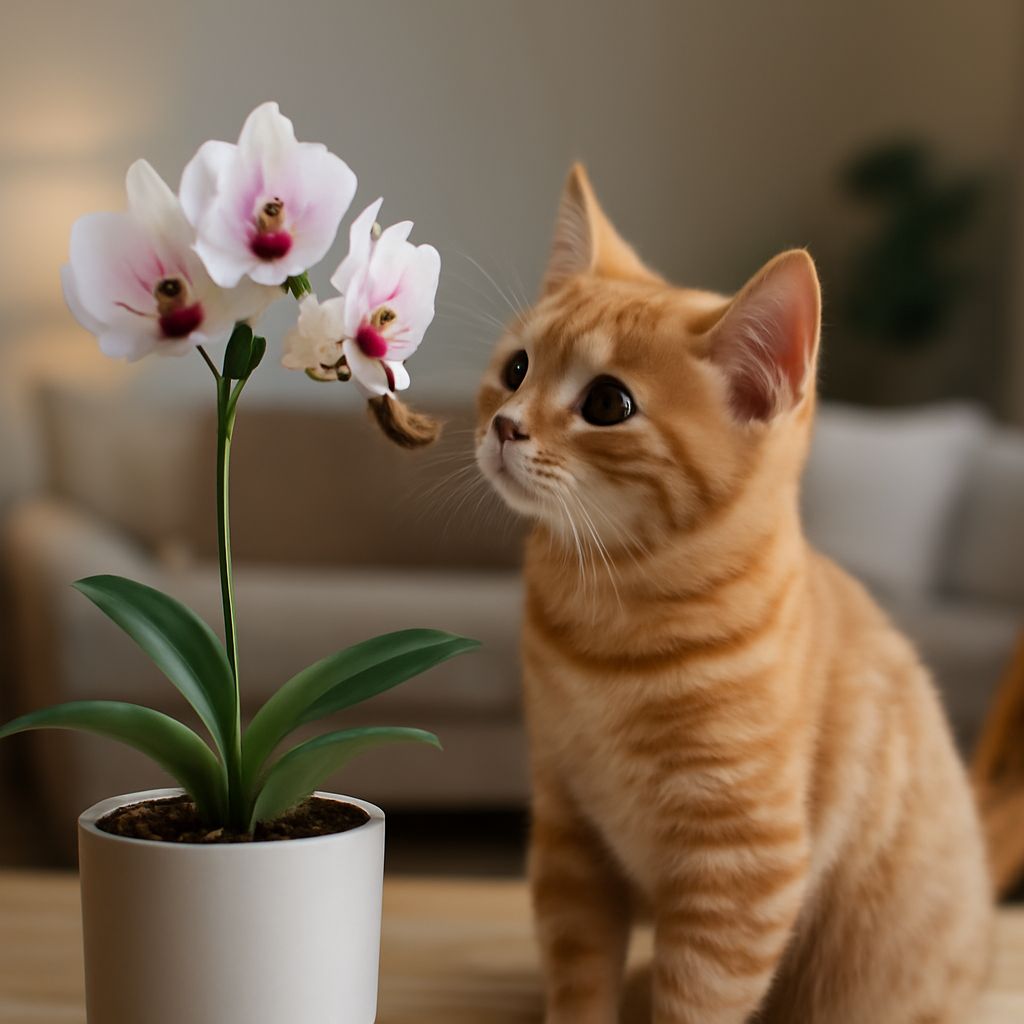
Your cat has found the orchid on the windowsill. Is that particular orchid safe for your cat? A confirmed Phalaenopsis, or moth orchid, is listed as non-toxic to cats by the ASPCA. But a plant sold under the name “orchid” still needs identification, and anything applied to it deserves a separate check.
If you are wondering whether an orchid is toxic to a cat after a bite, look for the plant label and any product packaging while you assess your pet. Contact your veterinarian promptly if the plant is unknown, a chemical may have been involved, or your cat is unwell.
Orchids Toxic to Cats? What the Plant Label Reveals
Are orchids safe for cats? The answer depends on the plant you can identify. The ASPCA lists Phalaenopsis species as non-toxic to cats. This familiar houseplant is also called a moth orchid. That listing applies to the plant itself; it does not evaluate a particular pot of fertilizer or a spray used on its leaves.
To decide whether orchids are safe for your cats, look for a scientific name on the nursery tag, receipt, or seller’s listing. A name such as Phalaenopsis is more helpful than a color or the word “orchid.” If the tag is missing, photograph the flowers, leaves, and whole plant, then ask the seller or a knowledgeable nursery to help identify it. Keep the plant away from your cat while you investigate. A photo can help an expert narrow the possibilities, but a guessed identification should not settle an exposure call.
Are orchids toxic to cats? Some types are listed as non-toxic, but a common name alone cannot tell you what is in your pot. If you cannot establish the identity and your cat has chewed it, call your veterinarian or an animal poison control service with what you do know.
A nibble, a touch, or a mouthful?
The way your cat encountered the plant matters. Brushing a clean, identified moth orchid is different from chewing its leaves, drinking water from the pot, or digging into the growing medium. Check for torn leaves, missing flowers, spilled water, and disturbed bark. You may not be able to reconstruct every moment, so tell the veterinarian what you saw and what remains uncertain.
Even a non-toxic plant can cause stomach upset when eaten. Pet Poison Helpline notes that plant material can irritate the digestive tract. Watch for vomiting, diarrhea, drooling, changes in appetite, or unusual behavior, and ask your veterinarian how to respond if symptoms appear. A large piece of plant or a swallowed clip, stake, or other decoration also merits a call; describe the object and its approximate size.
Are orchids bad for cats when they chew them? An identified moth orchid is not expected to poison a cat, but chewing can still upset the stomach, and accessories or treatments introduce other concerns. An orchid can be bad for your cat if it has been treated with a hazardous product. Move the plant and loose pieces out of reach so there is no further exposure.
Check the pot as well as the petals
A beautiful bloom may share its pot with fertilizer granules, treated bark, insecticide, fungicide, or a cleaning spray. Water collected in a saucer may contain some of what was added to the pot. If your cat licked or swallowed any of these, save the container and call your veterinarian or poison control for advice specific to the product and amount. Pet Poison Helpline explains that fertilizer ingredients vary and some exposures can cause serious illness.
Orchid toxicity in cats depends on identifying the plant and considering any products applied to it. The safety of an orchid around cats therefore depends on more than its name. Check when the plant was last treated, where the product was applied, and whether your cat reached wet leaves, potting material, or runoff. If the plant was a gift, ask the giver or florist about treatments; say when the information is unavailable.
When to call urgently
If your cat has trouble breathing, collapses, has a seizure, or is severely unwell, go to an emergency veterinarian immediately. Call ahead if possible, without delaying departure. For a suspected toxic exposure, contact your veterinarian or the ASPCA Animal Poison Control Center at (888) 426-4435 promptly; a consultation fee may apply. Do not wait for symptoms to appear. Follow the professional’s instructions, and do not induce vomiting or give home remedies unless directed by a veterinarian.
To keep cats safe around orchids in the future, place plants and their saucers where your cat cannot reach them, and store plant products securely. Offer appropriate cat toys and play sessions away from the display. Check the arrangement regularly: a dangling flower stem can turn a quiet shelf into an invitation to climb.
Before calling, gather the following if you can do so without delaying urgent care:
- The plant’s label or scientific name, plus clear photos of the whole plant, leaves, and flowers.
- What your cat touched or ate, an estimate of the amount, and when it happened.
- Names and packaging of any fertilizer, pesticide, fungicide, or other product used, and when it was applied.
- Your cat’s weight, symptoms, relevant health conditions, and any medications.
- Whether pot water, growing medium, a stake, or a decorative piece may also be involved.