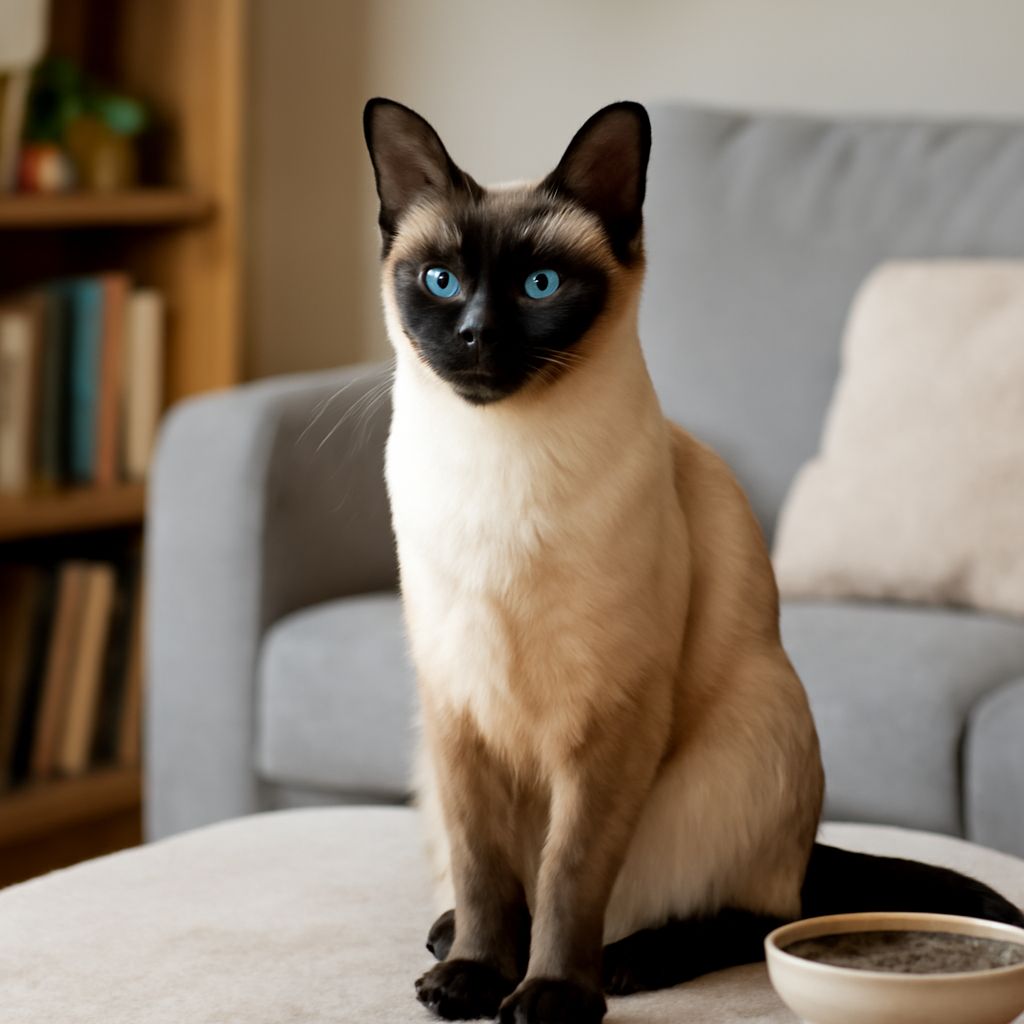
You close a door for a work call, and the cat on the other side announces that this was a poor administrative decision. If you are considering a Siamese kitten or adult, that conversation is worth imagining: the breed is known for a social, often vocal disposition, although each cat has its own preferences.
Siamese Cat Personality: A Conversation at Home
Siamese cats are often affectionate, active and interested in what their people are doing. The Cat Fanciers’ Association describes them as vocal and sometimes insistent. Your companion may answer your voice, follow you between rooms or ask for a game while you are trying to fold a sheet. The sheet will probably lose.
A Siamese cat personality can range from outgoing to cautious, so listen to the individual rather than expecting a particular script. Ask a caretaker how it reacts to visitors, handling and time alone. Some enjoy a lap; others prefer to sit close enough to supervise. A cat who retreats from a noisy introduction may be sociable after it has settled. Give it a quiet place and the choice to approach.
A talkative Siamese cat can be a good match if you enjoy interaction and can make time for it. In an apartment with thin walls or a household that needs long stretches of quiet, consider whether the particular cat’s usual volume and schedule fit yours. Ask a foster caregiver when it tends to call and what helps it settle.
Points, Blue Eyes and a Short Coat
Siamese cat traits include a slender, muscular body, blue eyes and a pointed coat: the face, ears, legs and tail are darker than the body. Point colors vary, including seal, chocolate, blue and lilac. The pale body and dark extremities can make the cat look dressed for a formal occasion it did not agree to attend.
The pattern also occurs in other cats. The Cat Fanciers’ Association’s color guide explains that a pointed coat alone does not establish Siamese ancestry. If a documented pedigree matters, ask for registration and ancestry records and check that they identify the cat. If you are adopting a pointed cat with an unknown background, its individual needs are still the best guide to care.
Among Siamese cat characteristics, the short coat is relatively straightforward to maintain. A gentle brush or comb removes loose hair and lets you check the skin. Add nail trims as needed, a sturdy scratching surface and toothbrushing with cat-safe toothpaste as advised by your veterinarian. Keep sessions brief and comfortable, especially while a young cat is learning the routine.
Give an Active Mind Something to Do
A bright, active cat may notice every closed cabinet and experiment with each one. Provide a secure climbing tree, a window perch and a scratching post, and put away medications, cords and fragile objects. A puzzle feeder can turn part of a measured meal into a small investigation; start with an easy puzzle so the cat can succeed.
Try a wand toy that moves around a chair leg, pauses and then escapes. Let the cat stalk and catch it, and put the toy away afterward. Several short sessions can fit around your day. If your companion prefers a ball to a feather, follow that preference: the goal is a satisfying game, not a performance review.
A Siamese may want company as well as toys. If you work away from home, plan regular interaction before and after you leave and ask how the cat has managed alone in its current setting. A compatible animal companion may help some individuals, but introduce pets gradually and give each separate resources and a place to retreat. Do not assume that any two animals will become friends on schedule.
From Kitten to Senior
Among kittens, Siamese youngsters can be curious and energetic. Offer safe places to climb, frequent short play sessions and calm introductions to household sounds. Use toys rather than hands for chasing games, and ask your veterinarian about vaccines, parasite prevention and food appropriate for growth. A kitten’s habits will develop with experience, so leave room for surprises.
An adult needs a reliable rhythm of meals, play, rest and attention. Measure food with veterinary guidance, provide fresh water and keep litter boxes clean and accessible. Observe what is normal for your cat: when it calls, how high it jumps and how eagerly it joins a game. These details make changes easier to describe at a checkup.
An old Siamese cat may still have plenty to say but find a high perch harder to reach. Add a stable step, choose a low-sided litter box if getting in is difficult, and offer shorter games at floor level. Ask your veterinarian about changes in appetite, weight, mobility or grooming. A new increase in vocalizing, especially at night, deserves a medical discussion rather than being dismissed as the breed’s usual conversation; VCA Animal Hospitals notes that behavior changes can have several causes.
As your companion grows, adjust the routine to what it can comfortably do. A kitten may need many small adventures, an adult a regular game and company, and a senior an easier route to a favorite resting place. Keep listening to the cat in front of you, and change the activity or the setup when its needs change.