
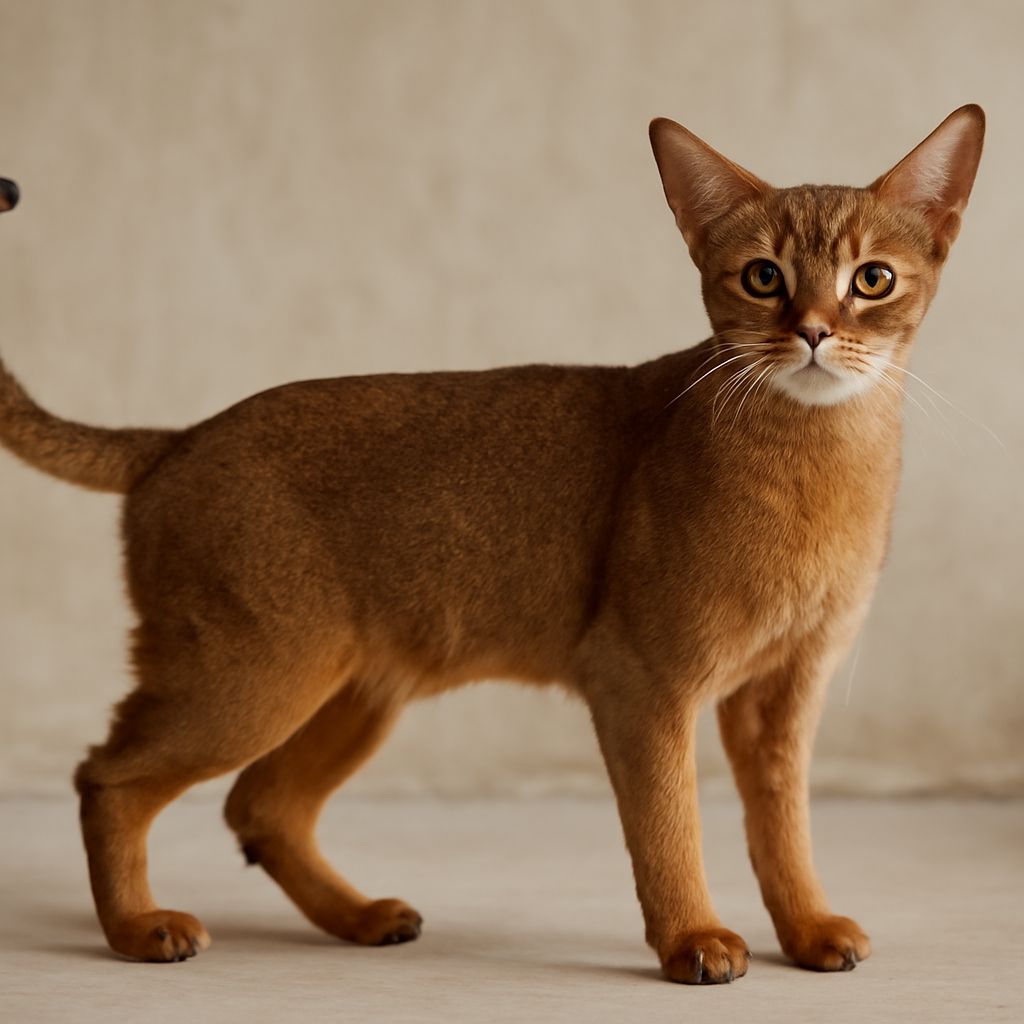
Look closely at an Abyssinian cat’s coat and one hair can contain several bands of color. Step back and those bands blend into a warm, shimmering surface. The Abyssinian is equally interesting in motion: this curious cat may turn a shelf, a paper bag and your afternoon chores into an expedition.
Abysinnian Cat: A Ticked Coat
An abysinnian cat has a distinctive ticked coat, with lighter and darker bands along each hair. Owners often call the breed an “Aby.” The International Cat Association describes the breed as athletic and curious. The ticking gives its short fur depth without requiring obvious stripes across the body.
A ruddy Abyssinian cat has a warm reddish-brown coat with dark ticking. The Cat Fanciers’ Association describes the color as ruddy brown with black ticking and an orange-brown undercoat. An Abyssinian with ruddy coloring is one of several color possibilities; the breed also appears in other shades. Coat color alone cannot establish ancestry, so ask for registration and pedigree records if those matter to you.
An Explorer Who Wants to Be Involved
A cat, Abyssinian or otherwise, may enjoy being where the action is. You might put away groceries and find your companion inspecting the empty bag, then watching from a nearby shelf as you unpack. Remove the handles from a paper bag before supervised play, and take it away if the cat starts chewing it. Curiosity is charming; swallowing packaging is less charming for everyone involved.
The breed is commonly described as active and people-oriented, but individuals vary. One Aby may follow family members from room to room and prefer a quick head rub before dashing away; another may spend longer on a lap. Ask the current caretaker about that cat’s routines, handling preferences and response to visitors. Give it the choice to approach, and make sure it has a quiet place to rest.
Think about the time and attention your household can offer. A curious Abyssinian feline may welcome daily company and games, while a cat accustomed to long quiet periods may settle differently. If you work away from home, ask how the individual manages alone and plan interaction when you return. A second pet may be a good companion for some cats, but it needs its own gradual introduction and separate resources.
Turn Vertical Space Into a Safe Route
Rather than offering a single high platform, create a route: a sturdy low step leading to a stable cat tree, then a clear resting spot where the cat can watch the room. Check that each landing is wide enough and the furniture cannot tip. Secure loose cords and move breakables away from likely jumping paths. A window perch can provide an afternoon of bird-watching without a bird receiving an unexpected visitor.
Try moving a wand toy behind a chair, allowing the cat to stalk and catch it. A treat puzzle or a few pieces of the daily food ration hidden in an easy-to-reach place can give it another problem to solve. Change the game when interest fades, and put string toys away after supervised play. A physical toy lets the cat hold its prize when the hunt ends.
Watch the individual’s energy and confidence. A kitten may need multiple short sessions and close supervision around gaps and cords. An adult may enjoy more demanding climbing or retrieval games. If the cat hesitates at a jump it previously made easily, keep the landing accessible and discuss the change with your veterinarian.
Living With Children and Other Pets
An active cat can enjoy family life when people also respect its breaks. Show children how to move a toy at a distance and let the cat approach for petting. Give the cat a raised resting place and a separate quiet room where it will not be chased. A cat leaving the game has made a perfectly valid scheduling decision.
Introduce a resident dog or cat gradually. Begin in separate rooms, exchange bedding and move to short, supervised meetings as both animals remain comfortable. Place food, water, litter and resting spots where neither animal must pass the other to reach them. Ask the caretaker what experience the newcomer has had with other pets; a general breed description cannot predict a particular friendship.
A Simple Care Routine
The short coat needs modest upkeep. Comb or brush gently to remove loose hair and check for changes in skin or coat. Trim nails as needed, provide scratching surfaces and ask your veterinarian how to introduce toothbrushing with cat-safe toothpaste. Regular veterinary visits are also a chance to discuss dental health, preventive care and any available family health history.
Offer fresh water and a complete food appropriate for age and health. Measure portions with veterinary guidance, including treats used in games. Keep litter boxes clean and accessible, and notice changes in appetite, movement or bathroom habits. Contact your veterinarian when a new change persists or concerns you.
Before settling on the room’s arrangement, watch where your Aby likes to climb and rest. Add one stable step or perch along that route, then see whether the cat uses it comfortably. Adjust the setup and play as its abilities and preferences change.