Imagine you are sitting in your living room, a cup of coffee in hand, scrolling through potential pet options online. The Savannah cat catches your eye with its striking, exotic appearance. You quickly find yourself captivated by the idea of owning such a unique breed. As you delve deeper, you discover the fascinating distinctions between an F2 Savannah cat and a Savannah cat F3. You learn that while both are intriguing, the F2 is known for its wild lineage and the F3 offers a slightly tamer disposition. As you read on, you wonder about the Savannah cat F6 and how it compares to the other generations.
The journey into the world of Savannah cats is not just about choosing a pet; it’s about finding a companion that fits your lifestyle. This comprehensive guide will help you understand the characteristics of these cats, the differences between the F2 and F3 generations, and what to consider if you’re thinking of bringing one into your home.
Understanding the F2 Savannah Cat
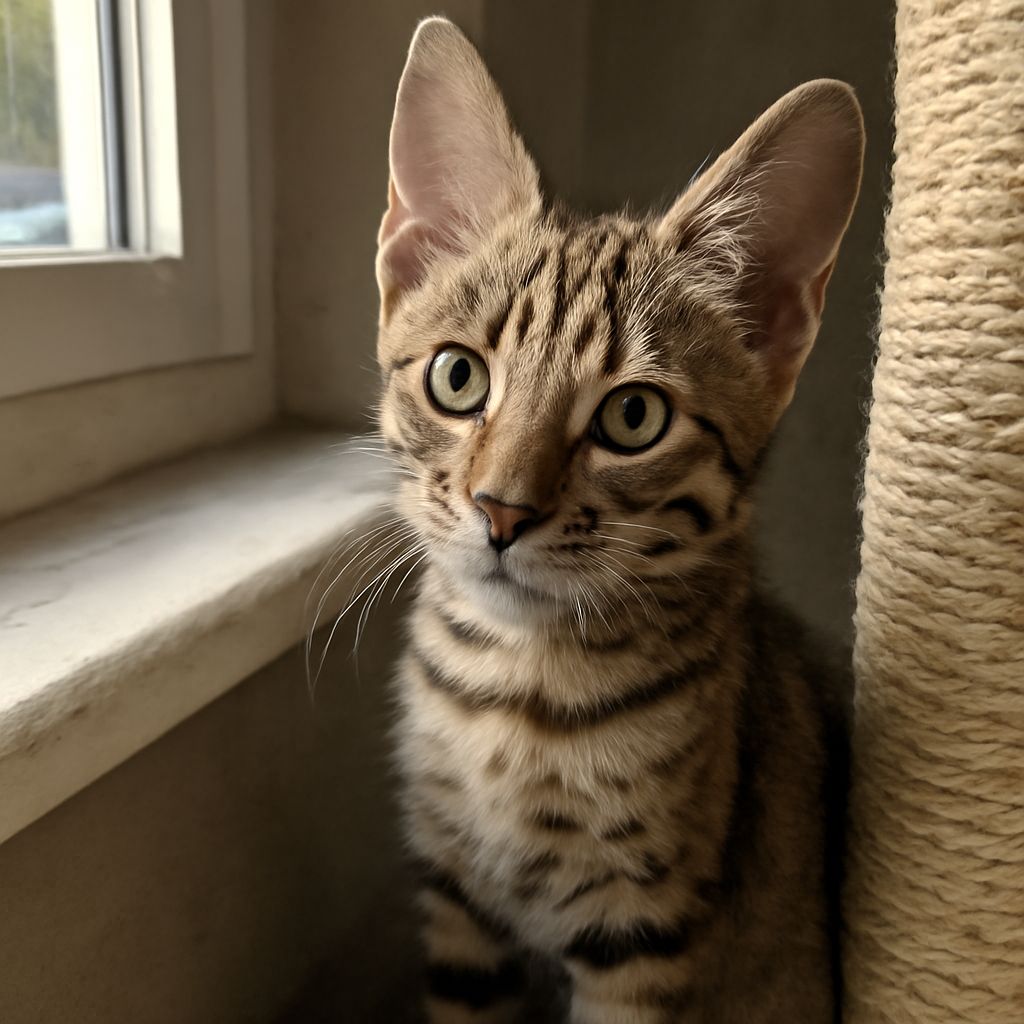
F2 Savannah cats are the second generation of Savannahs, known for their close genetic ties to the African Serval. This generation retains a strong resemblance to their wild ancestors, with long legs, large ears, and a lean, muscular build. These cats are often more energetic and demand a lot of interaction, making them suitable for families who can provide plenty of playtime and attention.
The F2 Savannah’s behavior is a mix of domestic and wild traits. They are highly intelligent and curious, often engaging in activities like opening doors or exploring high places. Their social nature means they thrive in environments where they can interact regularly with humans or other animals. However, their wild ancestry can make them a handful, requiring owners who are experienced with active and intelligent pets.
Characteristics of the F3 Savannah Cat
The F3 Savannah cat is the third generation, further from the wild ancestry of the Serval. They are generally smaller than their F2 counterparts and exhibit a more domestic temperament. This does not mean they lack the distinctive Savannah look; they still possess the striking spotted coat and elegant physique, albeit in a more manageable package.
F3 Savannahs tend to be more adaptable to various home environments, making them a popular choice for first-time Savannah cat owners. Their playful and affectionate nature makes them excellent companions for families and individuals alike. While they retain a high energy level, they are generally easier to train and socialize compared to the F2.
How the F3 Differs from the F2
When comparing the F2 and F3 Savannah cats, the most noticeable difference is in their behavior and temperament. The F2, being closer to the serval, often displays more wild-like behaviors and requires more specialized care. In contrast, the F3 is more domesticated, making it easier to integrate into a typical household environment.
Size is another distinguishing factor. F2 Savannahs are typically larger, with a more robust build, while F3s are smaller and more similar in size to average domestic cats. Potential owners should consider these differences when choosing which generation to bring home, as their care requirements and suitability for different living situations can vary significantly.
F3 Savannah Cat for Sale: What to Know
Before purchasing an F3 Savannah cat, it is crucial to do your research and find a reputable breeder. Due to their popularity, there are many breeders offering Savannahs, but not all provide the same quality of care and breeding standards. Look for breeders who are knowledgeable about the breed and can provide health guarantees and documentation.
When you find an F3 Savannah cat for sale, ensure that you understand the commitment involved. These cats require a lot of mental and physical stimulation, so be prepared to invest time in training and play. Additionally, consider the financial aspect, as Savannah cats can be expensive due to their exotic lineage.
Exploring the Savannah Cat F6
The Savannah cat F6 is further down the generational line, making it even more domesticated than both the F2 and F3. This generation is often more affordable and easier to care for, which can make them an attractive option for potential owners looking for the Savannah appearance without the demands of an earlier generation.
F6 Savannahs are known for their friendly and social nature. They have the distinctive look but are much closer in behavior to traditional domestic cats. This makes them a great choice for families or individuals who want the Savannah aesthetic in a cat that is easier to manage.
Choosing the Right Savannah Cat for Your Home
When it comes to selecting the perfect Savannah cat, consider your lifestyle and the level of commitment you can provide. An F2 Savannah might be ideal for someone with experience and the ability to meet its needs, while an F3 or F6 may be better suited for those new to the breed or with less time to dedicate.
Think about your living environment as well. Larger spaces and active households can better accommodate the higher energy levels of early generations. Ultimately, the right Savannah cat will depend on your personal preferences and capacity to provide a loving and stimulating home.
Next steps: If you’re ready to bring a Savannah cat into your life, begin by researching breeders and learning more about their care requirements. Remember, these cats thrive on interaction, so prepare your home with plenty of toys and climbing spaces to keep them engaged. Regular vet visits and a balanced diet will help maintain their health and well-being.