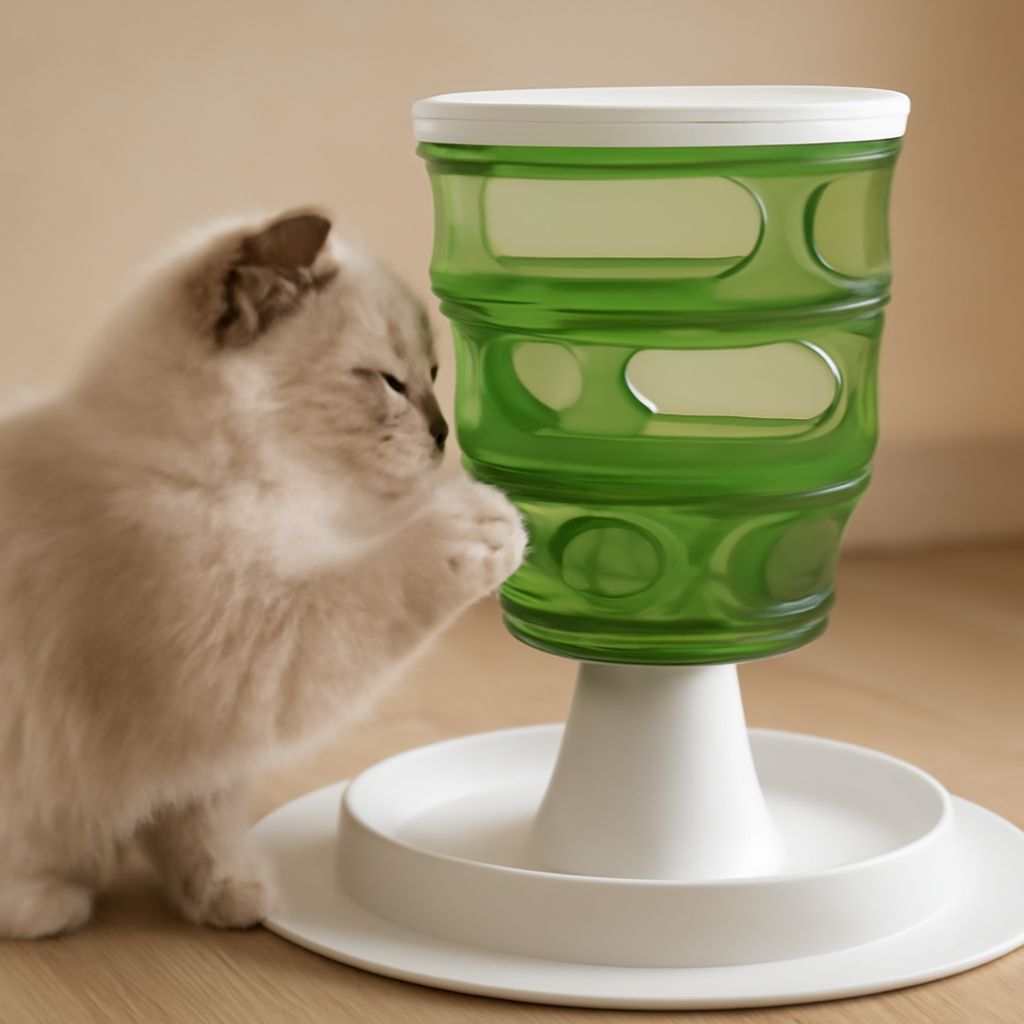
A few ridges in a dish can turn a mouthful of food into several smaller discoveries. A slow-feeding bowl for your cat creates spaces to lick or reach around, giving the meal a different pace and a little more interest. The right shape is one your cat can use comfortably with the food already on the menu.
Start with an easy design and watch what happens. A cat who takes a bite, changes position and returns to the dish is doing something quite different from one who paws helplessly at food just out of reach.
Slow feeder cat bowl: Match the shape to the meal
A cat slow feeder with shallow ridges is a versatile first choice. Low, widely spaced bumps divide a portion into small pockets while leaving the food visible. If your cat eats pâté, spread a thin layer across the bottom rather than packing it into deep corners. For kibble, choose gaps wide enough for the pieces to move and for a tongue or paw to reach them. A wide dish with low sides gives a flat-faced cat more room to approach than a deep maze with steep walls.
A slow feeder cat bowl should stay put while your cat eats. Look for a broad base or a nonslip underside, and place it on a washable mat if it slides. Check that the ridges have smooth edges and that your cat can reach the bottom without pressing its face hard against the rim.
A slow eating cat bowl can be simple: a few broad channels are enough to make a cat move between bites. The goal is access with a little exploration, so leave food visible and avoid narrow crevices that trap the last portion. If the dish tips or your cat abandons food that is still within it, try a shallower, steadier shape.
Mats and puzzles offer different kinds of work
A textured mat suits wet food that can be spread thinly. Choose a food-safe mat with shallow grooves and a stable backing; thick chunks in tiny holes may be hard for your cat to retrieve and hard for you to wash away. Place a small smear on top of the texture at first, where it is easy to see and lick. Loose kibble can roll off a mat.
A dry-food puzzle adds movement. A stationary board with broad openings lets a cat fish out pieces with a paw; a rolling dispenser releases kibble as it moves. For a beginner, use large openings and enough pieces that a light nudge produces a reward. Make sure the kibble actually fits through the holes. A rolling toy needs clear floor space; a stable board suits a smaller area.
The Feline Veterinary Medical Association recommends starting with a simple food puzzle and gradually increasing difficulty as a cat learns. For a cat who eats mostly wet food, a shallow slow feeding cat bowl or mat may be more practical than buying a rolling device intended for dry pieces.
Introduce it without losing the meal
- Set the new feeder in a quiet, familiar feeding place. Offer a small portion of your cat’s regular food on an easy-to-reach surface, with a few pieces or a smear near the edge. Let your cat approach at its own pace.
- Offer the rest of the normal portion in the usual dish, or transfer uneaten food there. Count both portions as part of the daily ration. Your cat should be able to eat its usual amount while learning; fresh water should remain available.
- Once your cat readily gets the easy food over several meals, move a little more of the measured portion into the shallow spaces. Increase difficulty gradually only if the cat continues to eat comfortably. You can always return to the easier arrangement.
A relaxed cat may sniff, lick or paw, pause and try another angle. Frustration can look like repeated unsuccessful pawing, pushing the feeder away or leaving accessible-looking food uneaten. Move the food back toward the top or offer the ordinary dish. If the cat cannot bend comfortably, stand steadily or use a paw, choose an easier surface and ask your veterinarian about a suitable setup.
In a home with several cats, give each one a separate feeding station with distance and visual separation. This helps you see who has eaten. The veterinary association also recommends checking that each cat can regularly reach enough food.
Keep the arrangement comfortable
Wash the feeder after use, especially after wet food, following its care instructions. Choose a design whose grooves you can reach with a brush; a complicated pattern loses its appeal if food dries into places you cannot clean. Inspect it for cracks or loose parts and replace it if the surface becomes damaged.
A dish that slows a cat’s eating is not a treatment for repeated regurgitation. Contact your veterinarian if food regularly comes back up, or if appetite changes, and describe when it happens and what the material looks like. If your cat has not eaten for 24 hours, seek veterinary attention; contact the vet sooner if your cat seems unwell.
As the weeks pass, your cat may become more deft at reaching each bite. You can introduce a slightly more involved feeding dish for your cat, or keep the familiar easy one if it remains comfortable. Revisit the fit as mobility and preferences change, and let your cat’s actual eating guide the next adjustment.