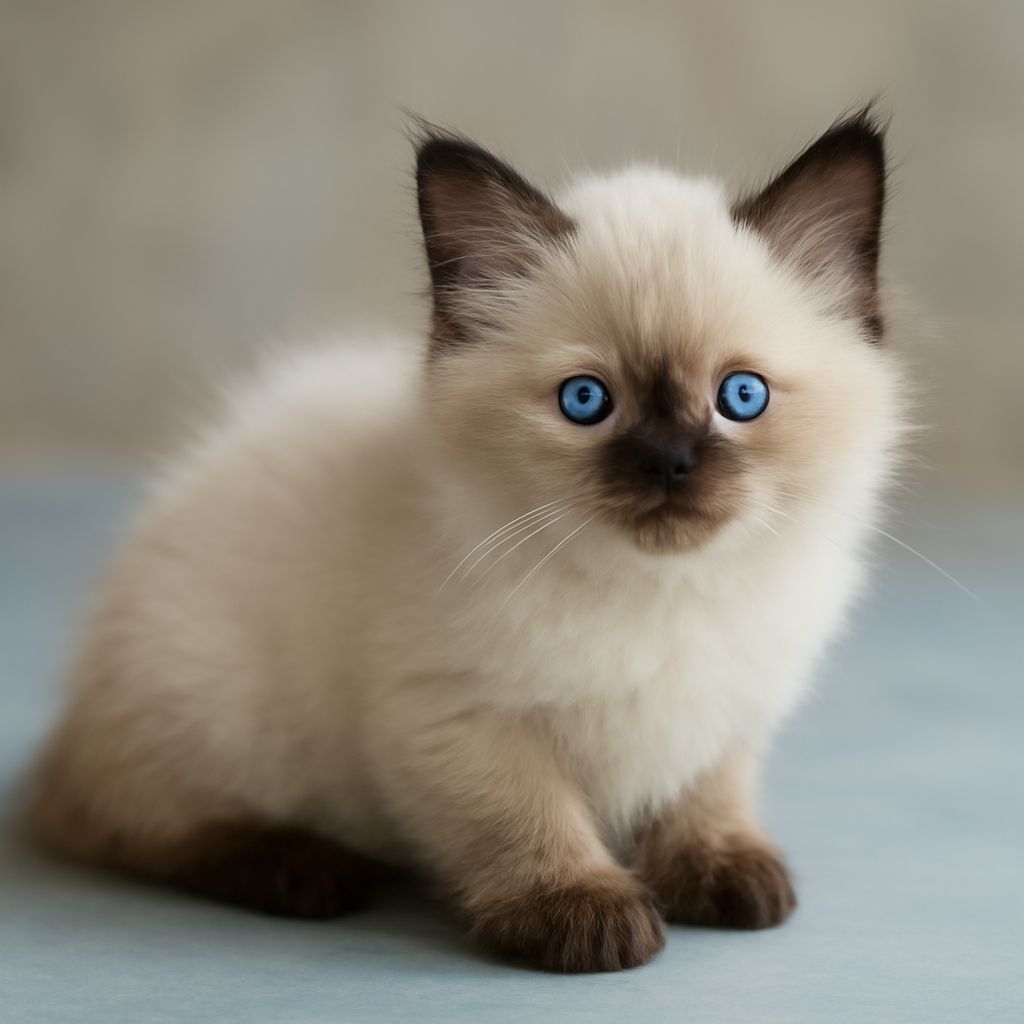
Wondering whether a Balinese with blue points looks different from a Balinese with lilac points? Yes: blue points are generally a deeper, cooler gray, while lilac points are paler and have a pinkish cast. Both wear their color on the face, ears, legs, and tail, against a lighter body. The names sound like a paint catalog, but the details are worth a closer look.
What “point” means on a cat
A pointed coat has darker color on the cooler parts of the body, with a lighter torso. In a blue point balinese, those darker areas can look slate gray rather than anything you would call blue in a box of crayons. The eyes are blue, too, but eye color alone won’t tell you which point color you are seeing.
The Cat Fanciers’ Association (CFA) Balinese standard describes blue points as deep blue, with a bluish-white body that lightens toward the chest and stomach. It specifies slate-colored nose leather and paw pads. These details give you more to compare than a single patch of fur, though a pet doesn’t have to match every show-standard detail to be a lovely companion.
A blue-pointed Balinese may show more body shading as the cat matures. Temperature can influence how dark pointed coats appear, and lighting changes what a camera records. Look at the whole cat over time rather than trying to settle the question from one shadowy tail.
Lilac Point Balinese: A softer shade
The CFA describes a lilac point balinese as having frosty gray points with a pinkish tone, a glacial-white body, and lavender-pink nose leather and paw pads. Compared with blue, lilac should look lighter and warmer or rosier, even though both belong to the gray end of the visual spectrum. The distinction can be subtle, especially on a young kitten.
When comparing a Balinese cat with lilac points to one with blue points, check the ears, mask, tail, nose, and pads together. A warm lamp can make a cool coat look pinker; a blue cast from a window can do the opposite. Photos taken in the same neutral daylight are much more useful than two portraits edited by different people.
If you are meeting the cat, ask to see the coat in natural light and give the kitten time to develop. CFA notes that lilac points can take longer to become apparent than blue ones. A pale kitten is therefore a poor candidate for a confident color verdict from a newborn photo.
Where flame fits in
A flame point balinese has warm reddish or apricot-colored points rather than the cool gray of blue or the pinkish gray of lilac. You may also hear this coloring called red point. In the CFA standard, the relevant color is listed as red point in the Javanese division: points range from bright apricot to deep red, with a clear white body and flesh or coral-pink nose leather and pads.
A Balinese cat with flame points can look quite pale in bright light, particularly when young. Cream points are paler still in the CFA description, so ask how the color was recorded instead of choosing between red and cream from a washed-out image. Fur markings and the color of the nose and pads add context, but an image may distort those as well.
Why the registry name matters
CFA places blue and lilac in its Balinese division and red in its Javanese division; CFA says Javanese became a division of Balinese in 2008. The International Cat Association (TICA) describes red among recognized Balinese point colors. That difference in organization terminology can make two listings sound more different than their color descriptions suggest.
Ask which registry issued the paperwork, then read the breed, division if listed, and color on that registry’s documents. A seller’s casual label and a registry’s classification may use different terms. If a listing says “flame,” ask whether the registration records it as red and under which breed or division.
Choosing the cat behind the color
A Balinese with a blue point coat or a Balinese with lilac point coloring still needs the same thoughtful introduction to a home: a comfortable resting place, play, routine veterinary care, and time to settle in. Ask about the individual cat’s habits and the care already provided. Color does not establish pedigree or predict health, and no coat color makes a cat hypoallergenic.
Before you decide, request the registration or pedigree documents and match the cat’s identification and recorded color to the issuing registry. Compare recent, unfiltered photos in natural light, including the face, ears, tail, nose, and paw pads; ask for another view if shadows or editing obscure the shade. Treat the photos as a way to see the cat, and the documents as the way to check the claimed lineage and registry classification.