
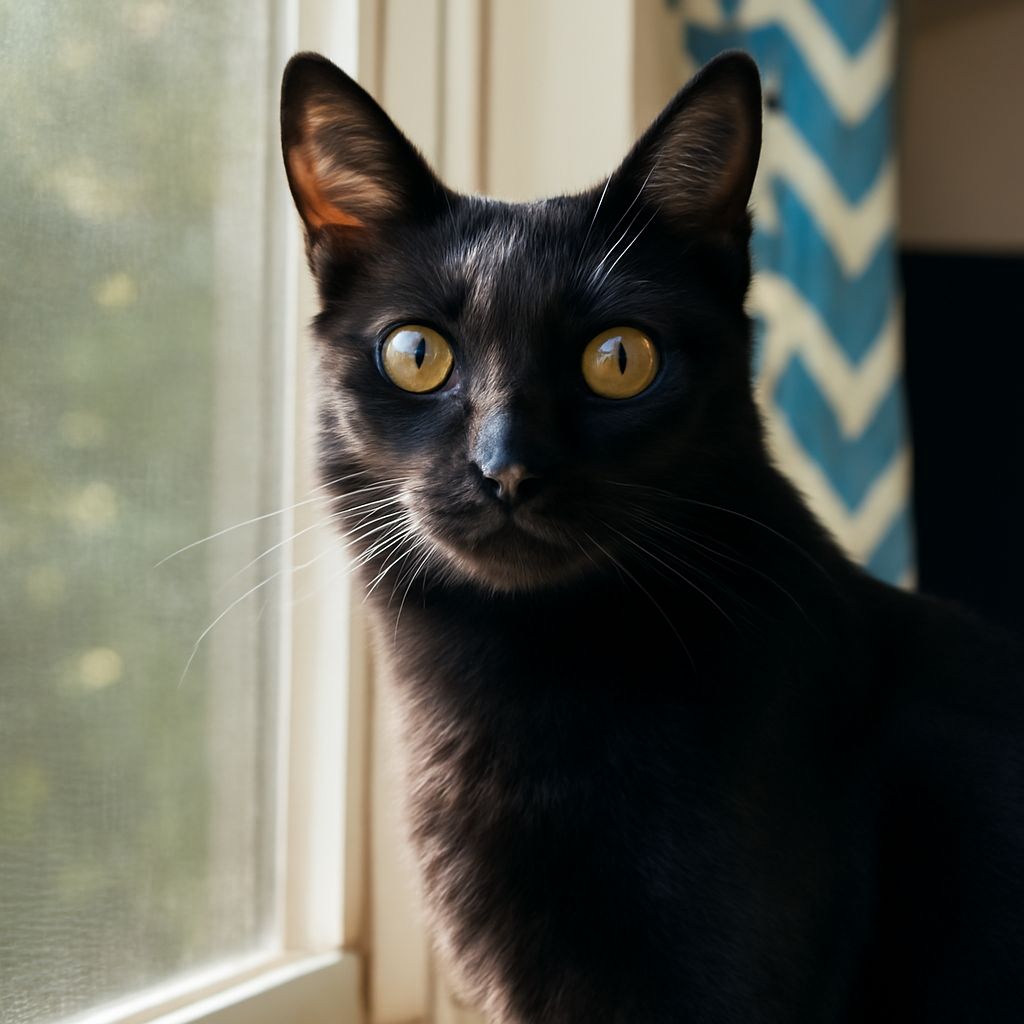
A sleek black cat follows you from the kitchen to the sofa and settles beside you as if it has an appointment. If you are considering a black-coated Bombay cat, its appearance is only the beginning of the story. The breed’s social habits, play needs and individual personality all matter when you picture life together.
Black Bombay Cat: The Look and the Pedigree
A black Bombay cat typically has a short, glossy coat, a rounded head and large eyes ranging from gold to copper. Its muscular body can feel surprisingly substantial when lifted. According to the International Cat Association, the breed was developed from Burmese and American Shorthair cats and is recognized for its black coat.
The black coat of a Bombay can resemble that of many other cats, including cats with unknown ancestry. Color, even paired with bright eyes, cannot establish a pedigree. If documented breed identity matters to you, request registration and ancestry records and check the details with the named registry. A shelter may describe a cat as Bombay-like based on appearance; ask what is known about its background. The cat’s need for care and company remains the same whether or not its family tree comes with paperwork.
As a breed of cat, the Bombay has a distinctive look, but no photograph can tell you how a particular animal behaves at home. Ask the person who knows the cat about its daily routine and how it responds to people, other pets and unfamiliar surroundings.
A Companion With Opinions About Your Schedule
Bombay cat characteristics often include curiosity, playfulness and an interest in people. The Cat Fanciers’ Association describes the breed as playful and affectionate. Some follow their people around, settle in a lap or investigate the day’s activities. Your desk may acquire a supervisor who contributes very little to the spreadsheet.
Those are tendencies, not a promise that every individual wants constant handling. One black-coated Bombay might greet visitors at the door; another may wait behind a chair until the commotion passes. Ask a caretaker whether the cat seeks petting, how it reacts when picked up and what it does when left alone. Give it room to approach, and stop a petting session if it moves away or becomes tense.
If your home is empty for much of the day, plan how the cat will receive attention and activity when you return. Food puzzles, a window perch and safe toys can make alone time more interesting. A compatible animal companion may suit some cats, but introducing another pet requires space, patience and a willingness to manage the relationship if the pair needs more time.
Play, Space and Household Fit
Among the Bombay traits, its lively nature makes interactive play a practical part of the day. Try a wand toy that moves like prey, let the cat stalk and catch it, then put the toy away. A small ball or a puzzle feeder can offer another kind of challenge. Several short sessions give you a chance to notice what your cat enjoys without waiting for it to invent a game involving your curtains.
Kittens need frequent play, safe exploration and supervision. Secure cords, remove toxic plants and small swallowable objects, and give a youngster a stable scratching post and low climbing places. Adults also benefit from play; an older cat may prefer gentler movement and an easier route to a favorite resting spot.
An apartment can work well when the cat has room to climb, scratch, rest and spend time with you. Provide a sturdy perch, a hiding place and a quiet sleeping area. In a family home, show children how to invite the cat over and let it leave. Introduce dogs or other cats gradually, beginning with separate spaces and moving to supervised meetings as each animal becomes comfortable.
Simple Care for a Short Coat
A Bombay’s short fur generally needs modest grooming. Brush or comb it regularly to remove loose hair and make the routine familiar. Use the opportunity to notice changes in the skin or coat, and contact your veterinarian if you find persistent irritation, bald patches or a new lump. Keep nails trimmed as needed, provide scratching surfaces and ask your vet about brushing teeth with cat-safe toothpaste.
Offer fresh water and a complete food suited to the cat’s age and health. Your veterinarian can help you choose portions based on body condition and activity. Treats used for training or puzzles should fit into the daily food allowance. Clean litter boxes regularly and keep them in accessible, quiet places.
Ask your veterinarian about preventive care, vaccination, dental checks and the cat’s health history. The International Cat Association notes that hypertrophic cardiomyopathy, a heart condition, can affect the breed; discuss family history and whether any evaluation is appropriate for your individual cat. Seek veterinary advice if you notice changes in appetite, breathing, activity or litter-box habits.
Expect a household companion who may want to participate in the ordinary business of living. Keep a predictable rhythm of meals, play, grooming and rest, then adjust it to the Bombay’s actual preferences and health. A few minutes of attention at the right time can make that appointment on the sofa the best part of both your days.