
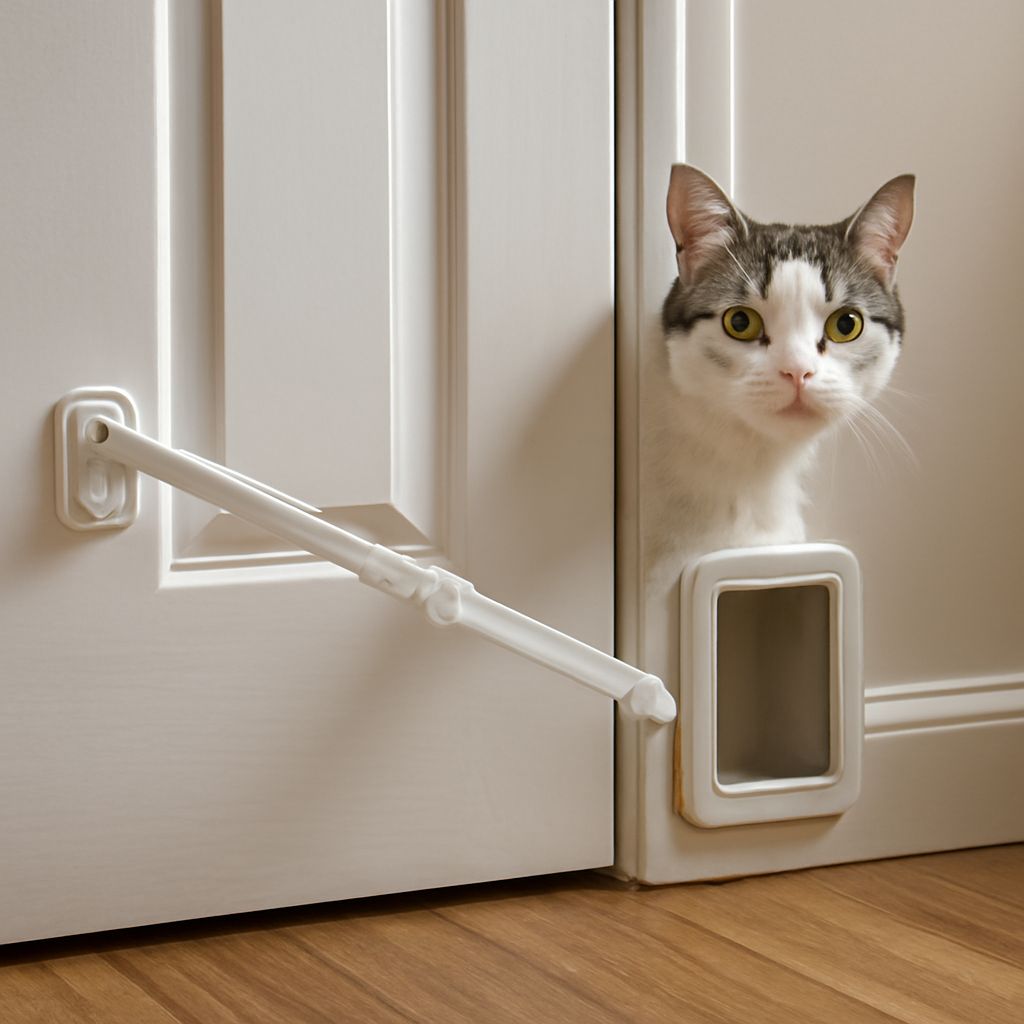
You’re tired of getting up to let the cat in and out fifteen times a day. You want to install a cat door — but you’ve quickly discovered that “cat door” covers an enormous range of products, and the choice between a standard flap, an electronic model, and a wall-mount installation is less obvious than you expected. The best cat door for your situation depends on where you’re installing it, how big your cat is, and whether you have other pets or wildlife concerns.
Cat doors for walls are a different installation than door-mounted flaps: they require cutting through drywall or siding, adding a tunnel section, and managing both interior and exterior trim. A large cat door installed in a wall is a bigger project than most people anticipate. Before you buy, understanding cat door size requirements and the difference between product types will save you a return trip to the hardware store.
Types of Cat Doors: Flap, Electronic, and Wall Installations
Standard Flap Cat Doors The classic hinged flap is the most affordable option and the easiest to install. It fits into a hole cut in a door panel and cats push through it in both directions. Basic flap models are suitable for interior doors — between rooms, to a laundry room with the litter box, or through a cabinet — where weather resistance and security aren’t concerns. For exterior use, look for flap models with a draft seal and a rigid locking panel for nights or when you’re away.
Electronic and Microchip-Activated Cat Doors
Electronic cat doors are unlocked by a sensor that reads your cat’s microchip or a collar tag. They stay locked by default and open only for registered animals. This is the right choice if you have neighborhood cats coming inside, if you live in an area with raccoons or other wildlife, or if you have dogs that would use a standard cat flap. The SureFlap DualScan and PetSafe SmartDoor are the leading products in this category.
The main trade-off: cost (typically $80 to $200) and battery replacement every few months. Some models require cats to slow down and approach at a specific angle for reliable reading, which can frustrate cats accustomed to running through flaps at speed.
Cat Doors for Walls: What the Installation Involves
A cat door in wall installations requires cutting a hole through the wall structure, inserting a tunnel section to span the wall depth (typically 4 to 8 inches for standard framing), and finishing both sides with trim. Wall installations are permanent in a way that door-mount flaps are not. They’re worth it if your door is a solid-core fire door, a metal exterior door, or a glass panel that can’t easily be modified. Thermo Panel cat doors — designed for sliding glass doors — are another option that avoids cutting entirely.
Getting Cat Door Size Right
How to Measure for the Correct Size Cat door size is typically specified by the flap opening dimensions, not the external frame size. To find the right size: measure your cat’s chest width at the widest point and add 2 inches; measure from the floor to the top of your cat’s back (withers height) and add 1 inch. Most domestic cats fit a medium opening of approximately 6×7 inches. Large breeds — Maine Coons, Norwegian Forest Cats, large Ragdolls — need a large opening of at least 7×10 inches.
A large cat door is better than a slightly-too-small one. A cat that has to squeeze through a flap will avoid using it or injure themselves. If you have multiple cats of different sizes, size for the largest cat.
Bottom Flap Sill Height
The bottom of the flap opening should be 1 to 2 inches above the floor — low enough for easy entry but high enough to keep drafts and debris out. For older cats or cats recovering from surgery, a lower sill height reduces the step-over effort. For a cat door in wall installations, account for baseboard height when measuring placement.
Installation Tips for Cat Doors for Walls
Mark the cut location clearly before cutting, and use a stud finder to avoid cutting through structural framing. The opening should be framed between studs. For exterior wall cat doors, caulk and weatherstrip all edges after installation to prevent moisture infiltration. Paint or prime any exposed wood edges inside the tunnel. If the wall has insulation, pack it back in around the tunnel sleeve before sealing — this maintains thermal performance.
Most cat doors come with paper templates for marking the cut. Use the template, tape it to the wall, and double-check measurements before cutting. Exterior siding requires a reciprocating saw; interior drywall cuts cleanly with a utility knife and drywall saw.
Key takeaways: The best cat door for most households is an electronic microchip-reading model for security, sized correctly for your largest cat. Cat doors for walls require more planning than door-mount flaps but are permanent and clean-looking. Always measure cat door size from your cat’s actual dimensions rather than guessing — the flap should be 2 inches wider and 1 inch taller than your cat’s body measurements.