
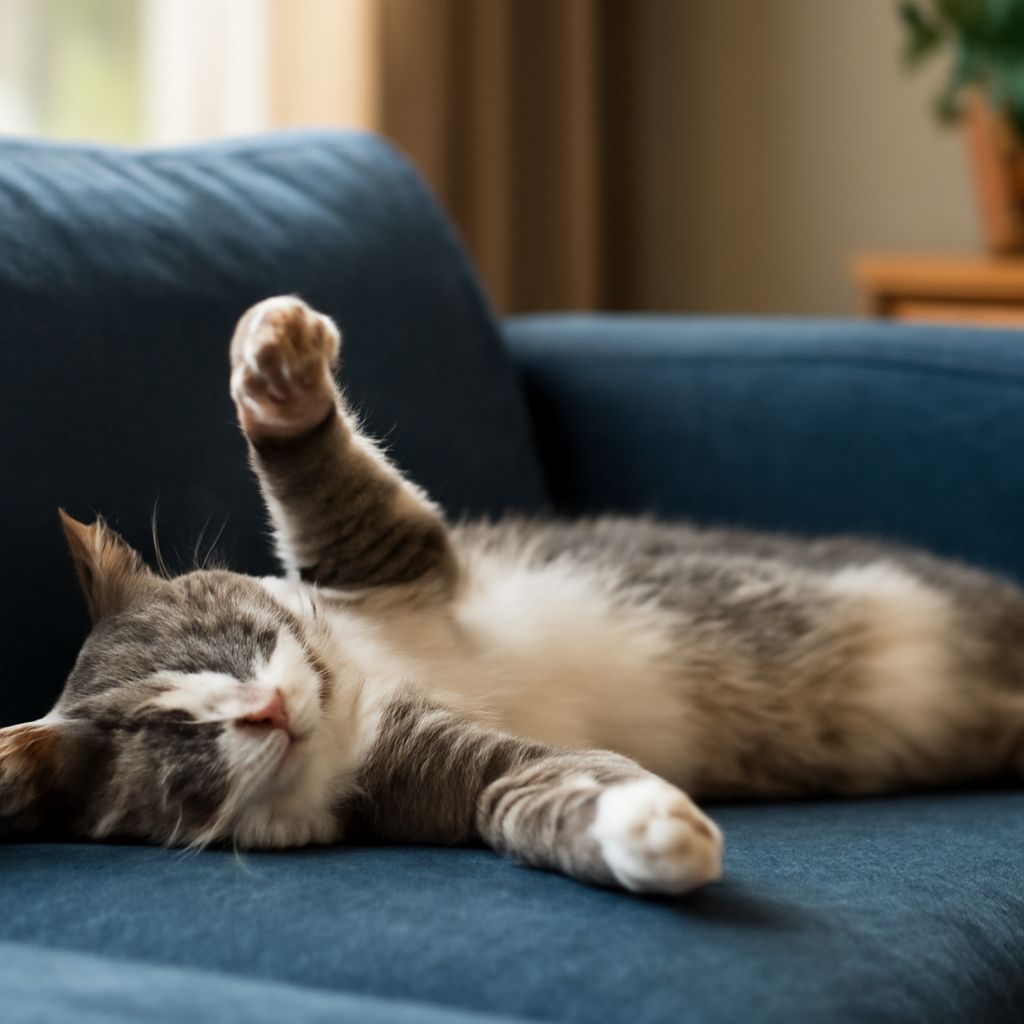
You’re relaxing on the couch when your cat settles onto your lap and starts vibrating with that low, steady rumble. The cat purring meaning in that moment feels obvious — contentment, right? But cat purring is actually more layered than most owners realize. A purring cat isn’t always happy, and understanding what causes cats to purr can change how you read your cat’s moods.
Whether you’ve wondered about cat purrs healing claims you’ve seen online, or you just want to understand your cat better, this guide covers the science and the practical signals behind one of the most distinctive things cats do.
What Causes Cats to Purr
Cats produce purring through rapid movement of the laryngeal muscles in the larynx. These muscles dilate and constrict the glottis — the part of the larynx surrounding the vocal cords — during both inhalation and exhalation. This creates a continuous vibration at frequencies between 25 and 150 Hz. Unlike dogs or other animals, cats can purr continuously without interruption.
The neurological trigger is a neural oscillator in the brain that signals those muscles to move rhythmically. What triggers that oscillator depends on context: a relaxed cat, a stressed cat, a sick cat, and a hungry cat can all produce similar-sounding vibrations. The sound alone doesn’t tell the whole story.
Cat Purring Meaning: Reading the Context
A contented purring cat curled up in a warm spot is the most familiar version. But cat purring meaning shifts based on other body language. A cat that purrs while flattened, ears back, or hiding is likely using the vibration as self-soothing — similar to a person humming when anxious.
Some cats develop a “solicitation purr” — a higher-pitched, more urgent sound embedded in the regular purr that researchers have compared to an infant’s cry. Cats use this selectively to signal hunger or desire for attention, and humans respond to it instinctively even without knowing the difference consciously.
Cat Purrs Healing: What the Research Shows
The frequency range of cat purrs — 25 to 50 Hz — overlaps with frequencies used in vibration therapy to promote bone density and tissue healing. Some researchers suggest that cats may purr partly as a self-healing mechanism during recovery from injury, illness, or stress. Cat purrs healing potential has been discussed in veterinary and alternative medicine contexts for decades.
The evidence is preliminary. There’s no controlled human study proving that proximity to a purring cat heals bones faster, but the frequency range is real, and cats do purr more when sick or recovering. Whether you accept the healing claims or not, the calming effect of a purring cat on human heart rate and blood pressure has more research support.
Purring in Kittens vs Adult Cats
Kittens can purr within days of birth, using it to communicate with their mother during nursing. The vibration helps the queen locate her kittens and signals that feeding is going well. Adult cats retain this behavior and often use it with human caregivers in a similar communicative role.
When a Cat Stops Purring
Some cats naturally purr less than others — it’s partly individual variation. But a cat that used to purr regularly and stops abruptly may be in pain, stressed, or unwell. Loss of purring alongside changes in appetite, grooming, or activity is worth a vet check.
Bottom Line
Cat purring is a flexible, multi-purpose vocalization — not just a happiness signal. Reading it alongside body language gives you a much more accurate read on what your cat is communicating. The potential for cat purrs healing at a physiological level adds an interesting layer, but the most practical takeaway is that a purring cat is telling you something worth listening to.